

 English
 中文简体
中文简体
 Español
 عربى
عربى

Specifications
| Parameter | Details |
| Thread Size | Commonly M6x1.0 to M20x1.5 (male or female) |
| Ball Diameter | Typically 5mm to 25mm |
| Material (Body/Race) | Steel, Stainless Steel, Aluminum |
| Material (Ball/Stud) | Chrome Alloy Steel, Stainless Steel |
| Bearing Type | Metal-on-Metal, Metal-on-Polymer (PTFE lined) |
| Left or Right Hand Thread | Available for adjustable linkages |
| Load Rating | Radial & Axial load specs vary by size/grade (e.g., 5kN to 50kN) |
| Misalignment Angle | Up to ±30° depending on design |
| Sealing | Often unsealed; optional rubber boots for dirt protection |
Applications
In automotive, rod ends are a staple in motorsports. They are used in push/pull-style steering systems, sway bar links, throttle linkages, shift linkages, and suspension components (like toe links and traction bars) on race cars, sand rails, and custom-built vehicles. Their precise movement and adjustability are crucial for fine-tuning suspension and steering geometry.
Beyond racing, they are used in industrial automation, robotics, and material handling equipment as pivot points in control rods and linkages. In aviation, they remain critical in flight control systems. For custom car and motorcycle builders, rod ends provide a versatile and strong solution for creating custom mechanical linkages where off-the-shelf parts are not available.
Advantages
- Zero Play & High Precision: Precision-ground models offer minimal backlash for extremely accurate control.
- High Misalignment Capability: Can accommodate angular errors in linkage assembly better than traditional joints.
- High Strength-to-Weight Ratio: Especially aluminum-bodied versions, ideal for weight-sensitive applications.
- Simple Adjustability: Threaded design allows for easy length adjustment and fine-tuning of linkages.
- Low Friction: Especially polymer-lined types, providing very smooth movement.
- Durability in Clean Environments: Metal-on-metal types can handle high loads and temperatures.
- Versatility: Available in countless sizes, threads, and materials for custom applications.
Materials and Structure
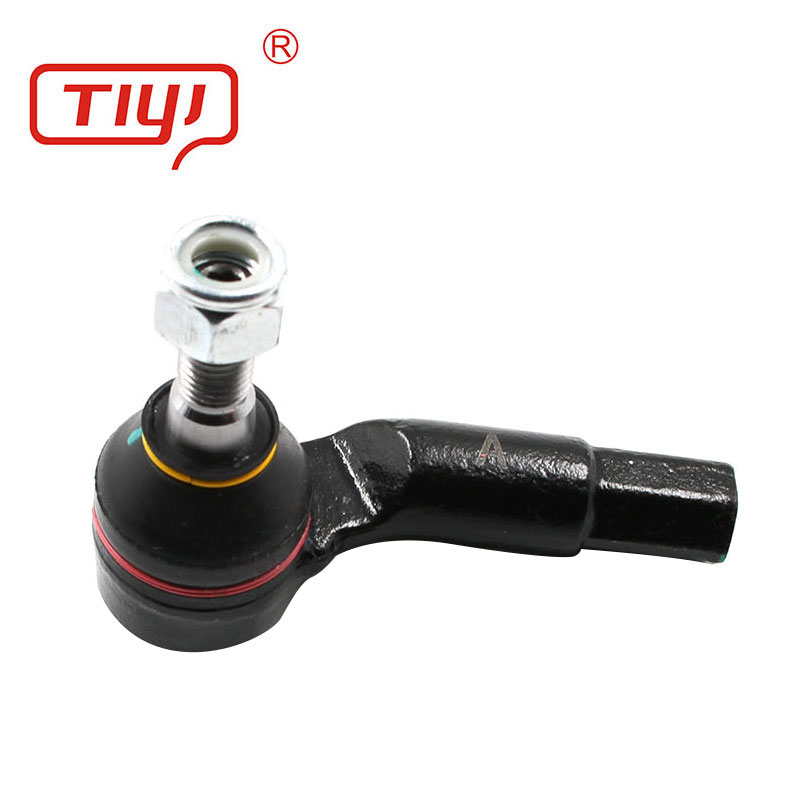
The basic structure is a spherical ball stud, made from high-carbon chrome steel or stainless steel for corrosion resistance, housed inside a circular outer race. The race can be made from steel, stainless steel, or anodized aluminum. The bearing interface is key: for high-load, high-temperature applications, a hardened steel ball runs directly against a hardened steel race (metal-on-metal). For low-friction, smoother operation, the race is often lined with a PTFE (Teflon) or acetal polymer insert.
The body is typically a one-piece design, cold-formed or machined. The stud is retained by peening the race material over it or by using a locking ring. Unlike sealed ball joints, most rod ends have no integrated seal, making them susceptible to contamination in dirty environments unless an optional slip-on rubber boot is used.