

 English
 中文简体
中文简体
 Español
 عربى
عربى


You can tell your ball joint is bad by a combination of symptoms: a clunking or knocking noise from the front suspension over bumps, uneven or rapid tire wear on one side, the steering wheel pulling to the left or right without input, and a vague or wandering feeling when steering at highway speeds. If you jack up the affected corner of the car and feel more than 0.5mm of play when you grip the tire at 12 and 6 o'clock and rock it in and out, the lower ball joint has worn beyond its serviceable limit. A bad ball joint is not a problem to defer — complete separation while driving can cause immediate loss of steering and braking, making it one of the most dangerous suspension failures a vehicle can experience.
Content
- What Is a Ball Joint and Why Does It Fail?
- What Are the Warning Signs of a Bad Ball Joint?
- How Do I Test My Ball Joint for Wear at Home?
- How Do Bad Ball Joints Compare to Other Suspension Noises?
- How Dangerous Is a Bad Ball Joint — and When Must You Stop Driving?
- What Does Ball Joint Replacement Cost?
- How to Extend Ball Joint Life and Prevent Early Failure
- Early-Stage vs. Late-Stage Ball Joint Wear: A Side-by-Side Comparison
- Frequently Asked Questions: How Do I Know If My Ball Joint Is Bad?
- The Bottom Line: How Do You Know If Your Ball Joint Is Bad?
What Is a Ball Joint and Why Does It Fail?
A ball joint is a spherical bearing pivot point that connects the steering knuckle to the control arm, allowing the wheel to move up and down with the suspension while simultaneously pivoting left and right for steering — and it fails primarily due to grease loss, corrosion, and cumulative impact loading.
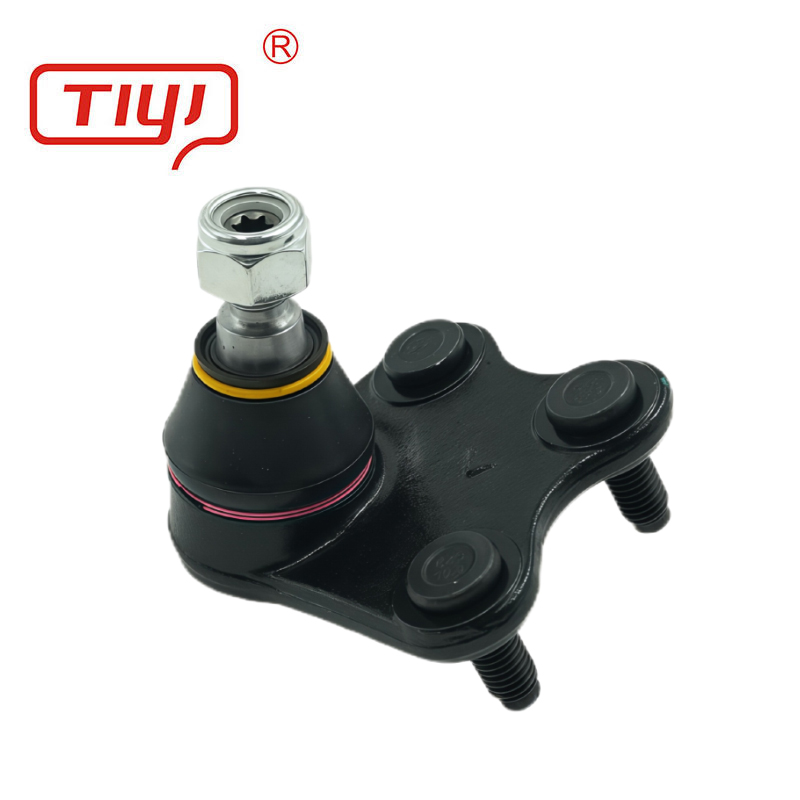
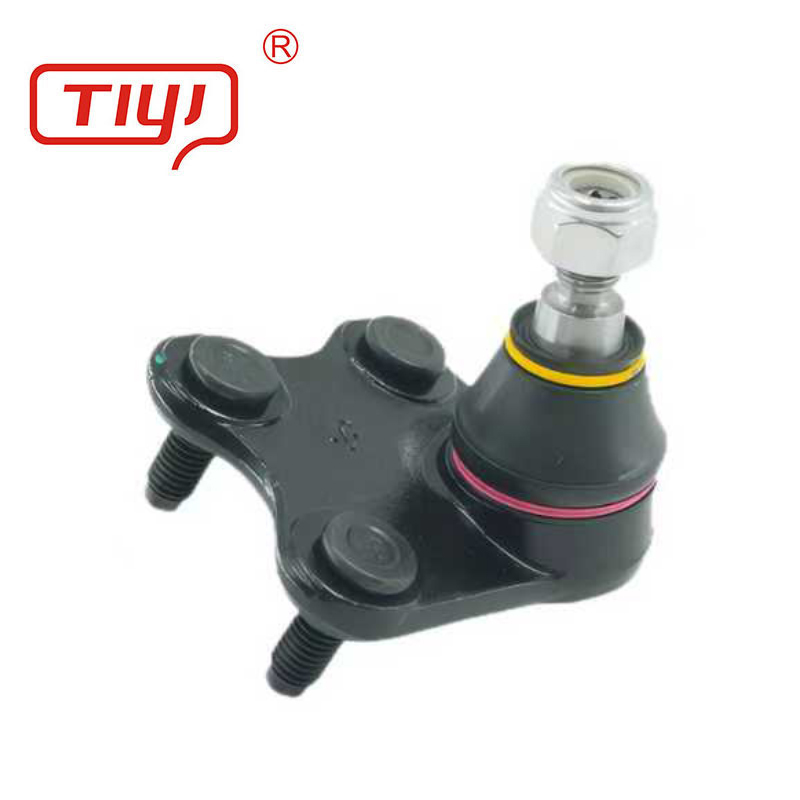
Structurally, a ball joint consists of a hardened steel ball stud seated inside a lubricated socket housing, sealed with a rubber or polyurethane boot. The boot retains the factory grease pack and excludes road contamination. When the boot cracks, tears, or pulls away from the housing — which happens gradually through heat cycling, UV degradation, and physical impact — grease escapes and abrasive dirt and moisture enter. Metal-on-metal contact then accelerates wear, increasing internal clearance (play) from the acceptable range of 0 to 0.5mm to 2, 3, or even 5mm in severely worn joints.
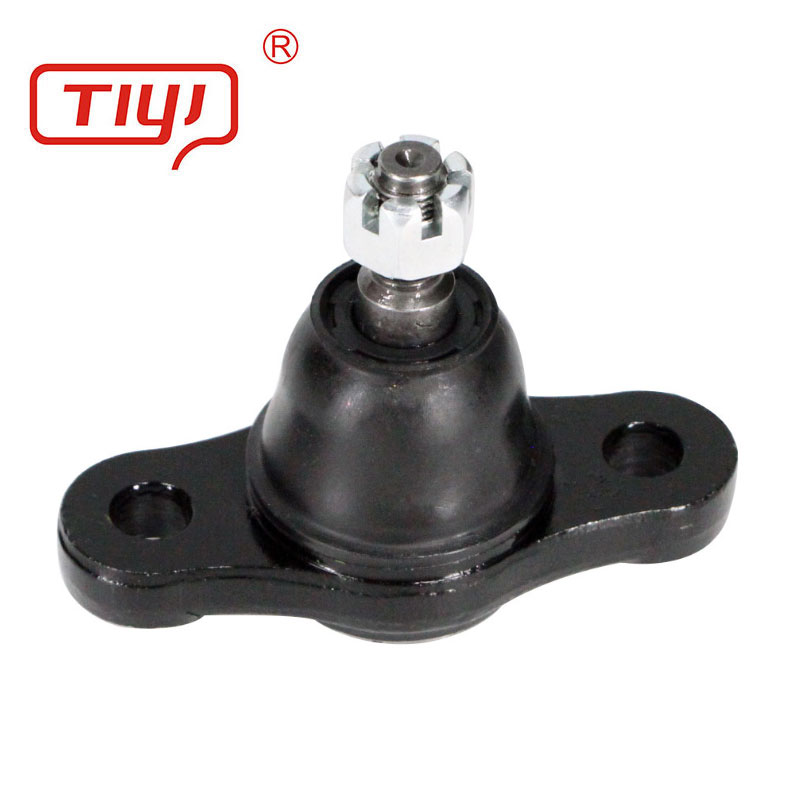
Most passenger vehicles have four ball joints total — one upper and one lower on each front wheel in a double-wishbone suspension, or one lower ball joint per side in a MacPherson strut system (the most common configuration on modern cars). Lower ball joints are load-bearing and wear significantly faster than upper joints because they carry the vehicle's weight. On a MacPherson strut car, the single lower ball joint on each side is the most critical suspension component on the vehicle.
Primary Causes of Ball Joint Failure
- Boot damage: A torn or cracked protective boot is the single most common precursor to ball joint failure. Once the seal is broken, service life can drop from 100,000 miles to as few as 10,000 to 20,000 miles depending on road conditions.
- High-impact driving: Repeated pothole strikes, off-road use, and aggressive curb contact introduce shock loads that exceed the joint's design limits and accelerate socket wear.
- Lack of lubrication maintenance: Greaseable (Zerk fitting) ball joints require periodic greasing — typically every 12,000 miles or annually. Sealed joints have factory-filled grease that cannot be replenished.
- Corrosion: Road salt and moisture corrode the housing and ball stud. Vehicles in northern climates or coastal areas typically see ball joint failures 30 to 40% earlier than vehicles operated in dry climates.
- Age and mileage: Most sealed ball joints are designed for 70,000 to 150,000 miles of service. Greaseable joints, when properly maintained, can exceed 200,000 miles.
What Are the Warning Signs of a Bad Ball Joint?
The most reliable warning signs of a bad ball joint are a clunking noise over bumps, steering pull, abnormal tire wear, and vibration through the steering wheel — and these symptoms typically appear in that sequence as wear progresses from early to severe.
1. Clunking or Knocking Noise
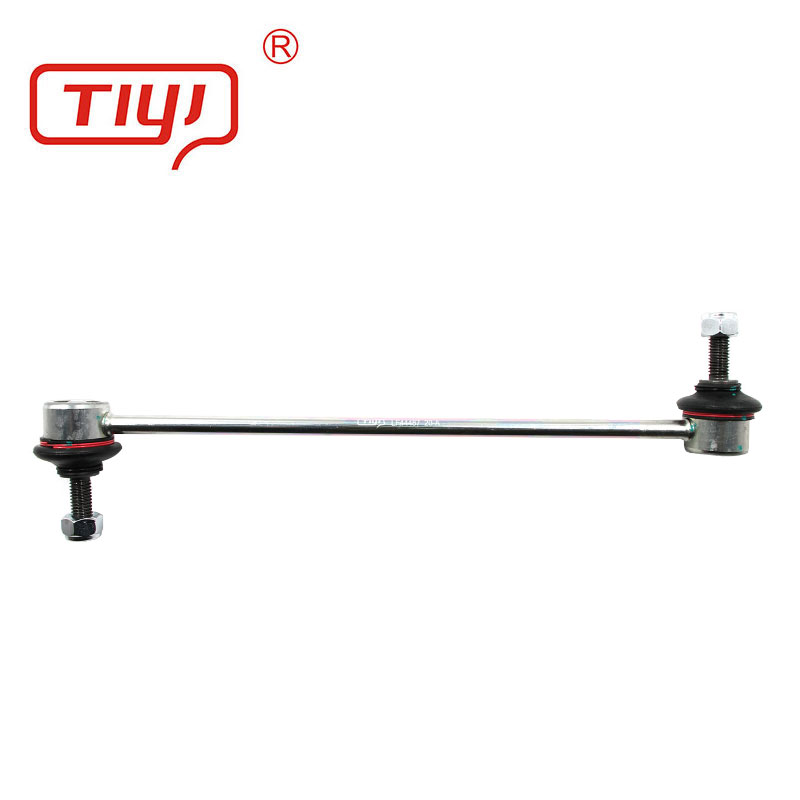
A metallic clunking, knocking, or popping sound from the front suspension — particularly over speed bumps, dips, or uneven pavement — is the earliest and most common symptom of a worn ball joint. The noise is produced when the loose ball stud shifts within the oversized socket, impacting the housing walls. At early wear stages (play of 1 to 2mm), the sound may only appear over sharp impacts. As wear progresses to 3mm or more, the clunk becomes audible over routine road texture at normal speeds. Many drivers initially mistake this sound for a worn sway bar end link or strut mount — both of which make similar noises — which is why a physical inspection to measure actual play is essential for accurate diagnosis.
2. Steering Wheel Pulling or Wandering
A bad ball joint causes the affected wheel's steering geometry to shift, which manifests as the vehicle pulling to one side or requiring constant small steering corrections to maintain a straight line at highway speeds. As the ball stud wears and develops play, the wheel's camber and caster angles — which are set during wheel alignment — change dynamically with suspension movement instead of remaining fixed. This makes alignment adjustments temporary at best; if a vehicle consistently goes out of alignment within a few thousand miles of correction, a worn ball joint (or other worn suspension component) is almost always the root cause. Studies on wheel alignment return visits show that approximately 23% of premature alignment drift cases are attributable to worn suspension joints rather than road disturbance.
3. Uneven or Rapid Tire Wear
A worn ball joint that alters camber geometry will cause accelerated wear on the inner or outer edge of the tire on the affected side, often consuming 20 to 40% more tread life than a tire on a healthy suspension. The pattern is typically a sharp feathered or sawtooth edge on one side of the tread blocks rather than uniform wear across the full tread width. If you notice one front tire wearing significantly faster than the other, or a distinct worn band on the inner or outer shoulder, inspect both the ball joints and the tie rod ends before simply replacing the tire and realigning — without fixing the root cause, the new tire will wear identically.
4. Vibration Through the Steering Wheel or Floor
As ball joint wear reaches moderate to severe levels, the looseness in the joint causes the wheel assembly to develop a subtle wobble under load, which transmits as vibration through the steering column and floorboard — most noticeably between 50 and 70 mph. This vibration is distinct from wheel balance vibration (which typically appears at a specific speed threshold and diminishes above it) because ball joint vibration worsens progressively and is often accompanied by the clunking noise over road irregularities. If wheel balancing does not resolve a highway vibration, the ball joints and wheel bearings should be the next items inspected.
5. Visible Boot Damage
A cracked, torn, or collapsed rubber boot is a direct visual indicator that the ball joint is either already failing or will fail significantly sooner than expected — and is often visible during a routine tire rotation without lifting the car. From underneath or at wheel well height, look at the area where the control arm meets the steering knuckle. The ball joint boot should be smooth, fully intact, and free of tears or grease smearing. A boot that shows cracks, has grease expelled around it, or has collapsed inward against the stud means contamination has entered the joint. Catching a torn boot early — before significant wear has developed — allows the joint to be regreased (on greaseable types) or replaced before the socket itself is damaged.
How Do I Test My Ball Joint for Wear at Home?
You can perform a reliable ball joint play test at home using a floor jack, jack stands, and a pry bar — the test takes less than 15 minutes per side and gives you a clear pass or fail result based on measured movement.
The Tire Rock Test (Load-Bearing Lower Ball Joint)
- Step 1: Park on a level surface and chock the rear wheels. Loosen the front lug nuts one-quarter turn before jacking.
- Step 2: Jack up the vehicle at the designated front jack point and place a jack stand under the frame rail or pinch weld. Lower the vehicle onto the stand so the suspension hangs freely. The wheel must be off the ground with the suspension fully drooped — this unloads the lower ball joint and allows play to be felt.
- Step 3: Grip the tire firmly at 12 o'clock (top) and 6 o'clock (bottom). Rock the tire in and out — toward you and away from you — applying firm force in each direction.
- Step 4: Any perceptible in-and-out movement (not rotational, which is normal) indicates ball joint play. Movement of 1mm or less may be borderline; movement of 2mm or more is a clear failure requiring replacement. Most manufacturers publish a maximum allowable play of 0.5mm for load-bearing ball joints.
- Step 5: Have a helper watch the ball joint housing while you rock the tire. Visible movement at the joint — the stud shifting within the housing — confirms ball joint wear rather than play from another component such as a wheel bearing.
The Pry Bar Test (Additional Confirmation)
Placing a pry bar under the tire and levering upward while watching the ball joint provides a more definitive test of lower ball joint wear in load-bearing applications. With the wheel off the ground, slide a pry bar or large screwdriver under the tire and lever upward firmly. Watch the ball joint: acceptable play is 0 to 0.5mm of vertical stud movement for most passenger vehicles. If the stud lifts visibly within the socket — particularly if you see a gap between the stud shoulder and the housing — the joint has exceeded serviceable wear limits and must be replaced.
The Steering Input Test (Upper Ball Joint or Non-Load-Bearing)
Upper ball joints and follower (non-load-bearing) joints are tested differently: with the vehicle weight on the wheel, grip the tire at 9 and 3 o'clock and attempt to rock it side to side — play here indicates wear in the upper ball joint, tie rod ends, or wheel bearing. With the car on the ground, grip the tire at the 9 and 3 o'clock positions (left and right sides). Attempt to rock the tire in and out horizontally. Any looseness at this position (other than rotational wheel bearing play, which has a different feel) points to the upper ball joint or inner and outer tie rod ends, which require the same urgent attention as a lower joint failure.
How Do Bad Ball Joints Compare to Other Suspension Noises?
Ball joint noise is most commonly confused with sway bar end link noise, strut mount noise, and worn control arm bushing noise — the key differentiator is that ball joint clunking is directly linked to vertical wheel travel and play is detectable in the 12-to-6 o'clock rocking test.
| Component | Noise Type | When Worst | Diagnostic Test | Safety Risk |
| Bad Ball Joint | Metallic clunk / knock | Over bumps, turns, dips | 12-6 o'clock tire rock test | Critical — risk of separation |
| Worn Sway Bar End Link | Rattling clunk | Over bumps at low speed | Shake end link by hand | Low — affects handling only |
| Failed Strut Mount | Clunk / creak on turning | Tight low-speed turns | Turn wheel lock-to-lock, listen at top of strut | Moderate |
| Worn Control Arm Bushing | Thud / creak | Braking, acceleration, bumps | Pry bar against control arm | Moderate |
| Worn Tie Rod End | Clunk / looseness | Steering input, bumps | 9-3 o'clock tire rock test | High — affects steering control |
| Worn Wheel Bearing | Grinding / humming | Highway speed, worsens in turns | Spin wheel by hand, listen for roughness | High — risk of wheel detachment |
Table 1: Comparison of bad ball joint symptoms versus other common front suspension noises, including noise type, diagnostic test, and relative safety risk level.
How Dangerous Is a Bad Ball Joint — and When Must You Stop Driving?
A severely worn ball joint that separates while driving causes the wheel to collapse outward or tuck under the vehicle instantly, eliminating all steering and braking capability on that corner — it is one of the few suspension failures that can cause a complete loss of vehicle control with no warning.
Ball joint separation typically happens under the highest-load conditions: hard braking, sharp cornering at speed, or striking a large pothole. The sequence is rapid: the ball stud pulls through the socket or the retaining ring fails, the wheel assembly swings freely on the remaining suspension links, the tire contacts the wheel arch or the vehicle drops onto the rotor, and the driver immediately loses the ability to steer or brake effectively. At highway speeds, separation gives the driver less than one second to react before the vehicle departs the lane.
The NHTSA has recorded hundreds of ball joint failure-related crashes over the past decade, with the majority involving vehicles driven an estimated 5,000 to 15,000 miles after the first symptoms appeared. The clear takeaway: symptoms of a bad ball joint are not a reason to "keep an eye on it." They are a reason to schedule replacement within days, not months.
When to Stop Driving Immediately
- Any visible play in the tire rocking test (over 2mm): The joint has exceeded its design limits and is at risk of separation under normal driving loads.
- The clunking noise is present at low speeds on smooth roads: This indicates play large enough to produce noise without any impact loading — a sign of advanced wear.
- The steering feels suddenly lighter or disconnected on one side: This can indicate the joint stud is near the limit of its socket engagement and is about to separate.
- The vehicle pulls severely to one side during braking: Combined with clunking, this indicates the geometry change from joint wear is now severe enough to create brake pull — an advanced and dangerous symptom.
What Does Ball Joint Replacement Cost?
Ball joint replacement costs range from $150 to $400 per joint for most passenger vehicles (parts and labor combined), with the total typically rising to $350 to $700 when both front joints on an axle are replaced simultaneously — which most mechanics recommend.
| Vehicle Type | Parts Cost (per joint) | Labor Cost (per joint) | Alignment (required after) | Total Estimate (both sides) |
| Economy / Compact Car | $25 – $70 | $80 – $150 | $80 – $120 | $290 – $560 |
| Mid-Size Sedan / SUV | $40 – $110 | $100 – $180 | $90 – $130 | $370 – $730 |
| Full-Size Truck / SUV | $60 – $150 | $120 – $220 | $100 – $150 | $440 – $970 |
| Performance / Luxury Vehicle | $80 – $300 | $150 – $300 | $120 – $180 | $580 – $1,380+ |
Table 2: Estimated ball joint replacement costs by vehicle type in the US market (2025–2026), including parts, labor, and mandatory post-replacement wheel alignment. Costs vary by region and shop labor rates.
A wheel alignment is not optional after ball joint replacement — it is a required step. Replacing a ball joint changes the suspension geometry, and driving on an unaligned vehicle after replacement will accelerate tire wear and may not restore the pre-failure handling characteristics. Budget $80 to $150 for a four-wheel alignment as part of any ball joint service. Most reputable shops include the alignment recommendation automatically; if one does not, request it explicitly.
On vehicles where the ball joint is pressed into the control arm rather than bolted in separately — a common design in Asian-market vehicles and many economy cars — the entire control arm assembly including the joint is often replaced as a unit. This increases parts costs by $50 to $150 compared to a standalone joint, but reduces labor time since the control arm comes pre-assembled with the new joint already pressed in at the correct specification.
How to Extend Ball Joint Life and Prevent Early Failure
The three most impactful habits for extending ball joint service life are inspecting and replacing torn boots before joint wear develops, greasing Zerk-fitting joints at every oil change interval, and avoiding repeated high-impact driving over potholes and rough terrain.
- Inspect boots at every tire rotation (approximately every 6,000 to 8,000 miles). A torn boot caught early can extend the joint's life significantly — either by regreasing a greaseable joint or by replacing the boot alone on some designs before contamination has reached the socket.
- Grease Zerk-fitting ball joints every 12,000 miles or annually, whichever comes first. Use the grease type specified in your vehicle's service manual (typically NLGI Grade 2 lithium complex or moly-based grease). Over-greasing until old grease purges from the boot seam ensures full replenishment of the socket cavity.
- Slow down for potholes and speed bumps. The impact load on a ball joint increases with the square of speed — hitting a pothole at 30 mph applies roughly 4 times more shock force than hitting the same pothole at 15 mph. Consistent high-speed impact driving can reduce ball joint life by 40 to 60% compared to smooth-road use.
- Replace ball joints in axle pairs when one has failed. If one lower ball joint has worn out at 90,000 miles, the opposite joint has experienced identical service conditions and is likely to fail within 10,000 to 20,000 miles. Replacing both sides during the same service appointment saves significant labor cost and prevents a second suspension failure in the near term.
- Address wheel alignment issues promptly. Misalignment causes uneven loading across the ball joint socket, accelerating wear on one side of the joint. Correcting alignment as soon as pull or uneven tire wear is noticed protects not just the tires but the ball joints, tie rod ends, and control arm bushings simultaneously.
Early-Stage vs. Late-Stage Ball Joint Wear: A Side-by-Side Comparison
Understanding where your vehicle sits on the wear progression scale helps you prioritize urgency — early-stage wear allows a scheduled repair within weeks, while late-stage wear demands immediate action.
| Symptom / Indicator | Early-Stage Wear | Late-Stage Wear |
| Clunking Noise | Only over sharp bumps or potholes | Present over routine road texture and turns |
| Measured Play (tire rock test) | 0.5 – 1.5mm | 2mm or more (often visible to naked eye) |
| Steering Feel | Slightly vague at highway speed | Significant pull, wander, or inconsistent response |
| Tire Wear | Slightly faster on inner or outer edge | Clearly uneven edge wear, possible feathering |
| Boot Condition | Cracked or torn; grease may be visible | Boot destroyed; bare metal or rust visible |
| Vibration | Mild, intermittent at specific speeds | Persistent vibration through wheel and floor |
| Separation Risk | Low — replace within 2 to 4 weeks | High — do not drive; arrange tow or immediate repair |
Table 3: Side-by-side comparison of early-stage versus late-stage ball joint wear indicators, helping drivers assess urgency and decide how quickly replacement is needed.
Frequently Asked Questions: How Do I Know If My Ball Joint Is Bad?
Q: Can a bad ball joint cause a car to fail inspection?
Yes — a ball joint with measurable play beyond the manufacturer's specification is a mandatory failure item on vehicle safety inspections in most US states and in virtually all other jurisdictions with vehicle inspection requirements. Inspectors check ball joints by lifting the vehicle and performing the same rocking test described above. A joint with visible or measurable play will fail the inspection, and the vehicle cannot be registered until the repair is completed and a re-inspection is passed.
Q: How long can I drive on a bad ball joint?
If you have confirmed measurable play in a ball joint, you should arrange repair within days — not weeks — and avoid highway speeds, hard braking, and aggressive cornering until the repair is complete. There is no reliable way to predict exactly when a worn ball joint will separate; it can last another 1,000 miles or fail catastrophically on the very next hard stop. Early-stage wear (less than 1.5mm play, noise only over sharp bumps) may allow a few weeks' driving with reduced speed and avoidance of rough roads. Late-stage wear (over 2mm play, noise on smooth roads) should be treated as a do-not-drive condition.
Q: Does a bad ball joint make noise when turning?
Yes — a worn ball joint often produces a clunking or creaking noise during slow-speed turning, particularly in parking lot maneuvers or U-turns, because turning places lateral load on the joint and causes the worn stud to shift within the oversized socket. However, noise specifically during turning is more commonly associated with worn CV axle joints (a clicking sound, especially pronounced in tight turns under power) or a failed strut mount bearing. If the noise occurs during both straight-line driving over bumps and during turns, ball joint wear combined with strut mount wear is a common cause and both should be inspected simultaneously.
Q: Can I replace a ball joint myself?
Ball joint replacement is mechanically achievable for an experienced DIYer with the right tools — specifically a ball joint press or pickle fork, a torque wrench, and jack stands — but it is not recommended without that equipment and experience given the safety-critical nature of the component. The most common DIY mistake is under-torquing the castle nut or cotter pin on the ball stud, which can allow the stud to loosen and separate even on a correctly replaced joint. Additionally, a wheel alignment is required after replacement, which demands a professional alignment rack. Most experienced mechanics suggest that unless you have professional-grade press tools and alignment access, ball joint replacement is one of the suspension jobs best left to a shop.
Q: How often should ball joints be inspected?
Ball joints should be inspected at every tire rotation — approximately every 6,000 to 8,000 miles — with a more thorough loaded and unloaded play check at every 30,000-mile service interval or whenever suspension noise or handling changes are noticed. Many vehicles include a ball joint inspection as part of their scheduled maintenance at 30,000 and 60,000 mile intervals, but this varies by manufacturer. If your vehicle does not have an explicit ball joint inspection interval in the maintenance schedule, request that your shop add it to every annual service visit.
Q: Do both ball joints need to be replaced at the same time?
Replacing ball joints in pairs on the same axle is strongly recommended, even if only one is currently showing measurable wear, because both joints have accumulated identical mileage and environmental exposure and the second joint is typically within 10,000 to 20,000 miles of its own failure. The labor time to replace one joint versus two on the same axle is nearly identical — the mechanic has already disassembled the same suspension components. Replacing the second joint adds only the parts cost (typically $25 to $150 depending on vehicle), saving the full labor charge of a return visit later. This is one of the clearest cases in automotive maintenance where the marginal cost of doing both at once is far lower than the cost of two separate service appointments.
The Bottom Line: How Do You Know If Your Ball Joint Is Bad?
If your vehicle clunks over bumps, pulls to one side, shows uneven tire wear, or has a vague steering feel — particularly if it has more than 70,000 miles on the odometer — there is a meaningful chance a bad ball joint is contributing to those symptoms. The 12-to-6 o'clock tire rocking test takes 10 minutes and gives you a definitive answer with no special equipment beyond a floor jack and jack stand.
Unlike many automotive wear items that degrade gradually and predictably, a worn ball joint can fail catastrophically without further warning after months of mild symptoms. The cost of replacement — $300 to $700 for most vehicles including alignment — is modest compared to the alternative: a sudden loss of vehicle control that endangers the driver, passengers, and everyone sharing the road.
Act on the symptoms early, test the joints correctly, replace them in pairs, follow up with a wheel alignment, and your suspension will be as safe and precise as the day the vehicle left the factory — for another 100,000 miles.