

 English
 中文简体
中文简体
 Español
 عربى
عربى


The answer to how many ball joints are on a car depends on the type of suspension system. Most modern passenger cars and light trucks equipped with a double-wishbone or short-long arm (SLA) suspension have four ball joints in total—an upper and a lower ball joint on each side of the front axle. Vehicles with MacPherson strut front suspensions typically have only two ball joints in the front, as the strut assembly replaces the upper ball joint. Some vehicles, particularly those with independent rear suspension, may also have additional ball joints in the rear, bringing the total to six or even eight. According to the Society of Automotive Engineers (SAE), the ball joint is the pivot point between the control arm and the steering knuckle, and every independent suspension system relies on at least one ball joint per wheel to allow the wheels to steer and move vertically. Understanding how many ball joints are on a car is critical for diagnosing front-end noise and planning maintenance, because the failure of any single ball joint can cause a catastrophic loss of vehicle control.
Content
What Is a Ball Joint and Where Is It Located?
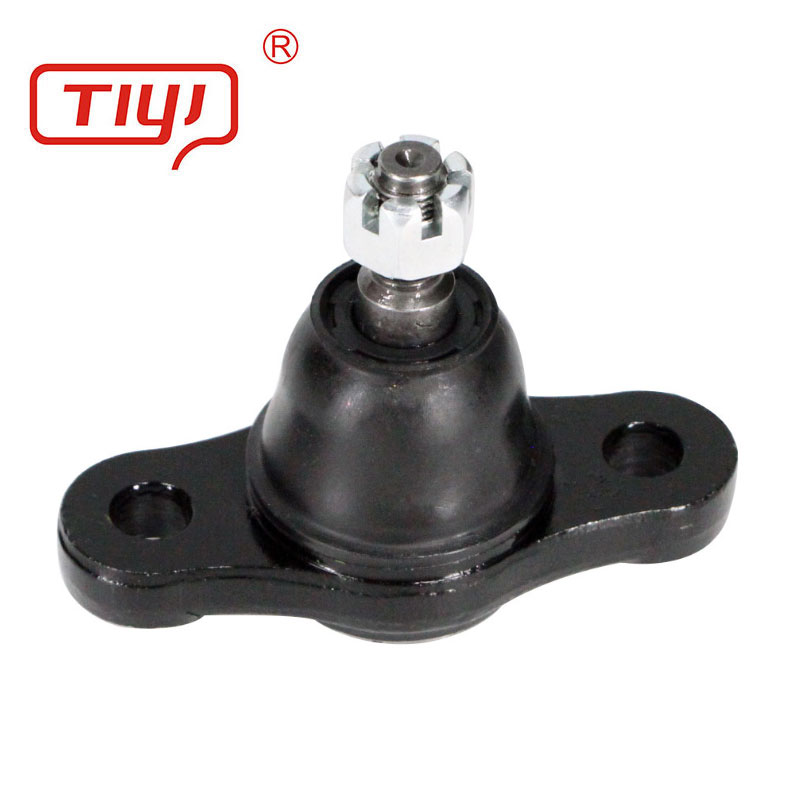
A ball joint is a spherical bearing that connects the vehicle's control arms to the steering knuckle, functioning as a pivot point that allows the suspension to move up and down while the wheels turn left and right. Inside a ball joint, a polished steel ball stud is housed within a lubricated, hardened steel or polymer socket. The ball stud is tapered and fits into a matching tapered hole in the steering knuckle or control arm, secured with a castle nut and cotter pin. This design permits multi-directional rotation and angular movement while maintaining a tight, play-free connection. Ball joints are classified as either load-bearing or follower. A load-bearing ball joint supports the vehicle's weight and is usually the larger of the two. In a double-wishbone suspension with the spring mounted on the lower control arm, the lower ball joint carries the vehicle's weight, while the upper ball joint acts as a follower that maintains alignment without bearing weight. In a MacPherson strut system, the entire weight of the front corner is transferred through the strut mount to the body, and the single lower ball joint serves primarily as a steering pivot, though it still experiences significant lateral loading during cornering. According to the MOOG Suspension Parts Technical Manual, a typical passenger car ball joint is designed to withstand axial loads exceeding 10,000 newtons (2,250 pounds-force) and must survive over 100,000 miles of service without developing play beyond the manufacturer's specified limit, which is typically 0.5 to 1.5 millimeters (0.020 to 0.060 inch) of radial movement.
How Suspension Type Determines the Number of Ball Joints
The total number of ball joints on a car is determined by the vehicle's suspension architecture, with double-wishbone systems having four front ball joints, MacPherson strut systems having two front ball joints, and multi-link and independent rear suspensions adding further joints to the rear axle. The table below breaks down the typical ball joint count for each suspension type found on common passenger vehicles.
| Suspension Type | Front Ball Joints | Rear Ball Joints | Total on Vehicle | Example Vehicles |
|---|---|---|---|---|
| Double-Wishbone (SLA) | 4 (upper and lower on each side) | 0 (if solid rear axle) or 2–4 (if independent rear) | 4–8 | Ford F-150, Honda Accord (older), many luxury SUVs |
| MacPherson Strut | 2 (lower only on each side) | 0–2 | 2–4 | Toyota Camry, Honda Civic, most compact sedans |
| Multi-Link Front Suspension | 2–4 (varies by design) | 2–6 | 4–10 | Audi A4, BMW 3 Series, Mercedes-Benz C-Class |
| Twin I-Beam (Ford Trucks) | 2 (radius arm bushing and kingpin; ball joint at steering knuckle) | 0 | 2 (or 4 depending on steering linkage) | Ford F-150 (1997–2003 2WD), Ford Ranger |
Ball Joints in Double-Wishbone Suspension Systems
Vehicles with a double-wishbone or SLA front suspension use four ball joints—two on each side—because both an upper and a lower control arm are needed to maintain camber angle throughout the wheel's vertical travel, and each control arm requires its own ball joint connection to the steering knuckle. In this design, the upper and lower ball joints form an imaginary line called the steering axis, and the angle of this axis relative to vertical is the kingpin inclination. The upper ball joint is usually smaller than the lower because it does not support the vehicle's weight; its role is purely kinematic, maintaining the correct camber and caster angles as the suspension cycles. The lower ball joint is the load-bearing component and is typically pressed into the lower control arm or bolted to it. On vehicles like the Ford F-150, the upper ball joint is integrated into an upper control arm assembly that must be replaced as a complete unit, while the lower ball joint can be pressed out and replaced separately. According to Ford's service specifications, the maximum allowable axial play in an F-150 lower ball joint is 0.8 millimeter (0.031 inch), measured with a dial indicator while the suspension is loaded. Double-wishbone systems are common on trucks, SUVs, and performance vehicles because they allow finer tuning of camber gain and roll center, but they come at the cost of more moving parts—and therefore more ball joints—to inspect and replace over the vehicle's lifetime.
Ball Joints in MacPherson Strut Suspension Systems
Cars with a MacPherson strut front suspension have only two ball joints in total—one lower ball joint on each side—because the strut body itself replaces the upper control arm and upper ball joint, and the lower control arm is typically a single L-shaped or A-shaped arm with a single ball joint at its outer end. The MacPherson strut design, patented in 1949 by Earle S. MacPherson, combines the shock absorber, coil spring, and upper steering pivot into a single assembly that bolts to the vehicle's body at the top and to the steering knuckle at the bottom. The lower control arm provides lateral and longitudinal location of the wheel, and the single lower ball joint serves as the steering pivot and the lower attachment point for the knuckle. Because the strut carries the vehicle's weight, the lower ball joint in a MacPherson system is not typically load-bearing in the vertical sense, but it must resist powerful twisting and pulling forces during acceleration, braking, and cornering. When this ball joint wears out, the symptoms include a clunking noise when driving over bumps, looseness in the steering, and uneven front tire wear, particularly feathering or cupping on the inside edge. The simplicity of the MacPherson strut system—with only two ball joints to maintain—is one of the reasons it has become the dominant front suspension design for mass-market passenger cars.
Signs That a Ball Joint Needs Replacement
Worn ball joints produce distinct symptoms including clunking or knocking noises over bumps, uneven or scalloped tire wear, a wandering steering feel, and visible play when the wheel is rocked by hand with the vehicle raised off the ground. The following checklist covers the most common indicators of a failing ball joint:
- Clunking noise from the front end: A loose ball joint produces a metallic knocking sound when the vehicle travels over potholes, speed bumps, or gravel. The noise is most noticeable at low speeds and comes from one corner of the vehicle.
- Excessive vibration through the steering wheel: As the ball joint socket wears, the suspension geometry changes, and the wheel can shimmy, particularly at highway speeds.
- Uneven front tire wear: A worn ball joint allows the camber and toe angles to vary dynamically, which scrubs the tire tread in a scalloped or cupped pattern. The wear is often concentrated on the inner or outer shoulder of the tire.
- Steering wander: The vehicle may pull to one side or drift, requiring constant steering corrections to maintain a straight line.
- Visible play during inspection: With the vehicle raised and the suspension supported, a pry bar placed under the tire can reveal looseness. On a load-bearing ball joint, the dial indicator should show radial movement below the manufacturer's specification.
Frequently Asked Questions About Ball Joints
Do cars have ball joints in the rear suspension?
Many modern vehicles with independent rear suspension have ball joints or similar spherical bearings at the rear control arms and toe links. The exact number depends on the design: a multi-link independent rear suspension may have between two and six ball joints in the rear. Vehicles with a solid rear axle typically have no rear ball joints, as the axle assembly locates the wheels through leaf springs or control arms with bushings.
How many ball joints does a 4WD truck have?
A four-wheel-drive pickup truck with a double-wishbone front suspension has four front ball joints. If the truck has a solid rear axle, there are no rear ball joints. Therefore, the total is four. If the truck has an independent rear suspension, there may be additional rear ball joints.
Can I replace just one ball joint?
Yes, a single ball joint can be replaced individually if the other components on the same axle are still within their service limits. However, because the labor to access the ball joint often involves removing or partially disassembling other suspension components, many mechanics and service manuals recommend replacing ball joints in axle pairs to ensure balanced handling and to avoid a second labor charge when the other side wears out shortly after.
Understanding how many ball joints are on a car helps demystify the suspension system and empowers vehicle owners to recognize the signs of wear before a failure occurs. The exact number depends on the suspension design, but most cars on the road today have either two or four front ball joints, with additional joints possible at the rear on vehicles with independent rear suspension. Regular inspection of these components, particularly during tire rotations and brake service, ensures that the suspension continues to provide safe, predictable handling throughout the vehicle's life.