

 English
 中文简体
中文简体
 Español
 عربى
عربى


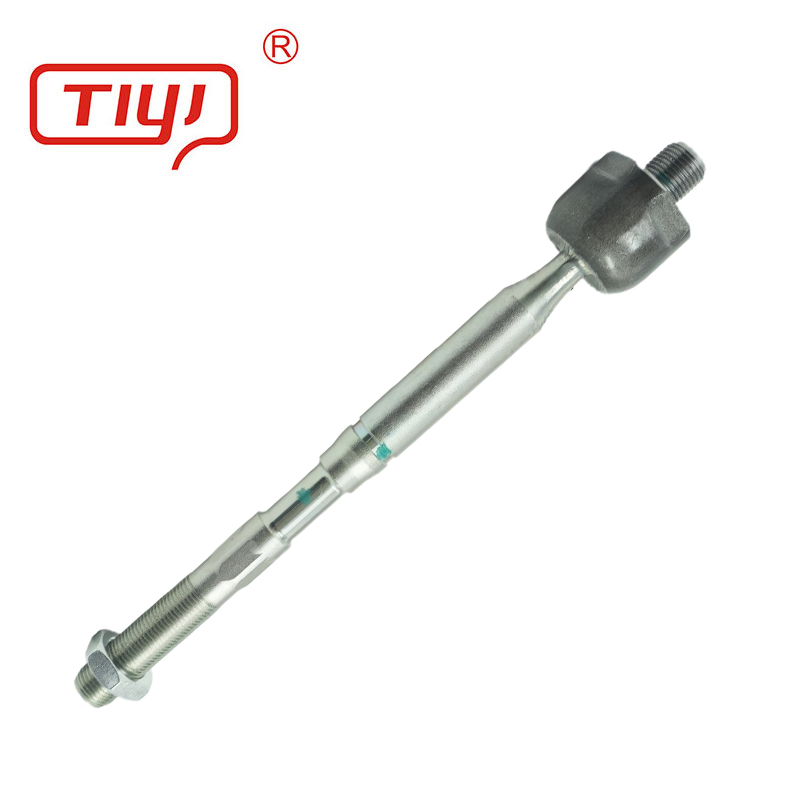
The inner tie rod connects the steering rack directly to the outer tie rod, forming the first link in the chain that turns your front wheels. On a rack-and-pinion steering system, the inner tie rod threads into the end of the steering rack, while on an older recirculating-ball system it attaches to the center link. In both layouts, its job is the same: it takes the side-to-side force generated by the steering rack and pushes or pulls it outward to the outer tie rod, which then pivots the steering knuckle and turns the wheel.
This article breaks down exactly where the inner tie rod sits in the steering system, how it differs from the outer tie rod, what it is made of, how to spot a failing one, and what replacement typically costs, using industry data from steering-parts manufacturers and repair-cost databases.
Content
- How the Inner Tie Rod Fits Into the Steering System
- Inner Tie Rod vs Outer Tie Rod: Key Differences
- What Is the Inner Tie Rod Made Of?
- Signs of a Failing Inner Tie Rod
- How Much Does Inner Tie Rod Replacement Cost?
- How Long Do Inner Tie Rods Last?
- How Inner Tie Rods Are Replaced
- Frequently Asked Questions
- Conclusion
How the Inner Tie Rod Fits Into the Steering System
The inner tie rod is the inboard connection point of the steering linkage, meaning it sits closer to the center of the vehicle than any other steering component in the assembly. When the driver turns the steering wheel, that rotational input travels down the steering column into either a steering rack or a steering gearbox, and from there into the inner tie rod.
Rack-and-Pinion Systems
Most cars, crossovers, and light trucks built since the 1980s use a rack-and-pinion steering system. In this layout, the inner tie rod threads directly into the end of the steering rack and is protected by a rubber bellows boot that keeps out dirt, water, and road debris. Turning the steering wheel rotates a pinion gear that moves the rack side to side. That lateral movement pushes one inner tie rod out and pulls the other in, which is what causes the two front wheels to turn together.
Recirculating-Ball Systems
Older trucks, SUVs, and some heavy-duty vehicles use a recirculating-ball steering gearbox instead of a rack. Here, the inner tie rod connects to the center link through a right-angle ball joint rather than threading into a rack. The center link moves back and forth as the steering box turns, and the inner tie rod transfers that motion outward in the same way it would in a rack-and-pinion setup.
Inner Tie Rod vs Outer Tie Rod: Key Differences
The inner and outer tie rods are threaded together to form one adjustable assembly, but they connect to different parts of the vehicle and wear differently. The table below compares the two side by side.
| Feature | Inner Tie Rod | Outer Tie Rod |
|---|---|---|
| Connects to | Steering rack or center link | Steering knuckle |
| Location | Inboard, hidden under the rack boot | Outboard, near the wheel |
| Joint type | Inline ball-and-socket joint | Tapered stud ball joint |
| Exposure to elements | Lower, protected by rack boot | Higher, exposed underneath the car |
| Typical wear rate | Slower | Faster |
| Replacement difficulty | Higher, requires a special tool and rack boot removal | Lower, standard tools usually sufficient |
| Role in alignment | Provides the base pivot point | Sets toe adjustment via threaded jam nut |
What Is the Inner Tie Rod Made Of?
An inner tie rod is a simple assembly of a few precision parts, but each one plays a specific role in transferring steering force reliably. The main components include:
- Rod body: A cylindrical steel shaft that extends from the steering rack outward toward the outer tie rod.
- Ball stud or ball joint: A spherical pivot point that allows the rod to move at changing angles as the suspension travels.
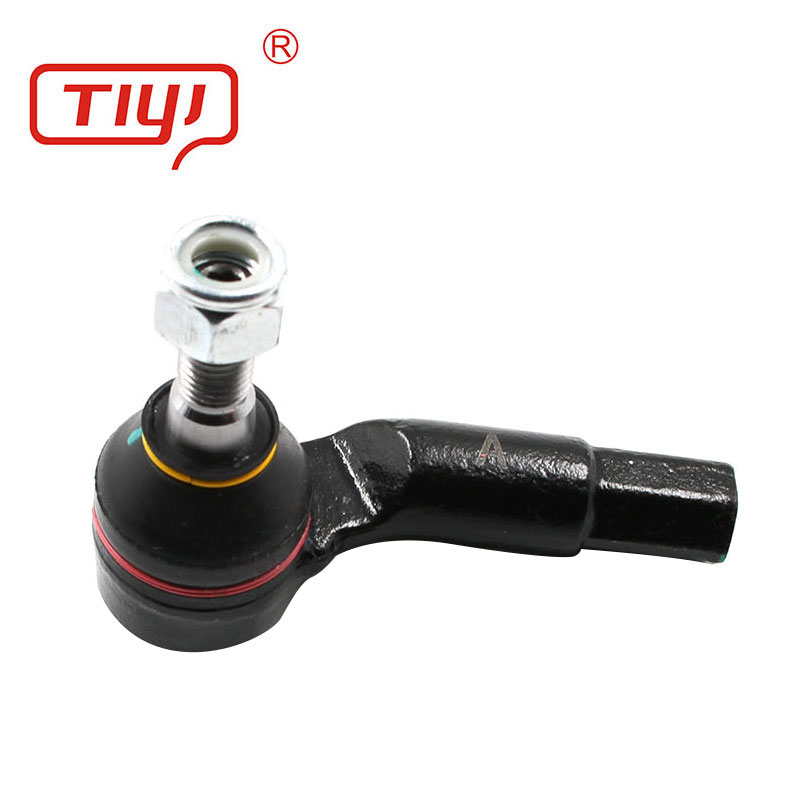
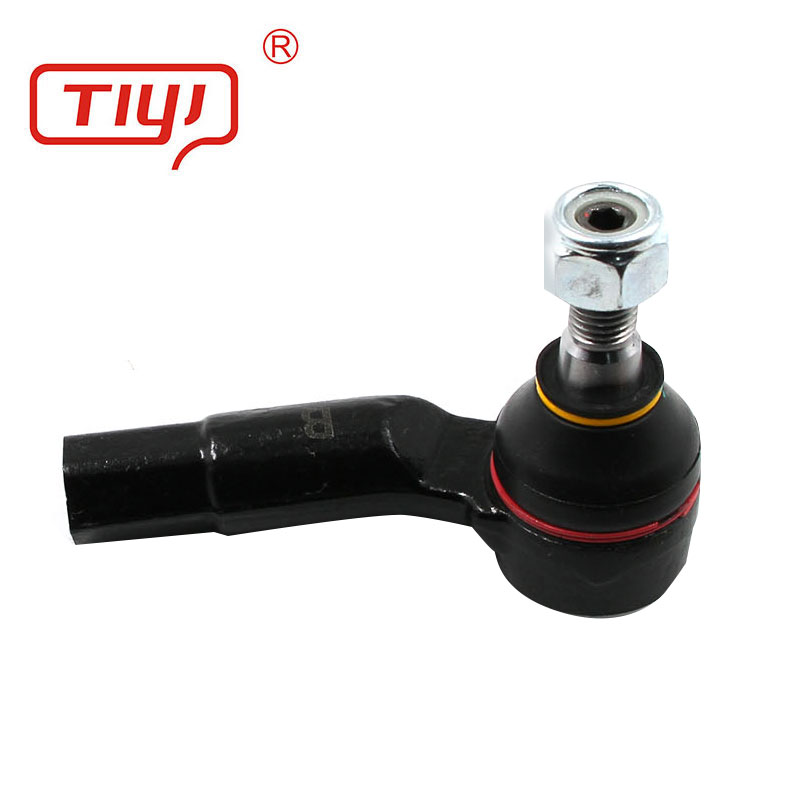
- Threaded end: The outer section that screws into the outer tie rod, allowing length and toe adjustments.
- Rack boot: A rubber bellows that seals the joint from moisture, dirt, and road grime.
- Locking nut or jam nut: Secures the threaded connection once the alignment length has been set.
Signs of a Failing Inner Tie Rod
A worn inner tie rod usually shows up as looseness or noise in the steering, because it sits deeper in the linkage than the outer tie rod and cannot be inspected visually without removing the rack boot. Watch for the following symptoms:
- Clunking or knocking noises when turning the wheel or driving over bumps.
- Loose or vague steering feel, often described as excessive play in the steering wheel.
- Uneven or premature tire wear, caused by toe misalignment as the joint develops slack.
- Steering wheel vibration, particularly at higher speeds.
- Vehicle wandering or difficulty holding a straight line without constant correction.
- Power steering fluid seepage near the rack boot on power-assisted rack-and-pinion systems.
Because the inner tie rod sits behind the rack boot, most technicians check it by grabbing the tire at the 3 and 9 o'clock positions and rocking it while a second person watches for movement at the boot. Any looseness felt there, rather than at the outer tie rod itself, usually points to the inner joint.
How Much Does Inner Tie Rod Replacement Cost?
Tie rod replacement cost depends heavily on the vehicle, but repair-estimate data shows a fairly consistent range across common models. The figures below reflect combined parts and labor averages reported by RepairPal for a single tie rod replacement.
| Vehicle | Average Total Cost | Labor Range | Parts Cost |
|---|---|---|---|
| Honda Civic | 172 to 206 USD | 72 to 106 USD | About 100 USD |
| Toyota Camry | 182 to 208 USD | 56 to 82 USD | About 126 USD |
| Nissan Altima | 185 to 214 USD | 62 to 91 USD | About 123 USD |
| Ford Explorer | 185 to 216 USD | 65 to 95 USD | About 121 USD |
| Chrysler 300 | 156 to 179 USD | 49 to 72 USD | About 107 USD |
| Overall market average | 257 to 298 USD | 88 to 130 USD | 168 to 169 USD |
Inner tie rod replacement tends to sit at the higher end of these ranges compared with outer tie rod replacement, because the job requires removing the rack boot and using a specialized inner tie rod tool to reach the threaded connection. A wheel alignment is also required after the job, which typically adds 75 to 150 USD depending on the shop and region.
How Long Do Inner Tie Rods Last?
Inner tie rods generally last 50,000 to 100,000 miles under normal daily driving conditions, and many vehicles never need one replaced during their service life. Because the joint sits behind the protective rack boot, it is shielded from most of the water and road debris that wear down the outer tie rod first. In practice, inner tie rods are most often replaced after an accident, a pothole impact, or once a badly worn outer tie rod has already been allowing excess play that hammers on the inner joint. Vehicles used for track driving, drifting, or fitted with steering angle kits see significantly shorter service intervals due to the higher lateral loads placed on the joint at extreme steering angles.
How Inner Tie Rods Are Replaced
Replacing an inner tie rod is more involved than replacing an outer tie rod because it sits deeper in the steering rack assembly. The general process follows these steps:
- Lift the vehicle and remove the front wheel to access the steering linkage.
- Detach the outer tie rod end from the steering knuckle.
- Loosen the jam nut and unscrew the outer tie rod from the inner tie rod, noting the thread position for alignment reference.
- Slide back or remove the rack boot to expose the inner tie rod joint.
- Use a specialized inner tie rod tool to unscrew the old inner tie rod from the steering rack.
- Thread in the new inner tie rod and torque it to the manufacturer's specification.
- Reinstall the rack boot, thread the outer tie rod back on, and reattach it to the knuckle.
- Complete the job with a professional wheel alignment to reset the toe setting.
Because the process involves specialty tools and directly affects vehicle safety, most repair guides recommend leaving inner tie rod replacement to a qualified technician rather than attempting it as a driveway repair.
Frequently Asked Questions
Is it safe to drive with a bad inner tie rod?
No. A failing inner tie rod can cause unpredictable steering and, in severe cases, a total loss of steering control. Any looseness, clunking, or wandering should be inspected promptly rather than driven on for an extended period.
Does a worn inner tie rod cause an alignment problem?
Yes. Since the inner tie rod is part of the toe-adjustment assembly, wear or play in the joint throws off the toe setting, which leads to uneven tire wear and a vehicle that pulls or wanders.
Can I replace just the inner tie rod without replacing the outer one?
In most cases, yes, since they are separate parts threaded together. However, if the outer tie rod has been allowing excess play, it may have already caused damage to the inner joint, so both are frequently inspected and often replaced together.
How many inner tie rods does a vehicle have?
Every vehicle with independent front steering has two inner tie rods, one for each front wheel, each connected to its own side of the steering rack or center link.
Do I need an alignment after replacing an inner tie rod?
Yes. Removing and reinstalling the inner tie rod changes the effective length of the steering linkage, so a professional wheel alignment is required afterward to restore the correct toe setting.
Conclusion
The inner tie rod connects the steering rack, or the center link on older recirculating-ball systems, to the outer tie rod, making it the innermost link in the chain that turns a vehicle's front wheels. While it typically wears more slowly than the outer tie rod because it sits behind a protective boot, a failing inner tie rod produces the same warning signs, including looseness, clunking noises, and uneven tire wear, and it carries the same safety risk if ignored. Understanding where this component connects, and what its failure looks like, makes it easier to recognize a steering problem early and get it addressed before it becomes a safety issue on the road.