

 English
 中文简体
中文简体
 Español
 عربى
عربى


A rubbing noise while driving is a continuous friction or scraping sound that usually comes from worn brakes, a failing wheel hub bearing, or a dry chassis joint. It is not normal road noise. If you hear metal rubbing metal, rubber squeaking against metal, or a rhythmic scrape that changes with speed or steering, treat it as a safety warning and diagnose it before it becomes a roadside breakdown.
Unlike a knock or a rumble, a rubbing noise typically stays fairly steady. Its most common sources are the brake system, wheel hub bearings, CV joints, suspension ball joints, control arm bushings, stabilizer links, tie rod ends, and rack ends. The sections below give the conclusion first, then explain how to confirm the cause.
Content
- What Usually Causes a Rubbing Noise While Driving?
- How Can You Tell Brake Noise from Bearing or Suspension Noise?
- Which Suspension and Steering Parts Commonly Cause Rubbing Sounds?
- What Is the Safest Way to Diagnose the Noise?
- When Should You Replace Rather Than Repair Chassis Parts?
- What Should You Look For in Replacement Chassis Parts?
- FAQ
What Usually Causes a Rubbing Noise While Driving?
Worn brake pads or rotors, a failing wheel hub bearing, a damaged CV joint, aged suspension bushings, and tire or fender liner contact are the five most common causes.
Brakes are the first suspect. When the friction material wears away, the metal backing plate touches the rotor and creates a metal-on-metal scrape. It may be worse when you press the brake pedal, or it may be constant. A failing wheel hub bearing often starts as a hum and turns into a grind. The noise rises with speed and may change when you turn left or right.
CV joints transfer power to the wheels. If the boot tears, grease escapes, dirt enters, and the balls and races wear. The result is a rhythmic rub or click on turns and under acceleration. Worn control arm bushings let the control arm shift, causing a dull rub over bumps. Tire or liner contact usually follows wheel changes, suspension work, or an accident, and it scrapes constantly when steering or carrying load.
| Cause | Sound signature | When it appears | Risk |
|---|---|---|---|
| Worn brake pads or scored rotor | Metal-on-metal grind or scrape | Braking; sometimes while rolling slowly | High |
| Failing wheel hub bearing | Hum that turns into a grind | Speed-dependent; changes when turning | High |
| Worn CV joint or axle | Rhythmic rub, click, or clunk | Turning, accelerating, or over bumps | High |
| Worn control arm bushing | Dull rub or squeak over bumps | Uneven roads, steering input | Medium |
| Worn ball joint or tie rod end | Creak, pop, or metallic rub | Steering, potholes, low-speed turns | High |
| Tire or fender liner contact | Constant scrape, often sharp | Steering, load changes, suspension travel | Medium |
The table is only a starting point. The trigger matters. If the noise appears only when braking, focus on the brake system. If it appears only on turns, suspect a CV joint or wheel bearing. If it appears only over bumps, look at the suspension and steering parts.
How Can You Tell Brake Noise from Bearing or Suspension Noise?
Use three simple actions: light braking, left and right turns, and low-speed bump tests. Brake noise changes with the pedal, bearing noise changes with speed and steering, and suspension noise changes with road surface.
- Brake noise: The scrape gets louder or softer when you press the brake pedal. If the noise disappears when braking, the pad wear indicator or dust shield may be touching.
- Wheel bearing noise: The sound gets faster and louder with speed. Turning left loads the right bearing and may increase the noise; turning right does the opposite.
- CV joint noise: A rhythmic rub or click appears on turns and is often worse under acceleration. The boot may show grease leaks or cracks.
- Suspension noise: The rub or creak appears over speed bumps and potholes. Steering may feel slightly loose because worn ball joints and bushings change alignment.
These tests do not require special tools, but they do require a safe, open space. If the noise comes with steering shake, brake pull, or uneven tire wear, stop driving and inspect the vehicle immediately.
Which Suspension and Steering Parts Commonly Cause Rubbing Sounds?
Ball joints, control arm bushings, stabilizer links, tie rod ends, and rack ends are the main chassis sources of rubbing sounds. They are wear items, and when they loosen, they change suspension geometry and reduce safety.
Ball joints and tie rod ends
Worn ball joints rub internally and creak or pop during steering and over bumps. In severe cases, wheel alignment shifts and the vehicle wanders.
A ball joint connects the control arm to the steering knuckle. When grease escapes, the ball and seat rub directly. The noise often appears at low-speed turns and may come with extra steering free play. To check, raise the vehicle and rock the wheel top to bottom. Any play suggests the ball joint is worn.
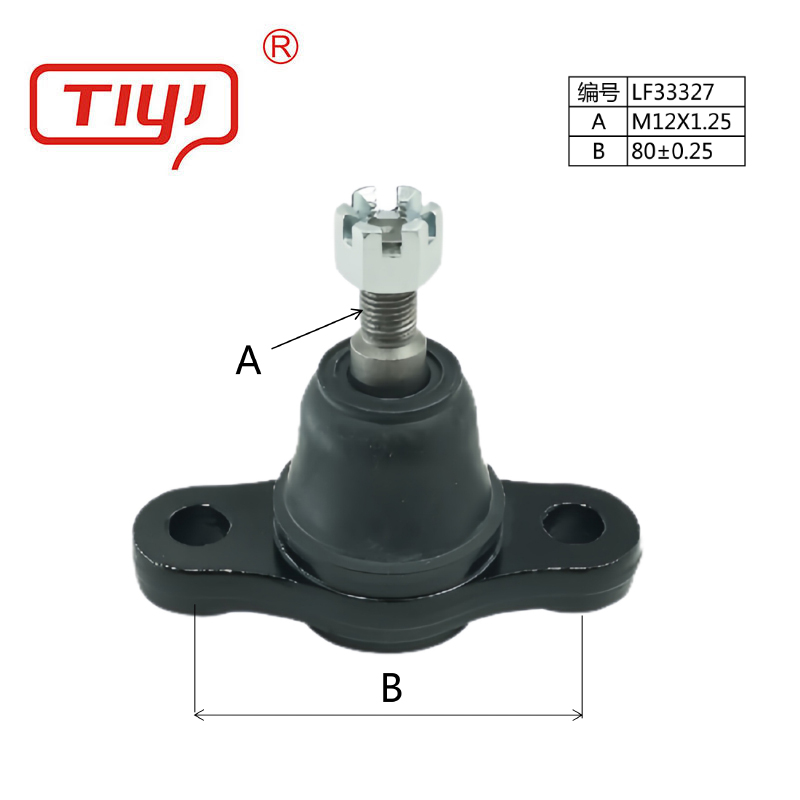 Hyundai Elantra 2000-2007 Ball Joint OEM 51760-0Q000Iron ball joint with M12×1.25 thread and 80±0.25 mm shell hole distance; restoring steering precision when low-speed turn noise and free play indicate wear.View Product →
For example, a ball joint for the Hyundai Elantra 2000-2007 with OEM 51760-0Q000 uses original-equipment materials and tolerances. Replacing a worn joint restores steering precision and removes the friction noise.
Control arm bushings
Cracked control arm bushings let the arm rub against the subframe and produce a dull rub over bumps.
Bushings isolate vibration and allow controlled arm movement. Rubber ages, oil contamination softens it, and impacts tear it. Once cracked, the control arm shifts under braking and over bumps, and metal contacts metal. This sound is usually deeper than a ball joint noise, and the steering may pull slightly.
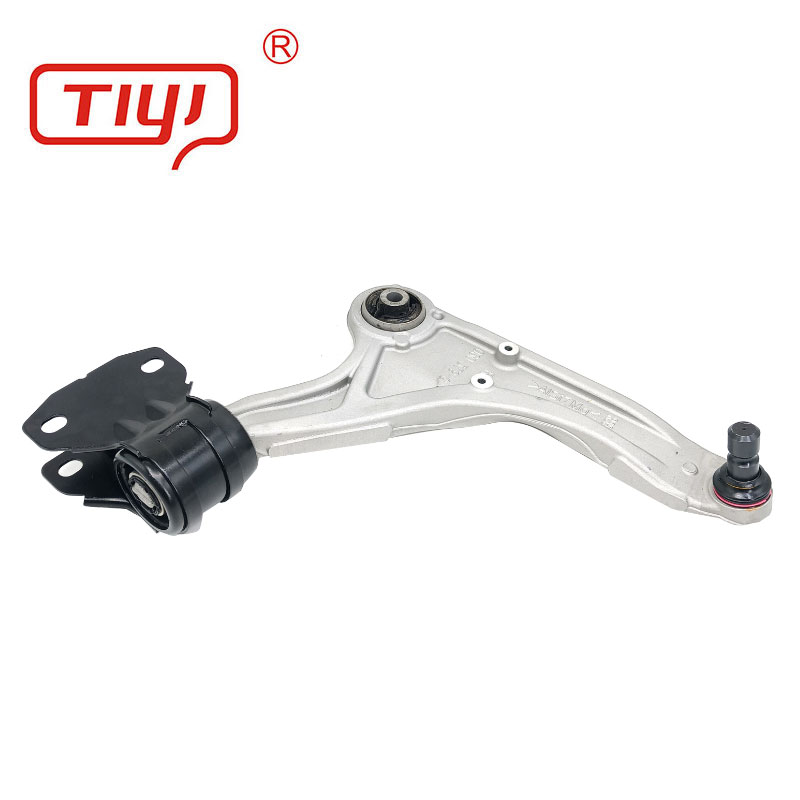 Ford Mondeo 2013-2015 Lower Control Arm DG9C3A053ANEAluminum lower control arm with included bushing and ball joint; addresses cracked-bushing symptoms like braking shift, bumps, and metal-to-metal noise.View Product →
For instance, a lower control arm for the Ford Mondeo 2013-2015 with OEM DG9C3A053ANE includes the bushing and ball joint. Replacing the complete arm is faster than pressing in a new bushing alone and keeps the geometry correct.
Rack ends and stabilizer links
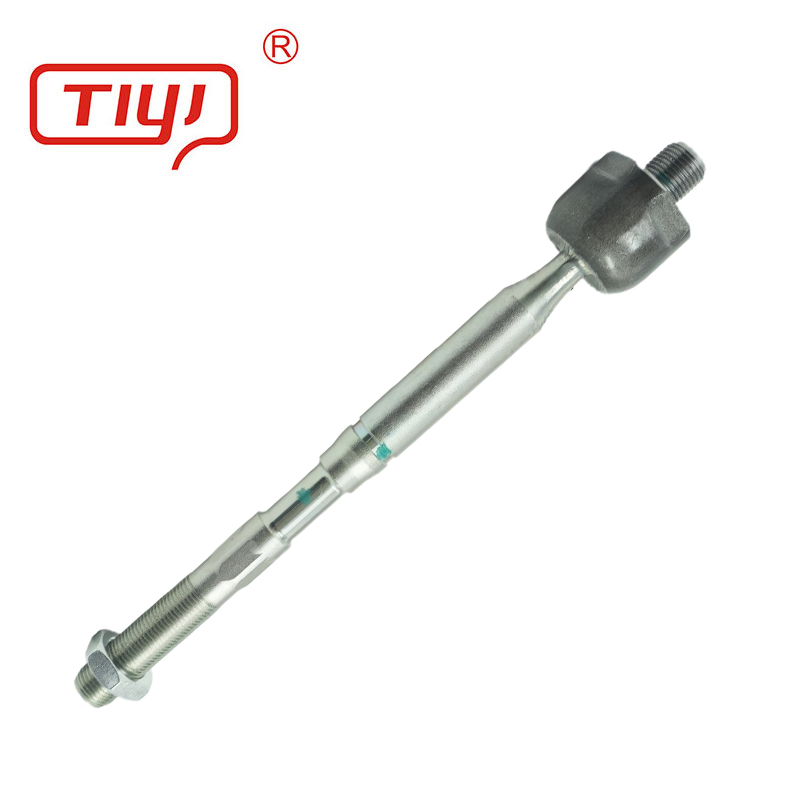
Worn rack ends and stabilizer link ball joints click or rub during steering and over bumps, and they weaken steering response.
A rack end connects the steering gear to the tie rod. When worn, it adds steering play and a metallic rub. A stabilizer link connects the bar to the control arm; its ball joints wear and click over bumps. These parts are inexpensive, but failure affects stability.
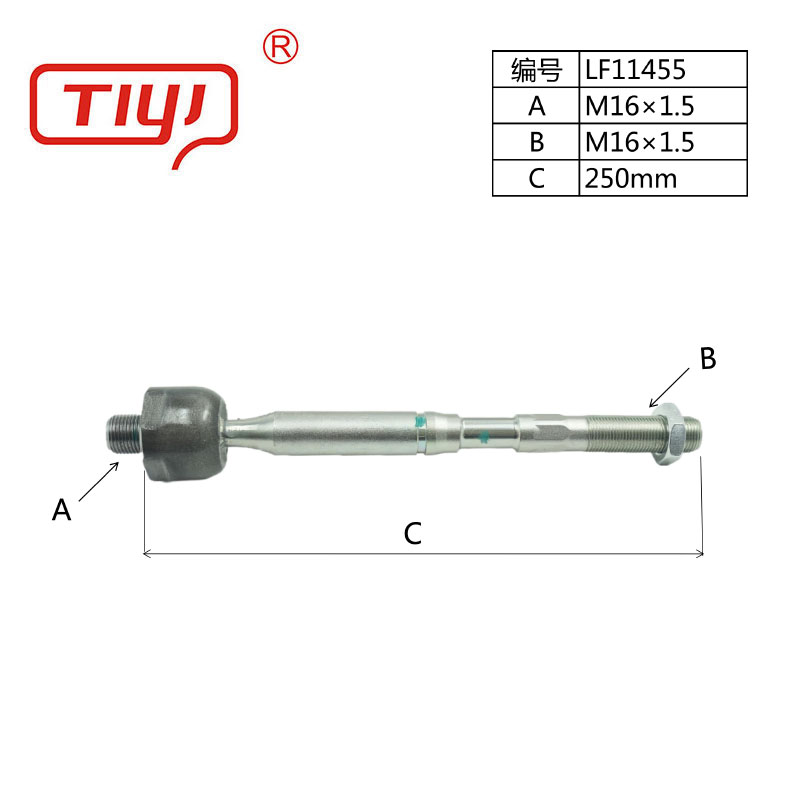 Toyota RAV4 2005-2013 Rack End OEM 45503-42030Iron rack end with M16×1.5 threads and 250 mm installation size; replacing worn unit removes steering friction and restores steering feel.View Product →
For example, a rack end for the Toyota RAV4 fourth and third generation 2005-2013 with OEM 45503-42030 is load tested. Replacing the worn part removes steering friction and restores steering feel.
What Is the Safest Way to Diagnose the Noise?
Start with low-speed dynamic tests, then raise the vehicle for a static inspection. Never lie under a car supported only by a jack.
- Low-speed straight and turn test: In an empty lot at 10-20 km/h, steer gently left and right. Note where and when the noise appears.
- Light braking: If the sound changes with brake pressure, inspect the pads, rotors, and dust shields first.
- Raise the vehicle: Use safety stands. Check tire-to-liner clearance and remove any stone trapped between the rotor and dust shield.
- Spin each wheel: Listen for a rough bearing. Rock the wheel up and down to check ball joint and hub bearing play.
- Check boots and bushings: Look for cracked CV boots, split ball joint boots, and displaced control arm bushings.
- Measure brakes: Replace pads below 3 mm and rotors with deep grooves or below minimum thickness.
If you find play, cracks, or heavy rust, do not continue at highway speed. Chassis parts often fail gradually, but the final failure can be sudden.
When Should You Replace Rather Than Repair Chassis Parts?
Ball joints, tie rod ends, wheel hub bearings, and cracked bushings have no reliable repair; they must be replaced. A stuck stone or a slightly bent dust shield can be cleaned or adjusted.
| Part | Repairable? | Replace when |
|---|---|---|
| Brake pads and rotor | Clean debris only | Pad below 3 mm; rotor below minimum thickness |
| Wheel hub bearing | No | Any play, roughness, or speed-dependent noise |
| CV joint and axle | No | Torn boot with contamination, or rhythmic noise on turns |
| Ball joint | No | Any vertical or horizontal play; torn boot |
| Control arm bushing | No | Cracks, separation, or metal-to-metal contact |
| Tie rod end or rack end | No | Loose stud, seized thread, or steering play |
Replace both sides of the same axle when possible. Left and right parts usually wear at similar rates, and replacing only one side can cause alignment drift and uneven handling. Always perform a four-wheel alignment after chassis replacement.
What Should You Look For in Replacement Chassis Parts?
Look at material, tolerances, test data, and warranty. Cheap parts often cut corners on rubber compounds, heat treatment, and ball joint seats, so the noise returns within months.
Chassis parts endure cyclic loads and road impacts. Ball joints need precise seats and high-temperature grease; bushings need aging-resistant rubber; control arms need strong stamped or forged steel. Ask whether the supplier follows OE standards, provides load test reports, and offers a clear warranty.
For example, some manufacturers test ball joints through one million gravity load cycles and bushings through 500,000 simulated rough-road cycles, while keeping customer return rates below 0.4 percent. That kind of data is more useful than a low price alone. For repair shops and parts distributors, supply stability also matters: common suspension repair parts that are often out of stock delay every job. A complete steering and suspension parts range reduces the need to buy from several sources.
During installation, use a torque wrench and follow the factory specification. The tapered seats of ball joints and tie rod ends must be clean and free of oil. Finish with a four-wheel alignment, or tires may wear unevenly and the noise may return because the geometry is wrong.
FAQ
Why does the rubbing noise stop when I turn?
It usually points to a wheel hub bearing or a brake component, because turning changes the load on that wheel. A left turn loads the right bearing and can make the noise louder; if the noise disappears, a brake pad may be lightly touching and shifting position.
Can a stone in the brake cause a rubbing noise?
Yes. A small stone trapped between the rotor and dust shield creates a sharp scrape that changes with speed. Remove the wheel and clear it out, but do not pry against the rotor with a hard tool.
Is it safe to keep driving with a rubbing noise?
No. If a brake pad is worn through or a hub bearing is failing, continued driving can lengthen stopping distance, overheat the wheel, or even let the wheel come loose. Inspect it as soon as possible.
Why is the noise worse at low speed?
At low speed, wind and road noise are lower, so the friction sound is easier to hear. Some parts, such as brake pads, also stay in more constant contact. At high speed the sound may be masked, but the danger remains.
Do I need an alignment after replacing chassis parts?
Yes. After replacing control arms, tie rod ends, rack ends, or ball joints, suspension geometry changes. A four-wheel alignment prevents uneven tire wear and steering pull.
A rubbing noise while driving is not a small issue, but it does not mean you should replace everything blindly. Narrow the source with driving tests, then raise the vehicle and check for play, cracks, and contact marks. Treat brakes and hub bearings as urgent, replace suspension and steering parts as needed, and always finish with an alignment. Used as a clue rather than an enemy, the noise can lead you to a quieter, safer drive with fewer parts and less downtime.