

 English
 中文简体
中文简体
 Español
 عربى
عربى


Yes, a failing wheel bearing causes vibration, but it usually spends weeks making noise before it starts shaking the car. The order of events matters: first a low rumble from one corner that rises and falls with road speed, then a growl you can hear with the windows up, and only later a shake that travels through the floor, the seat or the steering wheel. If you can already feel it, the bearing has typically been damaged for a while.
A wheel bearing is a sealed set of hardened steel rollers that lets the hub spin almost friction-free while carrying the weight of the vehicle. When a seal fails, water and grit get in and grease gets out, so the polished surfaces pit and spall. That roughness makes the noise; the looseness that follows makes the vibration.
Content
- How a Bad Wheel Bearing Turns Into a Vibration
- Symptoms by Stage
- Confirm It Yourself in About Fifteen Minutes
- What Else Mimics a Bad Wheel Bearing?
- Suspension and Steering Parts That Wear on the Same Schedule
- A Five-Minute Chassis Check While the Wheel Is Off
- What Happens If You Keep Driving
- The Repair: What to Expect
- Frequently Asked Questions
How a Bad Wheel Bearing Turns Into a Vibration
Two separate failures inside the bearing produce the shake: surface roughness and mechanical play.
- Roughness. Pitted races and rollers act like a washboard under load, sending a rumble up through the strut and body at a frequency that climbs with wheel speed.
- Play. Once the races wear, the hub can move a few hundredths of a millimeter in directions it was never designed to move. That tiny wobble is amplified by the tire and arrives as vibration.
The giveaway is that the vibration follows road speed, not engine speed. Coast in neutral at the speed where it shakes worst: if the vibration stays, the source sits at the wheel end — bearing, tire, rotor or steering linkage.
Symptoms by Stage
A bearing rarely collapses without warning. It moves through recognizable stages, and each one gives you a different clue.
| Stage | What you notice | Speed where it shows | What is happening inside |
|---|---|---|---|
| Early | Faint hum from one corner; disappears with the radio on | 50–80 km/h | Grease breakdown, first roughness on the races |
| Developing | Steady growl that changes when you steer left or right | 60–100 km/h | Race pitting, roller damage, measurable play |
| Advanced | Body vibration, hum audible at low speed, hub feels hot | 30 km/h and above | Clear hub movement, wheel-speed sensor gap affected |
| Critical | Wobble, vague steering, uneven tire wear | Any speed | Bearing near collapse; spindle and hub at risk |
Confirm It Yourself in About Fifteen Minutes
Start with the tires, because a balance or tread problem is far more common than a bearing, then work inward toward the hub. Chock the wheels and support the car on stands, never on a jack alone.
- Check pressures, tread and balance. Look for cupping, flat spots or a missing wheel weight. If the noise follows a tire when you swap it to another corner, the bearing is innocent.
- Drive and swerve. At 60–80 km/h, gently steer left, then right. Steering left loads the right side of the car, so a growl that gets louder on a left turn usually points to the right-hand bearing.
- Coast in neutral and brake lightly. Vibration that vanishes in neutral or appears only under braking comes from the driveline or a rotor, not the bearing.
- Rock the wheel at 12 and 6 o'clock. Movement there suggests bearing play. Movement at 9 and 3 o'clock points at the steering linkage instead.
- Spin the wheel by hand. A healthy bearing is silent and smooth; a worn one feels gritty, and on a driven axle you may hear a grind once per revolution.
- Feel the hub temperature. After a short drive, compare both sides carefully. A failing bearing runs noticeably hotter than the opposite corner.
- Scan for codes. Hubs with an integrated wheel-speed sensor often store an ABS or traction-control fault before the driver notices anything.
What Else Mimics a Bad Wheel Bearing?
Several other faults produce a vibration that owners blame on the bearing, and the pattern of the shake is what separates them.
| Possible cause | Where you feel it | Pattern | Fast check |
|---|---|---|---|
| Out-of-balance tire or wheel | Steering wheel shimmy | Strong in a narrow band, often 80–120 km/h | Re-balance and re-test |
| Cupped or scalloped tire | Floor and seat, droning | Constant, changes with road surface | Run a hand over the tread and feel the dips |
| Worn CV joint or axle | Floor, under acceleration | Only under power, clunk on full-lock turns | Inspect the rubber boot for tears |
| Warped brake rotor | Brake pedal pulsation | Only when braking | Light braking from 80 km/h |
| Worn tie rod or rack end | Steering wheel, vague steering | Shimmy plus uneven shoulder wear | Rock the tire at 9 and 3 o'clock |
| Worn control arm bushing or ball joint | Floor and steering | Clunk over bumps, shimmy under load | Rock the tire at 12 and 6, watch the arm |
| Failed engine or transmission mount | Seat and floor | Worst at idle or in gear | Rev in neutral: the vibration changes |
| Bad wheel bearing | Floor, seat, steering wheel | Follows road speed, worse when that corner is loaded | Hot hub, gritty spin, play at 12 and 6 |
Suspension and Steering Parts That Wear on the Same Schedule
A wheel bearing is not the only part at the front of a car that produces a speed-related shake, and it is rarely the only worn part. Chassis joints share the same duty cycle: they carry load, absorb shock and lose their grease over time.
Tie Rod Ends
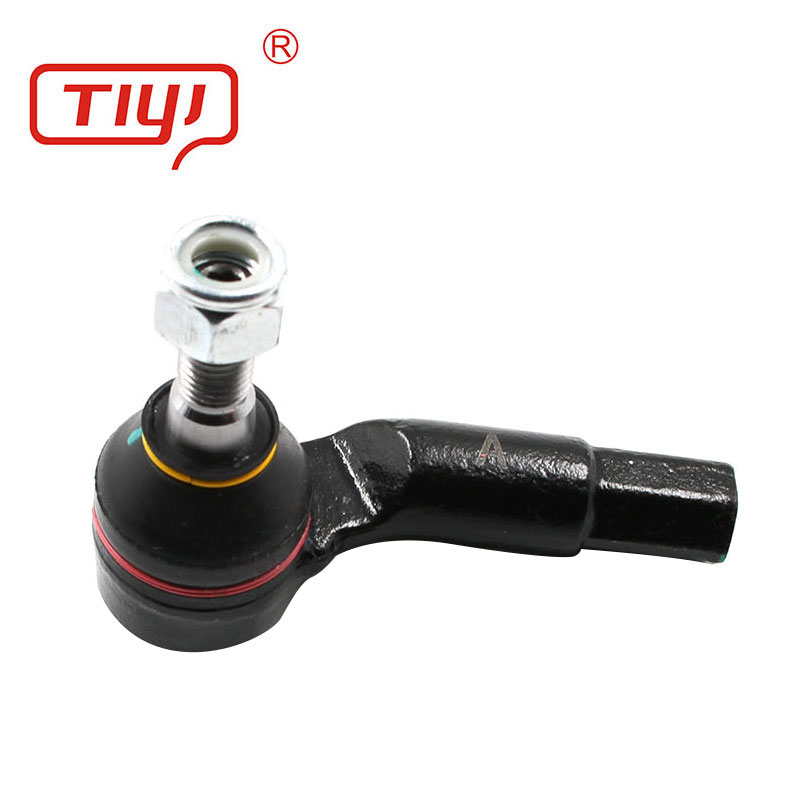
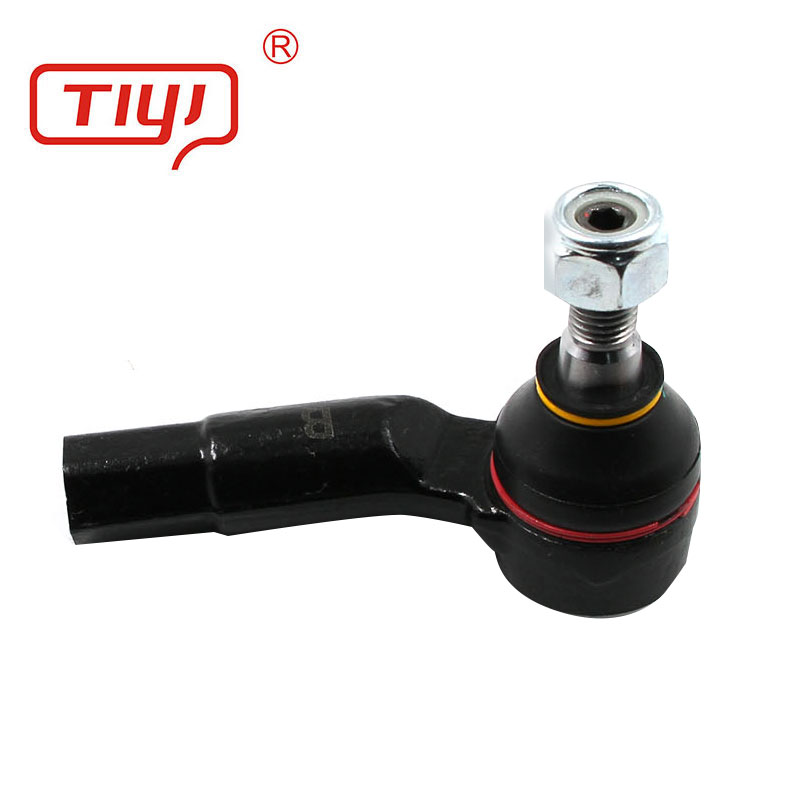
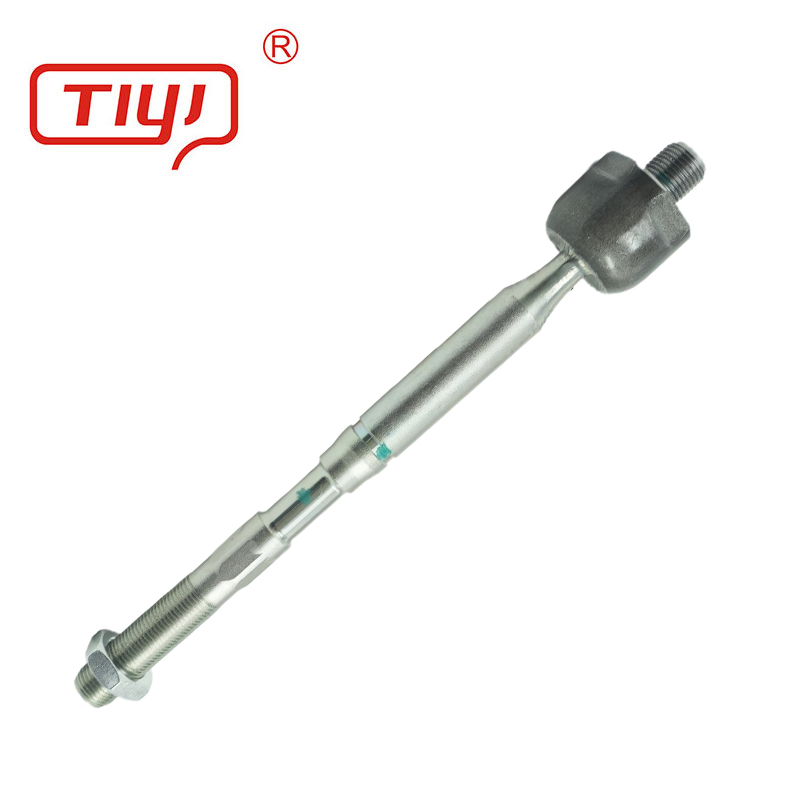
A loose tie rod end lets the wheel steer itself a fraction of a degree as you drive, which shows up as a shimmy above 80 km/h together with feathered wear on the tire shoulder. The test is the same one used for bearings, but you rock the tire at 9 and 3 o'clock instead of 12 and 6. Quality tie rod ends keep a hardened ball stud captive inside a stamped housing and are greased for life; once the boot splits, the joint is on borrowed time. Tianyu manufactures tie rod ends, rack ends and ball joints to original-equipment dimensions for a broad range of Asian, European and American models, so they install into the original knuckle and steering arm without modification.
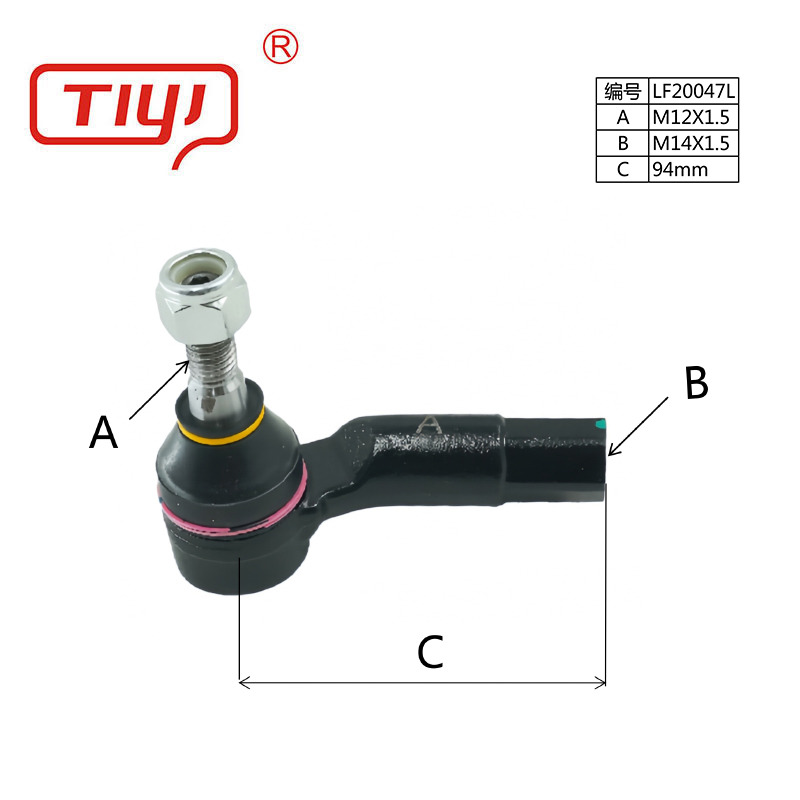 VW Group Tie Rod End for Lavida, Golf, Bora, Audi A3Replacement tie rod end matching OEM 1J0422811B, with M12×1.5 and M14×1.5 threads; suits listed VW Group applications and Tianyu LF20047L.View Product →
Control Arm Bushings and Ball Joints
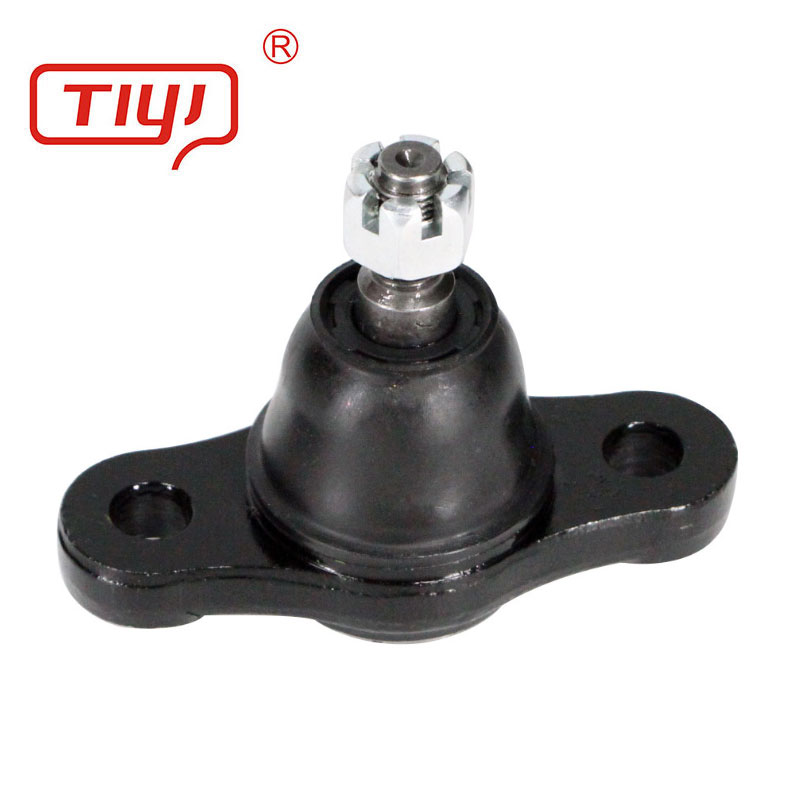
Perished control arm bushings let the arm shift under braking and cornering, so drivers report a clunk over expansion joints plus a wandering, imprecise front end. A worn ball joint adds a knock and shows the same 12-and-6 o'clock play as a bearing, which is exactly why the two are confused at the parts counter — and why replacing the wrong one rarely cures the vibration. Both components should be inspected as a pair, since the bushing usually fails before the ball stud does.
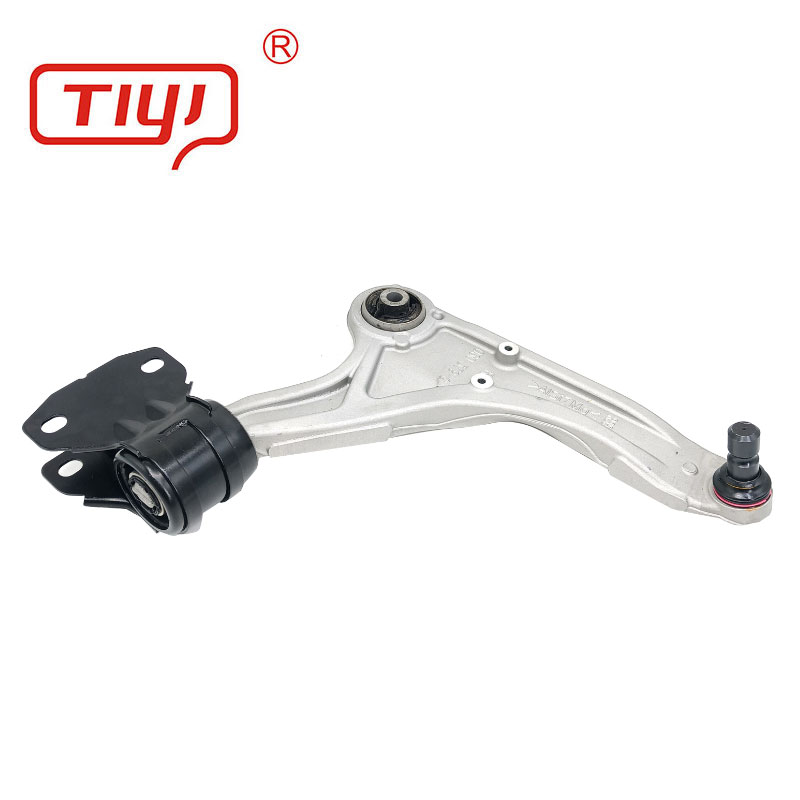 Lower Control Arm for Ford Mondeo and Lincoln MKZAluminum lower control arm, Tianyu LF60473R, with OEM references including DG9C3A053ANE; fits listed Ford Mondeo and Lincoln MKZ applications.View Product →
A Five-Minute Chassis Check While the Wheel Is Off
With the car supported on stands and the wheel removed, most vibration sources can be found by hand, without a lift or special tools.
- Pry between the control arm and the knuckle: any vertical movement means a worn ball joint.
- Try to rotate each tie rod ball stud; free play or a torn boot means the joint is finished.
- Shake the stabilizer link and listen for a rattle inside the socket.
- Look at every rubber bushing for cracks, oil swelling or separation from its sleeve.
- Check CV boots for tears and thrown grease, and the inner tire shoulder for uneven wear that points to alignment or worn steering and suspension components.
Stabilizer Links
Stabilizer links seldom cause a true high-speed vibration, but they are the most common source of the clunk heard alongside one. Because that rattle appears at the same time as a bearing growl, many owners replace the links first and the bearing second, which is why a thorough corner-by-corner inspection pays for itself.
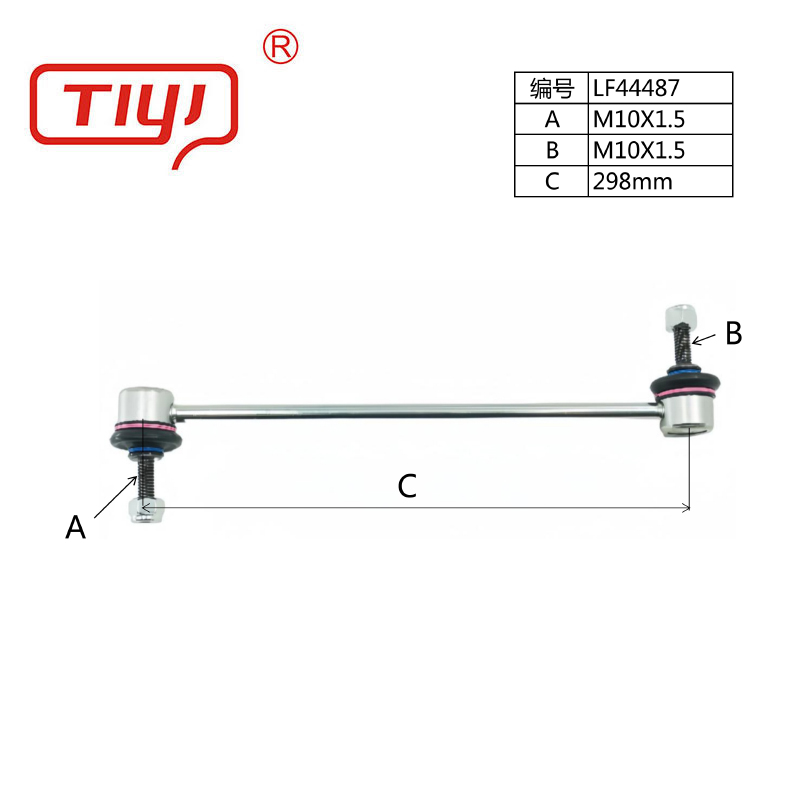 Front Stabilizer Link for Mazda 3, Ford Kuga, Lincoln MKC and Volvo XC60Iron front stabilizer link, Tianyu LF44487, with M10×1.5 threads and 298 mm center distance; fits listed Mazda, Ford, Lincoln and Volvo applications.View Product →
What Happens If You Keep Driving
A vibrating wheel bearing does not settle down; it accelerates. Four consequences show up again and again in the workshop.
- Tire damage. Hub play scrubs the tread and creates flat spots and cupping, so a noisy bearing often leads to a noisy tire.
- Sensor damage. On hubs with an integrated wheel-speed sensor, added play changes the air gap and can destroy the sensor or set ABS and traction-control codes.
- Heat damage. A dry bearing generates heat that can score the spindle, warp the rotor or damage the caliper on that corner.
- Loss of control risk. In the late stages the wheel and hub can move far enough to affect steering, and in the worst case the wheel separates. Sudden failure is uncommon, but it is possible.
The Repair: What to Expect
Most modern cars use a sealed hub assembly, so the bearing is replaced as a unit — bolt-in on many designs, press-fit on others. The difference matters to your bill.
- Press-fit bearings need a hydraulic press and the correct support adapters. Driving one in with a hammer damages the races before the car turns a wheel.
- The axle nut is usually single-use. Torque it to the manufacturer's figure with a torque wrench. Too little and the bearing loses preload; too much and it is crushed on installation.
- Cleanliness and seals decide how long the new bearing lasts. Keep grit out during assembly and renew the seal where the design calls for it.
- Alignment should be checked after any tie rod, control arm or knuckle work, otherwise the new part inherits the old tire wear.
For workshops and distributors, matching supply matters as much as the part: Tianyu builds ball joints, control arms, tie rod ends, rack ends, stabilizer links and bushings across two plants totaling 60,000 square meters, holds more than 2 million pieces in stock, accepts orders from a single carton and ships in 7 to 10 days — useful when one repair turns into a front-end rebuild.
Frequently Asked Questions
Can a bad wheel bearing cause vibration at only certain speeds?
Yes. Early on it appears in a band, often 50–80 km/h, and fades above or below it. As wear spreads, the vibration follows you across the whole speed range.
Will a bad wheel bearing set a dashboard warning light?
Not by itself — most bearings have no electrical connection. Hubs with integrated wheel-speed sensors can set ABS, traction or stability codes once play changes the sensor gap.
How long can I drive with a vibrating wheel bearing?
Days, not months. Once the vibration is constant, the bearing runs hot and play grows quickly; a failed bearing can damage the spindle or hub and turn a small job into a large one.
How do I tell which bearing is bad?
Use steering load. Steering left puts weight on the right side, so a growl that louden on a left turn usually means the right-hand bearing. Front bearings are also felt through the steering wheel; rear ones come through the seat and floor.
Vibration from a bad wheel bearing is real, predictable and easy to confirm once you know what to look for: a rumble that rises with road speed, a shake that follows the load, and a hub that runs hotter than the other three. Test the tires and the linkage first with a jack and a pry bar, and the bearing will make its own case.