

 English
 中文简体
中文简体
 Español
 عربى
عربى


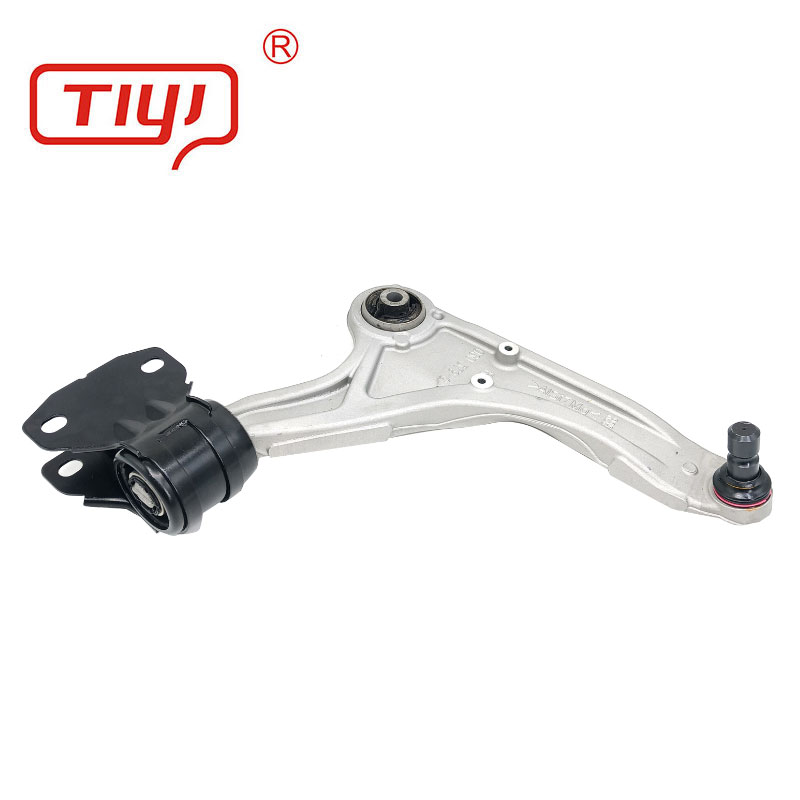
The lower ball joint serves as the pivot point that connects the vehicle's lower control arm to the steering knuckle. It enables the front wheels to turn left and right for steering while simultaneously allowing the suspension to travel up and down as the vehicle encounters bumps and road irregularities. Without a functional lower ball joint, the wheel assembly loses its anchored connection to the chassis, making controlled steering and stable suspension movement impossible. This component handles both vertical load-bearing forces and lateral steering forces every moment the vehicle is in motion.
Simplified front suspension diagram illustrating the lower ball joint as the critical pivot between the lower control arm and the steering knuckle
Content
- What Exactly Is a Lower Ball Joint?
- What Does the Lower Ball Joint Do? Core Functions Explained
- Signs and Symptoms of a Failing Lower Ball Joint
- What Causes Lower Ball Joint Failure?
- Lower Ball Joint vs. Upper Ball Joint: Key Differences
- Lower Ball Joint Replacement: Cost and Process
- Can You Drive with a Bad Lower Ball Joint?
- How to Inspect a Lower Ball Joint
- Frequently Asked Questions
- How long does a lower ball joint last?
- Can a lower ball joint be repaired, or must it be replaced?
- Do I need an alignment after replacing a lower ball joint?
- Should lower ball joints be replaced in pairs?
- What is the difference between a press-in and bolt-in ball joint?
- How can I tell if a noise is from the ball joint or another suspension component?
- Conclusion: The Lower Ball Joint as a Safety-Critical Component
What Exactly Is a Lower Ball Joint?
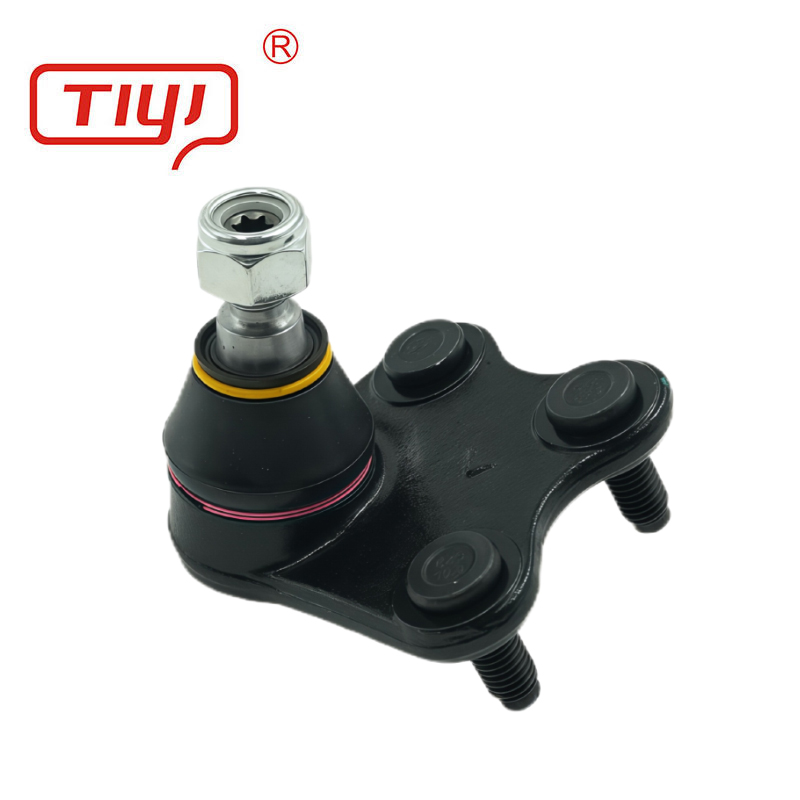
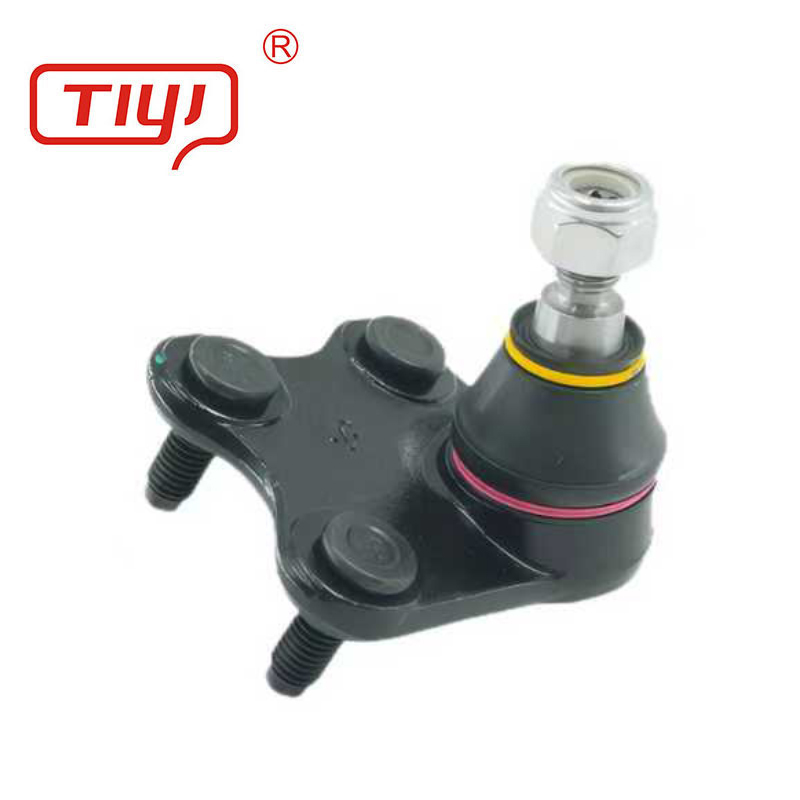
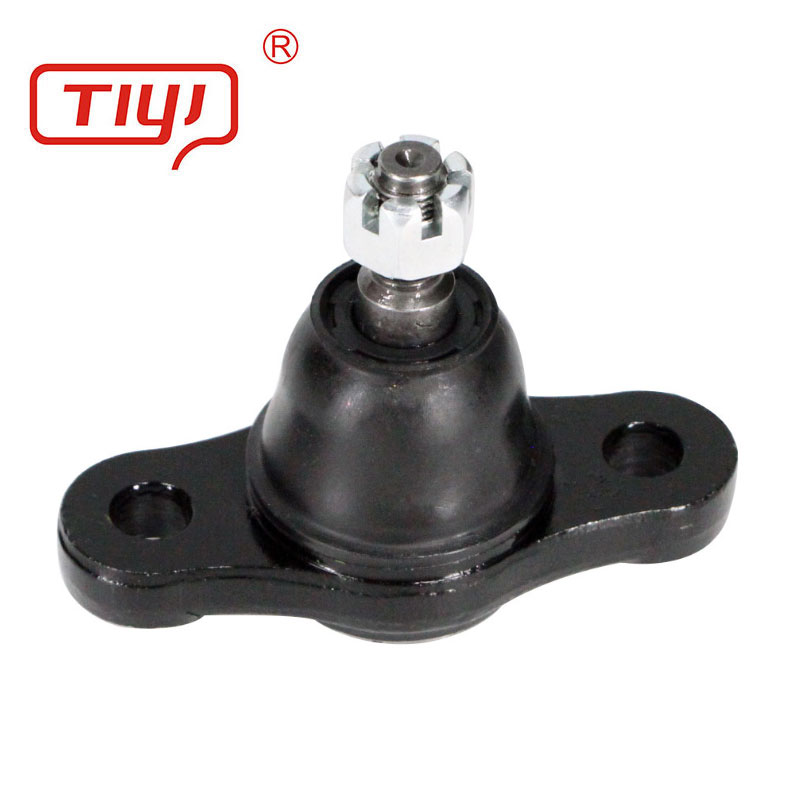
A lower ball joint is a load-bearing spherical bearing housed in a metal socket, designed to connect the lower control arm of a vehicle's suspension to the steering knuckle. It functions as a ball-and-socket joint, analogous to the human hip or shoulder joint, permitting multi-directional rotational movement while maintaining a fixed structural connection. The component consists of a hardened steel ball stud that fits into a lubricated, precisely machined socket, encased in a sealed housing to prevent contamination from dirt, water, and road debris.
In most front suspension designs, the lower ball joint is classified as a load-carrying joint, meaning it bears the weight of the vehicle's front end. This distinguishes it from follower-type ball joints that primarily serve as pivot guides. According to data from the National Highway Traffic Safety Administration, suspension system failures—including ball joint deterioration—contribute to approximately 3% of all vehicle-related mechanical failure incidents annually, underscoring the importance of this component in overall vehicle safety.
What Does the Lower Ball Joint Do? Core Functions Explained
The lower ball joint performs three essential mechanical functions simultaneously: it acts as a structural load-bearing anchor, a precision steering pivot, and a suspension articulation enabler. Each of these functions is critical to safe vehicle operation, and degradation in any one area compromises the entire front-end assembly.
Load-Bearing and Weight Distribution
The lower ball joint directly supports the vehicle's front-end weight. In a typical passenger sedan weighing approximately 3,300 pounds, the front axle carries around 1,800 to 2,000 pounds of static load. This weight is transferred from the chassis through the coil spring or torsion bar, into the lower control arm, and ultimately through the lower ball joint into the steering knuckle and wheel assembly. During dynamic loading—such as cornering at 0.7 g of lateral acceleration—the effective load on the outer front ball joint can spike to nearly 2.5 times the static weight, momentarily exceeding 2,500 pounds of force on a single joint. The ball joint's hardened steel construction, typically rated to withstand tensile strengths above 150,000 psi, is engineered specifically for these demanding conditions.
Steering Pivot Function
When the driver rotates the steering wheel, the steering rack translates rotational input into linear motion that pushes or pulls the tie rods. This force acts upon the steering knuckle, causing it to rotate around an imaginary axis known as the steering axis or kingpin axis. The lower ball joint, in conjunction with the upper ball joint or strut mount, defines this axis. The ball stud inside the joint rotates smoothly within its socket, allowing the knuckle to pivot left and right with minimal friction. A properly functioning ball joint permits steering angle changes of up to 35 to 40 degrees in either direction on most passenger vehicles, with rotational resistance typically below 2 N·m when new.
Suspension Articulation and Wheel Alignment Stability
As the vehicle traverses uneven road surfaces, the suspension must compress and rebound continuously. The lower ball joint enables the lower control arm to swing through its arc of travel—typically 4 to 8 inches on standard passenger vehicles and up to 12 inches on trucks and SUVs—while keeping the steering knuckle correctly positioned. This articulation must occur without introducing unwanted changes to camber, caster, or toe alignment angles. High-quality ball joints maintain positional accuracy within 0.5 millimeters of radial play when new, and industry standards generally consider radial play exceeding 2.0 millimeters as a sign of excessive wear requiring replacement.
Clunking or Knocking Noises
A worn ball joint produces a distinct metallic clunking sound when driving over bumps, potholes, or speed bumps. The noise originates from excessive clearance between the ball stud and its socket, allowing metal-on-metal impact. This sound is most noticeable at low speeds of 5 to 25 mph and often emanates from one specific corner of the vehicle.
Uneven or Accelerated Tire Wear
A failing lower ball joint alters the wheel's camber and toe alignment dynamically as the suspension moves. This causes the inner or outer edges of the front tires to wear at an accelerated rate compared to the center tread. Tire wear patterns may appear scalloped or feathered, and a single tire can lose up to 30% of its service life due to unresolved alignment shifts.
Steering Wander and Vagueness
Excessive play in the ball joint reduces the precision of steering inputs. Drivers may notice the vehicle wandering or drifting on straight roads, requiring constant small corrections. The steering wheel may feel loose or unresponsive in the center position, with a dead zone of 5 to 10 degrees where no meaningful directional change occurs.
Visible Grease Leakage
A torn or compromised ball joint boot allows lubricating grease to escape and contaminants to enter. Visual inspection may reveal dark grease residue around the boot area or on nearby suspension components. Once the boot fails, joint wear accelerates rapidly due to abrasive particle ingress and lubricant loss.
Front-End Vibration
As ball joint wear progresses, the increased clearance can transmit road vibrations directly into the chassis and steering column. Vibrations are typically felt through the steering wheel and floorboard, becoming more pronounced at highway speeds between 55 and 75 mph. This differs from tire balance vibrations, which usually peak at specific speed ranges.
Visible Wheel Camber Change
A severely worn lower ball joint may cause the affected wheel to exhibit visible negative camber—the top of the tire tilting inward toward the vehicle. This is observable when viewing the vehicle from the front or rear. The change occurs because the lower pivot point has shifted outward due to internal joint wear.
Signs and Symptoms of a Failing Lower Ball Joint
Recognizing the early warning signs of a deteriorating lower ball joint can prevent catastrophic suspension failure and costly collateral damage. The six most common indicators are detailed below, arranged from earliest to most severe presentation.
Progression of Symptoms Over Time
Ball joint wear follows a predictable progression. Initially, minor grease seepage and slight increased clearances produce subtle noises and mild alignment drift. As wear advances to the intermediate stage—typically after an additional 5,000 to 10,000 miles of driving with a compromised boot—the clunking becomes unmistakable and tire wear patterns intensify. At the advanced stage, the ball stud can separate from the socket entirely, resulting in complete loss of vehicle control. Industry data suggests that a ball joint with a torn boot can progress from initial wear to critical failure within 15,000 miles under normal driving conditions, and significantly faster in regions with rough roads or extreme climates.
What Causes Lower Ball Joint Failure?
Ball joint failure rarely occurs without identifiable contributing factors. The most common causes include boot deterioration, lubricant degradation, impact damage, and material fatigue, each operating through distinct mechanisms.
- Boot rupture and contamination ingress: The rubber or polyurethane boot that seals the ball joint is vulnerable to cracking from ozone exposure, UV radiation, and extreme temperature cycling. Once a tear develops—even as small as 2 to 3 millimeters—road grit, water, and salt can enter the joint. These abrasive particles score the polished ball stud surface and accelerate socket wear by a factor of 10 or more compared to a sealed joint.
- Lubricant breakdown and washout: The grease inside a ball joint is formulated to withstand extreme pressure and maintain film strength under high shear conditions. When the boot fails, water ingress emulsifies the grease, reducing its load-carrying capacity. Additionally, heat generated during normal operation—which can reach internal joint temperatures of 150 to 200 degrees Fahrenheit—causes gradual oxidation of the lubricant over tens of thousands of miles.
- Impact and shock loading: Striking deep potholes at speed or impacting curbs during parking maneuvers can impart instantaneous forces exceeding 5,000 pounds on the ball joint assembly. While ball joints are designed with safety margins to absorb occasional impacts, repeated shock loading causes microscopic deformation of the socket, progressively increasing internal clearance.
- Material fatigue and corrosion: After 80,000 to 120,000 miles of service, the hardened steel components within the ball joint experience cumulative fatigue from millions of load cycles. In regions where road salt is used for winter de-icing, corrosion can attack the ball joint housing from the outside, weakening the structural integrity of the metal and accelerating fatigue crack propagation.
- Manufacturing defects and substandard materials: Lower-quality aftermarket ball joints may use inferior steel alloys, inadequate heat treatment, or thinner housing walls compared to OEM specifications. Studies of failed aftermarket units have shown hardness values 15 to 20 Rockwell C points below OEM equivalents, correlating directly with reduced service life.
Lower Ball Joint vs. Upper Ball Joint: Key Differences
Not all ball joints serve the same purpose within a suspension system. The lower ball joint and upper ball joint differ in their load responsibilities, wear patterns, and replacement implications. Understanding these distinctions is essential for accurate diagnosis and appropriate repair planning.
| Characteristic | Lower Ball Joint | Upper Ball Joint |
|---|---|---|
| Load Type | Load-carrying (bears vehicle weight) | Follower-type (guidance only in most designs) |
| Typical Service Load | 1,800 to 2,500+ lbs static per side | 300 to 800 lbs (primarily lateral forces) |
| Wear Rate | Higher—faster wear due to constant loading | Lower—reduced load exposure |
| Failure Consequence | Catastrophic—wheel separation possible | Serious—alignment loss, but wheel typically retained |
| Replacement Cost (per side) | $180 to $450 (parts and labor) | $150 to $350 (parts and labor) |
| Service Interval (Typical) | 70,000 to 120,000 miles | 90,000 to 150,000 miles |
Comparison of lower and upper ball joint characteristics across key performance and service metrics. Data reflects typical values for passenger vehicles and light trucks; actual figures vary by make, model, and driving conditions.
Lower Ball Joint Replacement: Cost and Process
Replacing a lower ball joint is a moderately involved repair that requires mechanical competence, specialized tools, and careful attention to torque specifications. The total cost varies based on vehicle design, parts quality, and labor rates.
Parts Cost Breakdown
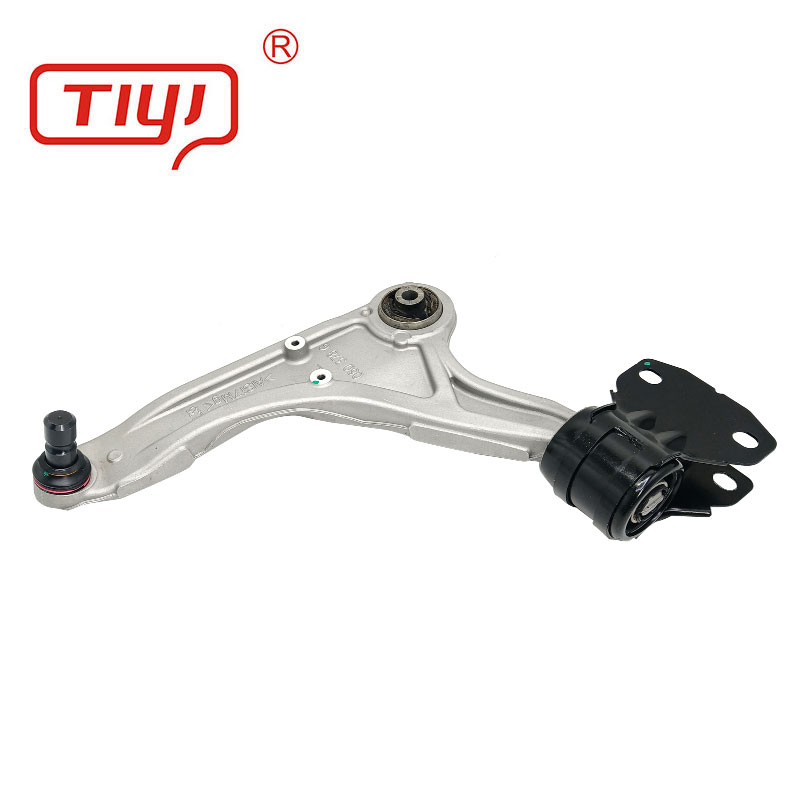
Individual lower ball joints range from $25 to $60 for budget aftermarket options, $60 to $120 for mid-grade replacements meeting OEM specifications, and $120 to $200 for premium or OEM-branded components. Vehicles where the ball joint is integrated into the control arm assembly—common in many modern designs—require replacement of the entire control arm, increasing parts cost to $150 to $400 per side. Labor charges typically range from $150 to $300 per side depending on shop rates and the complexity of the specific vehicle. The complete job, including both parts and labor, generally falls between $180 and $450 per side for standard configurations.
Key Replacement Steps
- Vehicle preparation and safety: The vehicle must be securely raised on jack stands with the front wheels removed. Never rely solely on a hydraulic jack for support during suspension work.
- Removal of the old ball joint: This involves disconnecting the ball joint from the steering knuckle using a ball joint separator tool or pickle fork. For press-fit ball joints, a hydraulic press or ball joint press tool is required to remove the old unit from the control arm. Bolted ball joints are simpler, requiring only fastener removal.
- Installation of the new ball joint: The new component must be pressed or bolted into place following the exact procedure specified by the manufacturer. Press-fit installations require careful alignment to prevent damage to the control arm bore or the new ball joint housing.
- Torque verification: All fasteners must be tightened to the vehicle manufacturer's specified torque values, typically ranging from 50 to 120 ft-lbs depending on the application. Under-torquing risks joint separation; over-torquing can cause thread stripping or component fracture.
- Post-installation alignment: After ball joint replacement, a professional four-wheel alignment is mandatory. The new joint alters the suspension geometry slightly, and without alignment correction, accelerated tire wear and compromised handling will result. Alignment costs range from $80 to $120 at most shops.
Can You Drive with a Bad Lower Ball Joint?
Operating a vehicle with a known faulty lower ball joint carries extreme risk. The ball stud can separate from its socket without warning, causing the affected wheel to collapse outward or inward. When this occurs at road speed, the driver loses all directional control, and the vehicle typically swerves violently toward the side of the failure. According to NHTSA crash data, suspension separation events—including ball joint failures—result in a collision rate exceeding 60% when they occur at speeds above 35 mph.
Even before catastrophic separation, a worn ball joint compromises braking stability. During hard braking, the affected wheel can shift unpredictably, altering the vehicle's tracking and increasing stopping distances by up to 15% in severe cases. For these reasons, any vehicle exhibiting confirmed ball joint symptoms should be taken out of service immediately until repairs are completed. The financial cost of a tow truck—typically $75 to $150—pales in comparison to the potential consequences of a high-speed suspension failure.
How to Inspect a Lower Ball Joint
A thorough inspection of the lower ball joint requires the vehicle to be safely raised with the suspension unloaded—meaning the weight of the vehicle must not be resting on the wheels. The two primary inspection methods are visual examination and physical play testing.
Visual inspection begins with examining the rubber boot for cracks, tears, or grease leakage. Any visible damage to the boot mandates replacement of the entire ball joint, as contamination has almost certainly entered the joint. Next, observe the ball joint housing for signs of rust jacking or deformation. On vehicles with wear indicators—small raised bumps on the ball joint housing—check whether the indicator has receded flush with the housing surface, signaling that maximum allowable wear has been reached.
Physical play testing involves using a pry bar placed under the tire to apply vertical force while observing the ball joint for movement. Any perceptible vertical or horizontal play beyond the manufacturer's specification—commonly 0.5 to 2.0 millimeters depending on the design—indicates the joint should be replaced. On some vehicles, the manufacturer specifies that zero perceptible play is acceptable. A dial indicator provides the most precise measurement, and professional inspection services typically charge $50 to $80 for a comprehensive suspension evaluation including ball joint assessment.
Frequently Asked Questions
How long does a lower ball joint last?
A lower ball joint typically lasts between 70,000 and 120,000 miles under normal driving conditions. Vehicles operated primarily on smooth highways may see service lives approaching 150,000 miles, while those driven on rough, unpaved, or pothole-ridden roads may require replacement as early as 50,000 miles. Regular inspection at 30,000-mile intervals is recommended to catch early signs of wear before they progress to dangerous levels.
Can a lower ball joint be repaired, or must it be replaced?
A worn lower ball joint cannot be repaired and must be replaced. The internal bearing surfaces are precision-machined at the factory and cannot be restored once wear has occurred. Some older vehicles were equipped with greaseable ball joints that allowed periodic lubrication to extend service life, but this maintenance practice only delays wear—it does not reverse existing damage. Once radial or axial play exceeds the manufacturer's specification, complete replacement is the only safe course of action.
Do I need an alignment after replacing a lower ball joint?
Yes, a professional wheel alignment is absolutely required after replacing any lower ball joint. The replacement process disturbs the suspension geometry, and even minor positional differences between the old and new components can alter camber and toe settings. Driving without a post-replacement alignment will cause rapid and uneven tire wear, potentially destroying a set of tires within a few thousand miles. Alignment should be performed by a shop with calibrated equipment, at a typical cost of $80 to $120.
Should lower ball joints be replaced in pairs?
While it is not mechanically mandatory to replace both lower ball joints simultaneously, doing so is strongly recommended. Both joints have experienced identical service conditions and mileage, so if one has worn to the point of requiring replacement, the other is likely approaching a similar state. Replacing both joints in a single service visit saves on duplicate labor and alignment costs. The incremental parts cost of replacing the second joint—typically $25 to $200—is modest compared to the $150 to $300 in labor and alignment expenses that would be incurred separately.
What is the difference between a press-in and bolt-in ball joint?
A press-in lower ball joint is friction-fitted into the control arm using an interference fit, requiring a hydraulic or mechanical press for installation and removal. A bolt-in ball joint attaches to the control arm using threaded fasteners and can be replaced with standard hand tools. Press-in designs are more common in older vehicles and heavy-duty applications, while bolt-in designs are increasingly prevalent in modern vehicles due to easier serviceability. Press-in replacements demand greater technical skill and specialized equipment, often adding $50 to $100 in labor compared to bolt-in alternatives.
How can I tell if a noise is from the ball joint or another suspension component?
Ball joint noise is typically a deeper, heavier-sounding clunk compared to the lighter rattling of worn sway bar links or tie rod ends. The noise occurs specifically when the suspension compresses or rebounds—such as over speed bumps or dips—rather than during steering maneuvers alone. A professional diagnosis using a chassis ear system, which places microphones on individual suspension components, can isolate the noise source with high accuracy. Many repair shops offer this diagnostic service for $40 to $60.
Conclusion: The Lower Ball Joint as a Safety-Critical Component
The lower ball joint is far more than a simple mechanical connector. It is a precision-engineered safety component that simultaneously manages vertical weight loads, facilitates steering rotation, and enables suspension articulation—all while operating in an environment filled with dirt, water, salt, and constant shock loading. Its failure is not gradual in consequence; when a lower ball joint separates, the results can be devastating. Regular inspection, prompt attention to early symptoms, and replacement with quality components are essential practices for every vehicle owner. The data is clear: the cost of proactive replacement—typically $180 to $450 per side—is negligible when weighed against the potential human and financial toll of a ball joint failure at highway speeds.