

 English
 中文简体
中文简体
 Español
 عربى
عربى

Cracked Lower Control Arm? Severity, Risks & Replacement Guide
 Administrator
 2026-08-07
Content
- That Crack Under Your Car Needs Attention
- What Exactly Is a Control Arm and Why Does It Crack?
- How Serious Is a Cracked Lower Control Arm? A Severity Scale
- Symptoms That Your Cracked Control Arm Has Become Dangerous
- Can You Keep Driving? When Replacement Is Mandatory
- How Much Does Control Arm Replacement Cost and How Long Does It Take?
- How to Choose a Replacement Lower Control Arm That Won't Crack Again
- Conclusion: Don't Wait for the Crack to Become a Break
That Crack Under Your Car Needs Attention
You found a crack on your lower control arm, either because a mechanic pointed it out during an oil change or because you were investigating a knock from the front suspension. The first question is always the same: can I keep driving, and how urgent is this really?
The honest answer is that it depends. A shallow surface crack in a rubber bushing and a structural crack in the metal arm are two completely different problems with different timelines. As a manufacturer with 28 years of experience building control arms and suspension components, we have inspected thousands of failed suspension arms. This guide shows you how to tell the difference, judge the severity, and know exactly when replacement is mandatory.
What Exactly Is a Control Arm and Why Does It Crack?
The lower control arm connects the wheel assembly to the vehicle frame or subframe. It keeps the wheel correctly positioned while allowing controlled vertical movement over bumps, and every road impact or braking event transfers force through two connection points: the rubber bushing on the frame side and the ball joint on the wheel side.
When people search for a "cracked lower control arm," they usually have one of three things: a crack in the metal arm, a crack near a weld, or cracks in the rubber bushing. The causes differ too:
- Repeated road impact — deep potholes, curb strikes, or speed bumps taken too fast overload the arm beyond its design limits.
- Accident damage — even a minor collision can leave a hairline crack that only becomes visible months later.
- Material fatigue — every mile bends the arm slightly, and after enough load cycles the metal can develop fatigue lines.
- Corrosion — road salt and moisture weaken the arm surface in regions with harsh winters.
- Modified suspension — lowered springs or oversized wheels change the loading angles the arm was designed for.
An OE-standard control arm uses the steel or aluminum grade specified by the vehicle designer and is tested to survive normal service for the life of the vehicle. A more detailed introduction to control arm anatomy and function explains the basics step by step.
Cracks in the Metal Arm vs. Cracks in the Bushing: Know the Difference
This is the single most important distinction in this guide. A crack in the metal arm is a structural defect. The arm is a load-bearing component, and once the metal is fractured, its bending resistance is permanently compromised. The crack can grow under normal stress and may eventually separate completely, which means the wheel loses its locating link to the car body.
A crack in the rubber bushing is a different matter. The bushing is designed to flex and absorb vibration; after years of heat, oil, and weather exposure, the rubber hardens and develops surface cracks. Many bushings with shallow cracks still function correctly. Severity depends on crack depth and whether the bushing can still hold the arm in position.
Quick rule of thumb: cracks in rubber give you time to plan a replacement; cracks in metal do not. Our own quality testing illustrates the standard a properly manufactured part should meet, with bushings surviving 500,000 simulated rough-road cycles and ball joints passing 1,000,000 load cycles before release. Parts built to that level do not develop internal structural cracks in normal service.
How Serious Is a Cracked Lower Control Arm? A Severity Scale
Not every crack is an emergency. To make the decision easier, we use a three-level severity scale based on what you can see and what symptoms the car is showing.
| Severity Level | What You See | Safety Risk | Recommended Action |
|---|---|---|---|
| Level 1 — Surface cracks | Shallow rubber cracking on the bushing surface; no visible metal damage | Low | Observe, then plan replacement within a few weeks |
| Level 2 — Bushing tear or weld-zone crack | A visible tear in the bushing rubber, or a hairline crack near a weld on the arm | Moderate | Replace within one week |
| Level 3 — Structural metal crack | A crack through the metal arm, or a bushing torn with visible separation between inner and outer sleeves | High | Stop driving and replace immediately |
Level 3 is urgent for a reason. Structural cracks propagate quickly: every bump and turn applies tension to the same stressed point, and fatigue can advance from a hairline to a full break over a short distance. Most automotive professionals agree that a cracked metal control arm can fail without meaningful warning, and losing wheel location at highway speed is a risk no one should take.
How to Inspect Your Control Arm for Cracks at Home
You can perform a basic visual inspection yourself if you have a jack, two jack stands, and a flashlight. Never work under a vehicle supported only by a jack.
- Raise the vehicle and secure it on jack stands.
- Locate the lower control arm — the metal link running from the wheel hub toward the center of the car.
- Shine a flashlight along the full length of the metal arm, paying special attention to bends, stamped edges, and weld joints.
- Examine the rubber bushing at the frame-side end for cracking, splitting, or bulging.
- Use the handle of a screwdriver to gently pry against the arm and bushing; watch for movement, clunking, or visible gaps.
If you can see a crack in the metal arm, stop the inspection and schedule a replacement. There is no need to test how bad it is.
Symptoms That Your Cracked Control Arm Has Become Dangerous
A cracked lower control arm changes the way the wheel is located, and the car usually lets you know. Watch for these symptoms, roughly in order of severity:
- Clunking or knocking from the front suspension over bumps, especially at low speed.
- Clicking or popping sounds when turning the steering wheel.
- The car pulling to one side while driving straight.
- Uneven tire wear on the inner or outer edge of the front tires.
- Steering wheel vibration at highway speed, or a vague floating feeling in the front end.
- A pull to one side during braking.
These symptoms share one mechanism. When the arm cracks, its stiffness drops and the wheel alignment angles shift slightly with every load change. The result is irregular tire contact, unpredictable steering response, and extra stress on the ball joint, the bushing, and the opposite-side arm. If these symptoms appear together with a visible crack, the component has moved from the warning stage into the unsafe stage.
Can You Keep Driving? When Replacement Is Mandatory
Here is a direct answer rather than a vague "it depends." You may continue driving for a short observation period, no longer than two to three weeks, only if all of these conditions apply: the cracks are limited to the rubber bushing surface, there are no unusual noises, the car tracks straight, and tire wear is even. Even then, schedule the replacement.
Replacement is mandatory immediately if any of the following is true:
- You can see a crack in the metal arm itself.
- The bushing is torn deeply enough to show separation between its inner and outer metal sleeves.
- The car makes clunking or knocking noises from the front suspension.
- The steering pulls, wanders, or vibrates.
- The arm shows any sign of bending or deformation.
If you are not confident judging the severity yourself, use the conservative rule: have the vehicle checked by two qualified mechanics, and replace the part if either one recommends it. For the full procedure, check our step-by-step control arm replacement guide.
How Much Does Control Arm Replacement Cost and How Long Does It Take?
Replacement cost varies significantly by vehicle make and model. On a typical passenger car, the part ranges from an economy stamped-steel arm to a premium forged-aluminum unit, and labor adds the shop's time on the job. Most single-side replacements are completed within a few hours, including the wheel alignment that should always follow.
Two practical points keep owners out of trouble. First, replace both sides at the same time: both arms have covered the same mileage and endured the same conditions, so if one side has failed, the other is likely close behind. Second, do not skip the alignment. Removing and reinstalling the wheel mounting point shifts the alignment angles, and skipping that step guarantees uneven tire wear within a few thousand miles.
To understand what your specific car needs, find the right control arm for your specific vehicle model before visiting a shop.
How to Choose a Replacement Lower Control Arm That Won't Crack Again
The replacement part you choose determines whether the problem returns in six months or stays fixed for years. Four criteria matter more than the price tag.
OE-standard design geometry. The arm must match the original part's dimensions, bushing position, ball joint angle, and mounting points exactly. OE standard means the part is built to the same specification as the original equipment, not merely "compatible in most cases." Even a few millimeters of difference in bushing position shifts the wheel alignment and places abnormal stress on the arm, which is exactly how new cracks start.
Material and manufacturing process. Control arms are typically stamped steel, cast aluminum, or forged aluminum. Stamped steel is common on mainstream vehicles and balances strength with cost. Cast aluminum is lighter but demands precise quality control to avoid internal porosity. Forged aluminum is the strongest per unit of weight and appears on higher-performance applications. The right choice matches the material and process the vehicle manufacturer specified.
Verifiable quality data and warranty. Look for a manufacturer that publishes testing standards and stands behind its products. For example, our control arms are produced with core components developed and manufactured in-house across two production bases covering 60,000 square meters. We develop around 700 new products per year, our customer return rate is below 0.4 percent, and since 2015 we have offered a 2-year/100,000-kilometer warranty. A supplier that cannot point to similar evidence deserves skepticism.
Manufacturing experience. Suspension parts are safety-critical, and experience is a direct quality indicator. We have manufactured chassis and suspension components for 28 years, with more than 20 years of export experience, and our standard is captured in the phrase "Tianyu Quality, Solid as Rocks." That same engineering discipline goes into the Ford Mondeo lower control arm in OE standard and the matching opposite-side control arm we supply as premium replacement parts.
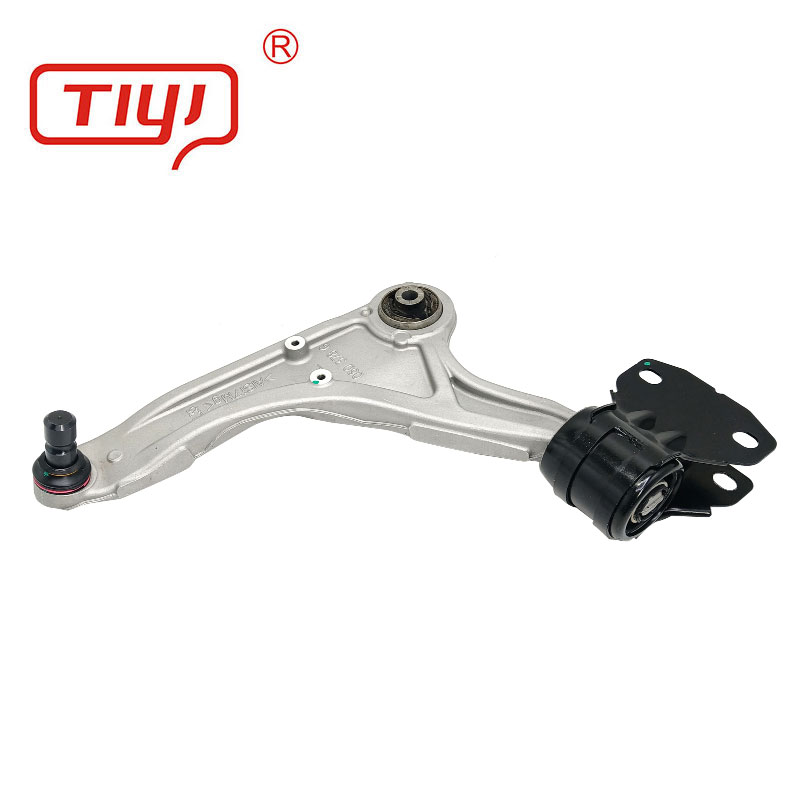 Custom Ford Mondeo 2013-2015/LOWER CONTROL ARM/OEM: FG9C3A052ANB Supplier, CompaAnhui Tianyu is top China Ford Mondeo 2013-2015/LOWER CONTROL ARM/OEM: FG9C3A052ANB supplier and company, providing reliable custom OEM/O...View Product →
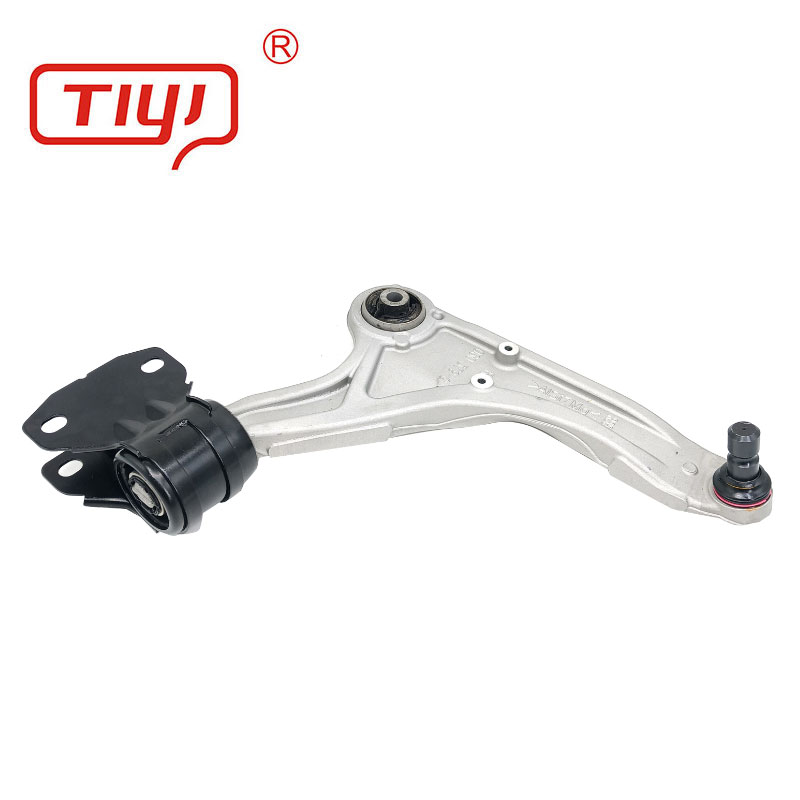 Custom Ford Mondeo 2013-2015/LOWER CONTROL ARM/OEM:DG9C3A053ANE Supplier, CompanAnhui Tianyu is top China Ford Mondeo 2013-2015/LOWER CONTROL ARM/OEM:DG9C3A053ANE supplier and company, providing reliable custom OEM/OD...View Product →
To explore your options, browse our complete range of control arms, learn more about our manufacturing history and quality standards, or see how OE-quality control arms are manufactured. A part produced to the same standard as the original will not crack before its time.
Conclusion: Don't Wait for the Crack to Become a Break
A cracked lower control arm is a warning that should never be ignored, but urgency depends on location. Surface cracks in the rubber bushing give you time to plan; cracks in the metal arm do not. The cost of a quality replacement is modest, and a correctly fitted OE-standard arm with a proper alignment restores safe handling for years.
The next time your car is on a lift, ask your mechanic to show you the condition of your lower control arms. Five minutes of looking now can save you from a very bad day on the road later.
-



-
Quick Links
About Us Products Capabilities Support News & Events Contact Us -
Product Range
Rack End Tie Rod End Stabilizer Link Control Arm Ball Joint -
Address
No. 1471, Qingliu East Road, Chuzhou City, Anhui Province, China
