

 English
 中文简体
中文简体
 Español
 عربى
عربى


Content
- The Short Answer: What Bad Tie Rods Feel Like While Driving
- What Tie Rods Do and Why They Wear
- 7 Symptoms of Bad Tie Rods While Driving
- Two Quick Tests You Can Do While Driving
- Confirming It at Home or at a Workshop
- How Much Risk Are You Actually Taking?
- Replacement: What to Match and What to Expect
- Frequently Asked Questions
The Short Answer: What Bad Tie Rods Feel Like While Driving
Bad tie rods announce themselves through the steering wheel before they make much noise. The most reliable signs while driving are a loose or wandering steering feel, a clunk or knock when turning or crossing bumps, and a front-end shimmy at highway speed. A tie rod end is the pivot joint that connects the steering rack to the front wheel knuckle. When the internal ball socket wears, play develops inside the joint, and every road input reaches the tires late — or not at all.
If you feel any of those symptoms, have the tie rod ends inspected before you continue regular driving. In the worst case, a worn outer end separates completely, and the front wheel loses steering altogether.
What Tie Rods Do and Why They Wear
Each front wheel is steered by a tie rod assembly: an inner tie rod end attached to the steering rack and an outer end that threads into the steering knuckle. The joint at each end is a ball socket protected by a rubber boot. That socket is what wears. Road grit, water, and heat break down the grease; the ball polishes the socket loose; play develops.
On most cars, the outer tie rod end wears first because it carries the heavier load and sees more dirt and impact. The assembly's second job is holding the front toe setting. Even a fraction of a millimeter of play inside the socket translates to several millimeters of movement at the tire, which is why symptoms appear even when the wear is barely visible.
7 Symptoms of Bad Tie Rods While Driving
Worn tie rods produce seven recognizable symptoms from the driver's seat; the more of them you notice at once, the more certain the diagnosis becomes.
| Symptom | What you feel | What it means |
|---|---|---|
| Loose or wandering steering | Constant micro-corrections; the car drifts slowly out of its lane | Play inside the tie rod ball socket |
| Clunking or knocking | A thunk from the front when hitting bumps or turning sharply | Worn socket shifting under load |
| Pulling to one side | The car drifts toward the curb even on flat pavement | Wear changing the toe setting on one side |
| Steering wheel shimmy | Vibration between 40 and 60 mph | Looseness letting the wheel assembly oscillate |
| Off-center steering wheel | Wheel sits angled while the car goes straight | Toe angle drifting from joint play |
| Uneven front tire wear | Feathered, cupped, or worn edges on front tires | Dynamic toe changes as the joint flexes |
| Squeaking in slow turns | A rubbery creak at low speed | Dry or contaminated grease inside the joint |
Loose or Wandering Steering
This is the most common complaint. On a straight, flat road, the steering wheel develops a dead zone: you turn it an inch and nothing happens, then the car responds suddenly. You correct constantly, and the car never feels settled. An alignment will not fix this — the joint itself is loose, so the alignment cannot hold.
Clunking or Knocking from the Front
Worn tie rods produce a metallic knock when the load direction changes. You will hear it on potholes, speed bumps, and sharp parking-lot turns. To reproduce it, turn the steering wheel lock-to-lock in a quiet area at low speed. A clunk that comes from one side usually points to the outer tie rod end on that side.
Steering Wheel Vibration or Shimmy
Play in the tie rod lets the hub move a few millimeters under load. At 40 to 60 mph that movement turns into a shimmy. If the wheels are balanced and the brake rotors are straight, the steering linkage is the next suspect — and the tie rod is the most common linkage failure.
Uneven Front Tire Wear
Tie rods set the toe angle. When a socket is loose, toe changes dynamically as you drive, scrubbing the inner or outer shoulder of the tire. Look for feathered edges or a sawtooth pattern on the front tires. This is also why the car's alignment keeps going out: the part that is supposed to hold the setting can no longer do it.
Two Quick Tests You Can Do While Driving
Two simple dynamic tests can confirm the play you feel while driving; both take minutes and need no tools.
Parking-Lot Wiggle Test
A quick side-to-side steering input at walking speed reveals play instantly. In an empty lot, drive slowly and move the steering wheel left and right in small, quick motions. A healthy car responds immediately in both directions. With worn tie rods, you feel a clunk and a half-second delay between wheel input and tire response. If the clunk is sharp and metallic, the socket is worn; if it feels rubbery, check the control arm bushings instead.
Straight-Line Drift Test
On flat, empty pavement, a car with worn tie rods drifts consistently and feels loose in the first few degrees of wheel movement. Hold the wheel lightly at 30 to 40 mph and let the car go straight naturally. If the car pulls to one side and the wheel moves before the tires respond, you are dealing with mechanical looseness, not tire pressure or road crown.
Confirming It at Home or at a Workshop
Driving symptoms narrow the problem to the steering linkage, but these three static checks confirm the tie rod as the cause.
Inspect the Rubber Boots
A torn, split, or leaking boot is the most common root cause of tie rod failure. Once the boot tears, grease escapes, grit enters, and the joint fails fast. Look with a flashlight at the inner and outer ends of the tie rod behind the front wheels. Oil or moisture around the boot means grease has been washed out. A healthy boot is clean, dry, and firmly clamped at both ends.
The 3-and-9 Wheel Shake Test
Movement at 3 and 9 o'clock points to the tie rod; play at 12 and 6 points to the ball joint. With the car parked, engine off, and front wheels on the ground, grip the tire at 3 and 9 o'clock and rock it side to side firmly. A clunk or visible movement in that direction indicates tie rod wear. The two failures can feel identical while driving, which is why this distinction matters.
Play Check at the Joint
Anything beyond 1 to 2 mm of radial or axial play is a fail under most service standards. With the wheel lifted, push and pull the tie rod against the knuckle. Workshops often use a pry bar for this; it takes seconds. If you are not comfortable doing it, ask the shop to show you the play before they order parts.
How Much Risk Are You Actually Taking?
A badly worn tie rod end is a safety-critical failure, not a comfort issue. The tie rod end is what keeps the wheel attached to the steering system. If a severely worn outer end separates, the wheel loses steering completely — you can turn the wheel without the tire turning. This is not a slow-motion failure; it can happen the next time the wheel drops into a deep pothole.
| Condition | Can you drive? | Recommended action |
|---|---|---|
| Slight steering play, no noise | Short trips at low speed | Inspect within a few days and plan a replacement |
| Clunking, torn boot, or play at 3 and 9 | Only directly to a workshop | Replace the affected side promptly |
| Severe wandering, shimmy, or loose wheel feel | No — tow the car | Replace immediately; check the opposite side too |
Waiting is the expensive option. Driving on worn tie rods destroys tires, prevents alignments from holding, and can end in a crash-level failure if the joint separates.
Replacement: What to Match and What to Expect
When you replace tie rods, three rules decide how long the repair lasts:
- Replace in pairs — if one side is worn, the other is close behind.
- Order parts that match the original equipment (OE) specification; socket clearance, taper size, and thread pitch must match your knuckle and steering rack.
- Have a wheel alignment set after replacement, because a new tie rod changes the toe angle on that side.
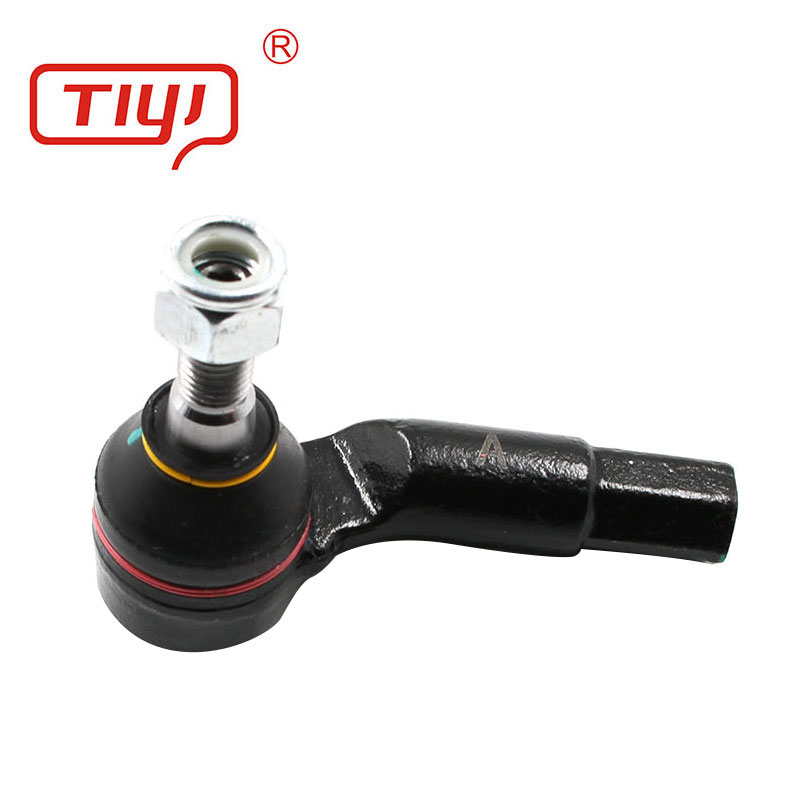
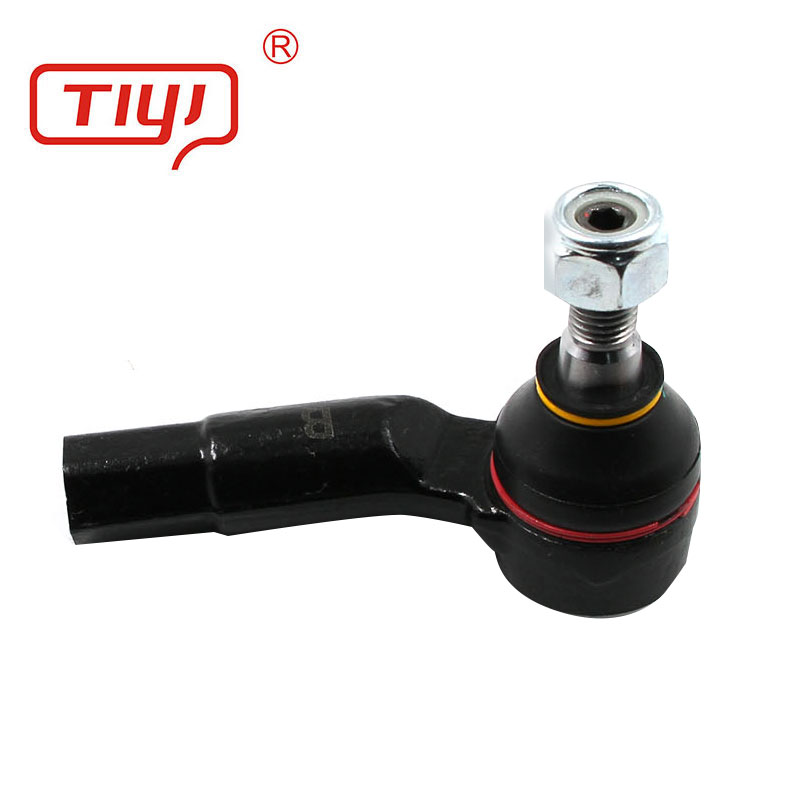
Match the OE number stamped on the old part when ordering. For example, the VW Lavida A4 2008 tie rod end (OEM 1J0422811B) is the left outer end for that model; the right side carries a different part number, so always confirm both sides separately before buying.
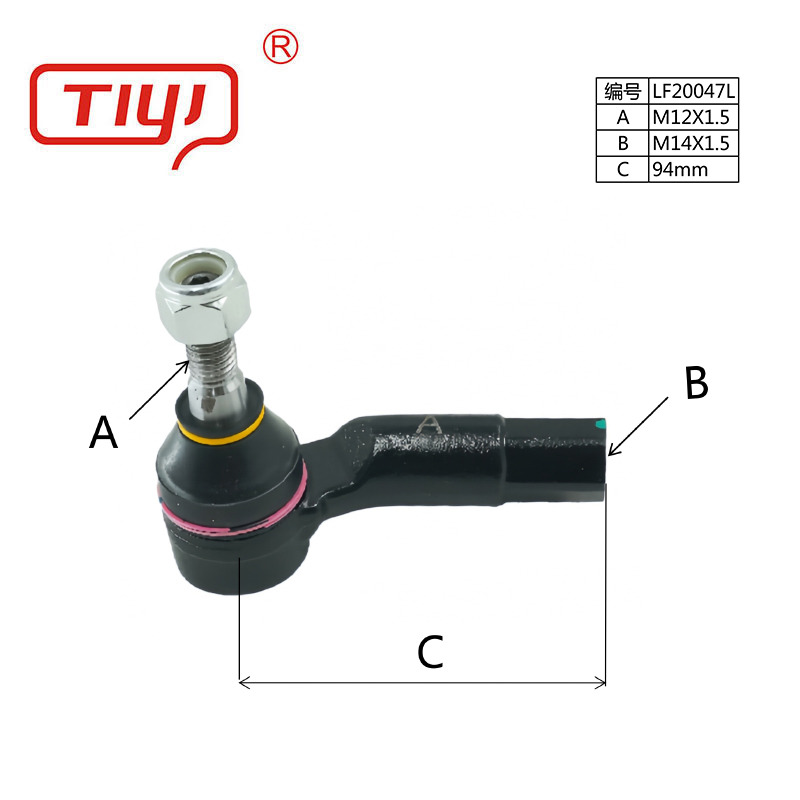 Custom VW Lavida A4 2008-/Tie Rod End/OEM:1J0422811B Supplier, CompanyAnhui Tianyu is top China VW Lavida A4 2008-/Tie Rod End/OEM:1J0422811B supplier and company, providing reliable custom OEM/ODM auto part...View Product →
If the wear is at the inner end, you need a rack end instead of an outer tie rod. A Toyota RAV4 2005-2013 rack end (OEM 45503-42030) is a good example of the sealed, OE-style construction to look for in that position. Follow the tie rod end replacement procedure: loosen the locknut before removing the old part, count the turns as you unscrew it, and torque the new parts to the vehicle manufacturer's specification. A tie rod tightened too loosely has play from day one; one that is over-torqued can strip or bind.
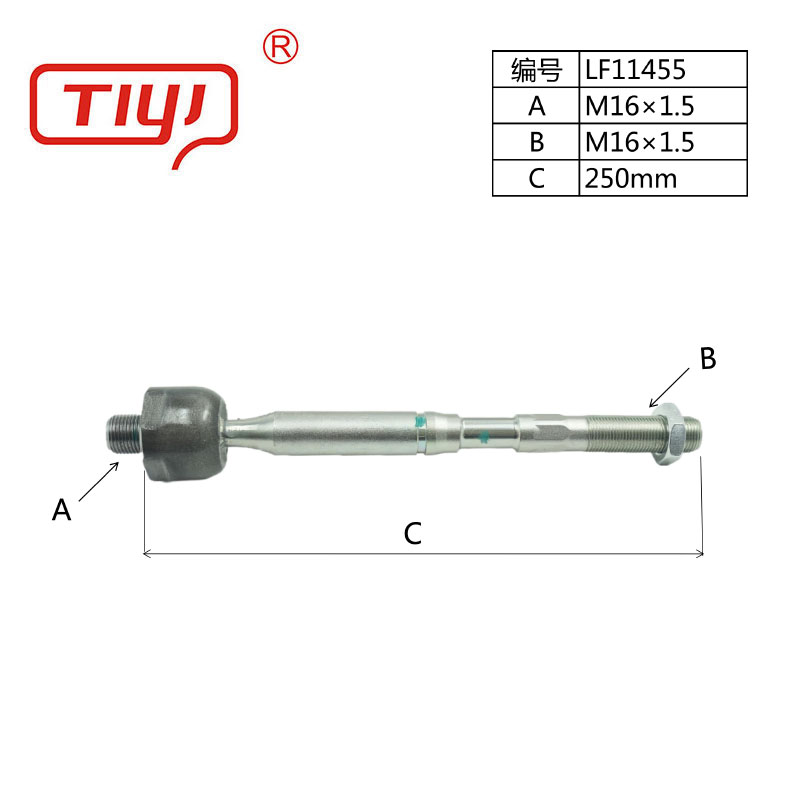 Custom TOYOTA Rongfang 4th 3rd generation 2005-2013/Rack End/OEM: 45503-42030 SuAnhui Tianyu is top China TOYOTA Rongfang 4th 3rd generation 2005-2013/Rack End/OEM: 45503-42030 supplier and company, providing reliable...View Product →
For workshops and distributors, the practical differences between suppliers come down to warranty, packaging, and batch consistency. A manufacturer with in-house production and a published warranty — such as Tianyu, which builds steering and suspension parts to OE standards with a 2-year or 100,000 km warranty — makes the liability path clearer than unbranded parts. The installation labor is identical; the part quality decides how long the repair lasts.
Frequently Asked Questions
How long do tie rods normally last?
Most OE-quality tie rod ends last 60,000 to 100,000 miles in normal road use. They fail faster on rough roads, in dusty or salty conditions, or when the rubber boot gets damaged. There is no fixed interval — inspect them at every tire rotation or alignment.
Can I drive with a bad tie rod if the alignment is new?
No. A new alignment makes no sense with a worn tie rod. Joint play changes the toe angle dynamically as you drive, so the alignment washes out within weeks, and the tire damage continues while you wait.
How do I tell a bad tie rod from a bad ball joint while driving?
Both can cause clunks and looseness. The difference shows in the static test: play at 3 and 9 o'clock in the wheel shake test is the tie rod; play at 12 and 6 o'clock is the ball joint. Uneven tire wear on the edges combined with a shimmy points more strongly to the tie rod.
Is an alignment mandatory after tie rod replacement?
Yes. Any change in tie rod length changes the toe setting. Without an alignment, the car pulls, the steering wheel sits off-center, and the new tires wear unevenly.
What happens if a tie rod fails completely while driving?
The front wheel is no longer connected to the steering rack. The wheel folds in or out on its own, and you lose steering control of that side completely. That is why the urgency level in the risk table above is not exaggerated.