

 English
 中文简体
中文简体
 Español
 عربى
عربى


The upper control arm is a critical suspension component that connects the vehicle's chassis to the steering knuckle, allowing the wheel to move up and down while keeping it properly aligned. Without a functioning upper control arm, your vehicle cannot maintain safe steering geometry, making it one of the most important parts of your front suspension system.
In this guide, we'll cover everything you need to know about the upper control arm — what it does, how it works, signs it's failing, and what it costs to replace.
Content
- What Is the Upper Control Arm?
- How Does the Upper Control Arm Work?
- What Suspension Systems Use an Upper Control Arm?
- Signs of a Bad Upper Control Arm
- Upper Control Arm Materials: Steel vs. Aluminum
- Upper Control Arm Replacement: What to Expect
- Aftermarket vs. OEM Upper Control Arms
- How Long Does an Upper Control Arm Last?
- Frequently Asked Questions (FAQ)
- Q: Can I drive with a bad upper control arm?
- Q: Do I need to replace both upper control arms at the same time?
- Q: What is the difference between the upper control arm and the upper ball joint?
- Q: Does replacing the upper control arm require a wheel alignment?
- Q: My vehicle has MacPherson struts — does it have an upper control arm?
- Q: How do I know if my upper control arm bushings are worn?
- Conclusion
What Is the Upper Control Arm?
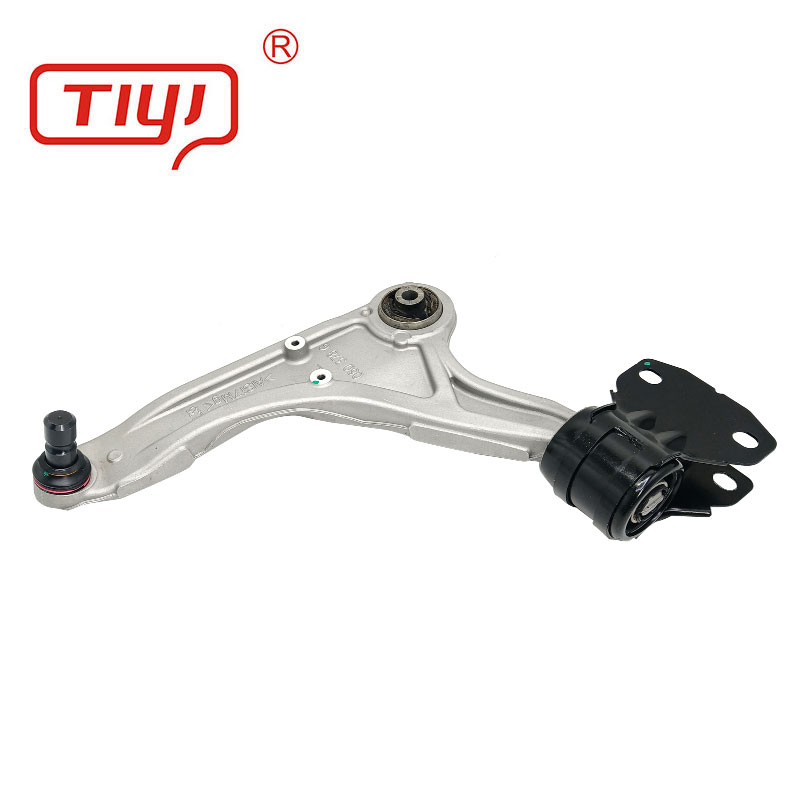
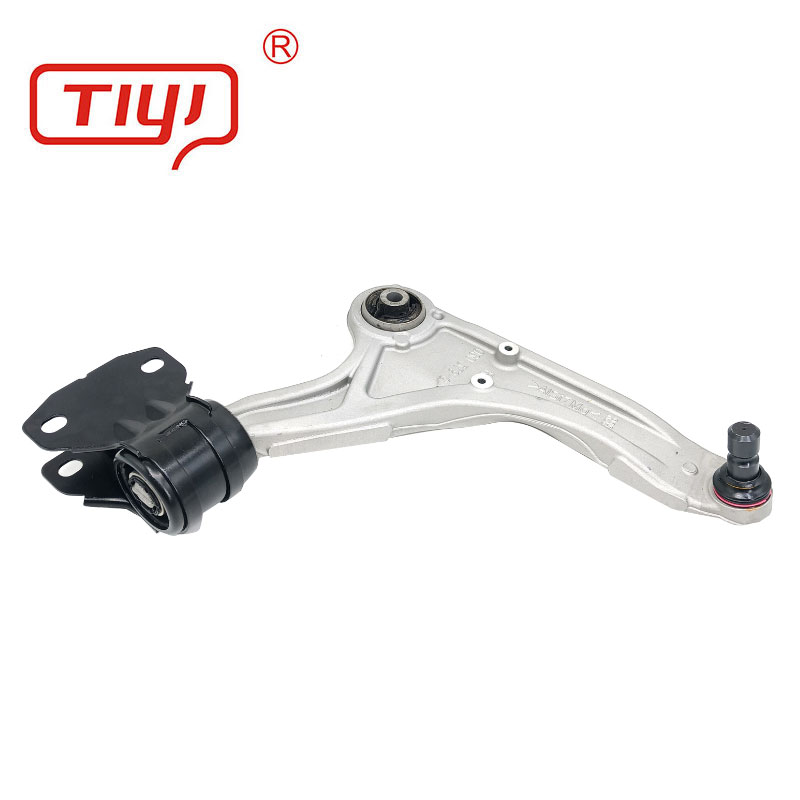
The upper control arm (UCA) is a suspension linkage located above the lower control arm in a double-wishbone or A-arm suspension system. It is typically A-shaped or L-shaped and connects the vehicle frame or subframe to the upper part of the steering knuckle through a ball joint.
Its primary role is to guide the vertical motion of the wheel while maintaining camber angle, caster, and overall wheel alignment. In vehicles with a MacPherson strut suspension, there is no separate upper control arm — the strut itself handles that function. However, in double-wishbone setups commonly found in trucks, SUVs, performance cars, and heavy-duty vehicles, the upper control arm is a dedicated, load-bearing component.
Where Is the Upper Control Arm Located?
The upper control arm is positioned at the top of the front wheel assembly. It sits between the vehicle's frame (or subframe) and the top of the steering knuckle. You can typically see it by looking through the wheel well from above. In most double-wishbone systems, it works in tandem with the lower control arm to keep the wheel geometry stable during suspension travel.
How Does the Upper Control Arm Work?
The upper control arm works by acting as a pivot point that guides wheel motion along a controlled arc. When your vehicle hits a bump, the wheel moves upward. The upper control arm pivots on its bushings (at the frame end) and allows the steering knuckle to travel in a precise arc, keeping the tire contact patch in the correct position relative to the road.
Key Components of the Upper Control Arm Assembly
The upper control arm assembly typically consists of the following parts:
- Control Arm Body: The rigid A-shaped or L-shaped metal arm, usually made from stamped steel, cast iron, or forged aluminum.
- Upper Ball Joint: Connects the arm to the steering knuckle and allows rotational movement in multiple directions.
- Bushings: Rubber or polyurethane sleeves at the frame-mounting end that absorb vibration and allow controlled pivot motion.
- Mounting Hardware: Bolts and brackets that attach the arm to the chassis, sometimes with adjustable cam bolts for alignment tuning.
| Feature | Upper Control Arm | Lower Control Arm |
|---|---|---|
| Position | Above the axle centerline | Below the axle centerline |
| Primary Load | Lighter lateral loads | Heavier vertical/braking loads |
| Ball Joint | Upper ball joint | Lower ball joint |
| Camber Adjustment | Often adjustable (aftermarket) | Sometimes adjustable |
| Suspension Type | Double-wishbone only | Double-wishbone & MacPherson |
| Typical Material | Stamped steel or aluminum | Cast iron or forged steel |
| Replacement Cost | $150–$600 per side | $200–$700 per side |
What Suspension Systems Use an Upper Control Arm?
Not all vehicles have an upper control arm — it depends entirely on the suspension design. The two most common suspension types are the double-wishbone (dual A-arm) and MacPherson strut setups.
Double-Wishbone Suspension
This system uses both an upper and lower control arm, forming a wishbone shape on each side. It provides superior handling, better camber control during cornering, and is preferred in performance vehicles and trucks that require precise wheel control. Vehicles like full-size pickup trucks, body-on-frame SUVs, and sports cars typically use this setup. The upper control arm is essential in this design.
MacPherson Strut Suspension
This system replaces the upper control arm with a strut assembly. It is simpler, lighter, and more cost-effective to manufacture, making it popular in compact and mid-size cars. If your vehicle uses MacPherson struts, there is no separate upper control arm — the strut itself performs that role.
Signs of a Bad Upper Control Arm
A failing upper control arm produces clear and recognizable symptoms — the most common warning sign is a clunking or knocking noise from the front suspension when going over bumps or turning.
Here are the most common symptoms of a worn or damaged upper control arm:
- Clunking or knocking sounds: Worn bushings or a loose ball joint causes metal-to-metal contact, especially over bumps or potholes.
- Uneven tire wear: If the upper control arm is bent or its bushings are deteriorated, the wheel alignment shifts, leading to camber-related wear on the inner or outer tread edge.
- Vehicle pulling to one side: A compromised arm disrupts wheel alignment, causing the car to drift left or right even on a straight road.
- Loose or wandering steering: The steering wheel feels vague, requires constant correction, or feels as if the front end is floating.
- Vibration in the steering wheel: A failed upper ball joint can transmit road vibration directly through the steering column.
- Wheel pulling inward or outward: Visible camber change or wheel tilt when looking at the vehicle from the front can indicate upper control arm damage.
| Symptom | Likely Cause | Urgency |
|---|---|---|
| Clunking over bumps | Worn bushings or ball joint | High — inspect immediately |
| Uneven tire wear | Misalignment from bent arm | Medium — schedule service |
| Car pulls to one side | Alignment shift from bushing wear | Medium — check alignment |
| Loose steering feel | Failed upper ball joint | High — dangerous to drive |
| Steering wheel vibration | Loose or seized ball joint | High — replace soon |
| Visible wheel tilt | Bent or cracked control arm | Critical — do not drive |
Upper Control Arm Materials: Steel vs. Aluminum
Modern upper control arms are made from one of two primary materials — stamped steel or forged/cast aluminum. Each has distinct advantages depending on the application.
Stamped Steel Upper Control Arms
Steel arms are the OEM standard for most trucks and SUVs. They are highly durable, weld-repairable, and relatively inexpensive to manufacture. A steel upper control arm can typically handle repeated heavy-load stress without cracking. The main downside is added weight — a steel arm may weigh 20–40% more than its aluminum equivalent.
Forged Aluminum Upper Control Arms
Aluminum arms are lighter and offer better corrosion resistance, making them popular in performance and luxury vehicles. A typical aluminum upper control arm weighs around 2–4 lbs compared to 4–7 lbs for a steel equivalent. However, aluminum is more susceptible to cracking under severe impact and cannot be welded as easily as steel if damaged.
Upper Control Arm Replacement: What to Expect
Replacing a worn upper control arm is a straightforward job for an experienced mechanic, though it does require a wheel alignment afterward. The total service typically takes 1–3 hours per side.
Upper Control Arm Replacement Cost
Costs vary depending on the vehicle, whether you use OEM or aftermarket parts, and regional labor rates. Below is a general cost estimate:
| Cost Category | Estimated Range | Notes |
|---|---|---|
| OEM Part (per side) | $120 – $400 | Direct fit, OEM quality |
| Aftermarket Part (per side) | $60 – $250 | Budget to performance range |
| Labor (per side) | $80 – $200 | 1–2 hours at $80–$120/hr |
| Wheel Alignment (required) | $75 – $150 | Always required after replacement |
| Total Estimated Cost | $215 – $750 | Per side, including alignment |
Steps Involved in Upper Control Arm Replacement
- Raise and secure the vehicle using a jack and jack stands.
- Remove the wheel to access the suspension components.
- Disconnect the upper ball joint from the steering knuckle.
- Remove the mounting bolts securing the arm to the frame or subframe.
- Install the new upper control arm and torque all fasteners to specification.
- Reinstall the wheel and lower the vehicle.
- Perform a 4-wheel alignment to restore proper wheel geometry.
Aftermarket vs. OEM Upper Control Arms
For most street-driven vehicles, OEM-equivalent aftermarket upper control arms deliver excellent value and performance. However, if you've lifted your truck or use your vehicle off-road, an aftermarket heavy-duty or extended upper control arm may be the better choice.
Aftermarket UCAs designed for lifted vehicles offer several advantages over stock arms: they typically feature extended length to correct ball joint angle after a lift, heavier-gauge steel construction for off-road durability, and adjustable camber correction to restore alignment specs. Many also come with integrated greaseable Heim joints or heavy-duty ball joints instead of standard rubber boots.
For a stock-height daily driver, a quality aftermarket arm with new bushings and a pre-installed ball joint typically performs just as well as a dealer-sourced part, often at 30–50% less cost.
How Long Does an Upper Control Arm Last?
A well-maintained upper control arm typically lasts between 90,000 and 150,000 miles under normal driving conditions. However, several factors can significantly shorten its service life:
- Off-road use or rough road driving accelerates bushing wear and can bend the arm body.
- Collision or curb impact can crack, bend, or deform the arm immediately.
- Corrosion in high-salt environments (northern climates with road salt) weakens the arm over time.
- Neglected maintenance — dried-out or cracked bushings lead to premature ball joint wear.
The bushings are typically the first component to wear, followed by the ball joint. Inspecting these components during routine tire rotations (every 5,000–7,500 miles) can help catch problems early and extend the life of the entire assembly.
Frequently Asked Questions (FAQ)
Q: Can I drive with a bad upper control arm?
Driving with a severely worn upper control arm — especially one with a failing ball joint — is dangerous. A broken ball joint can cause the wheel to collapse or separate from the steering knuckle while driving, resulting in loss of vehicle control. If you notice clunking, pulling, or visible wheel tilt, have the vehicle inspected immediately before driving further.
Q: Do I need to replace both upper control arms at the same time?
It is not always required, but it is strongly recommended. Because both sides typically experience the same wear conditions and mileage, replacing both at the same time saves on labor costs and ensures balanced suspension performance. If one side has failed, the other is likely not far behind.
Q: What is the difference between the upper control arm and the upper ball joint?
The upper control arm is the rigid structural link between the frame and the steering knuckle. The upper ball joint is a pivot joint mounted on the end of the upper control arm that connects it to the steering knuckle. In some designs, the ball joint is pressed into the arm and sold as a separate part; in others, it is integrated into a complete arm assembly.
Q: Does replacing the upper control arm require a wheel alignment?
Yes — always. The upper control arm directly affects camber, caster, and sometimes toe settings. Any time the arm is removed and reinstalled, a 4-wheel alignment is mandatory to restore correct geometry and prevent uneven tire wear or handling issues.
Q: My vehicle has MacPherson struts — does it have an upper control arm?
No. MacPherson strut suspension systems do not use a separate upper control arm. The strut assembly functions as the upper suspension link. Only vehicles with double-wishbone (dual A-arm) suspension systems use a dedicated upper control arm.
Q: How do I know if my upper control arm bushings are worn?
Worn bushings typically show as cracking, tearing, or visible deformation of the rubber sleeve when inspected visually. Functionally, you may feel increased road noise, vague steering, or a clunking sound during slow-speed turns or on rough roads. A mechanic can confirm bushing wear by grabbing the arm and checking for excess movement at the pivot points.
Conclusion
The upper control arm is a small but essential component of any double-wishbone suspension system. It controls wheel motion, maintains alignment geometry, and directly affects steering feel and tire longevity. When its bushings wear or the ball joint fails, the entire suspension system's performance and safety are compromised.
Understanding what the upper control arm does, recognizing its failure symptoms early, and replacing it promptly — along with a proper wheel alignment — will keep your vehicle handling safely and predictably for the long term. Whether you're maintaining a daily driver or building a lifted truck for off-road use, the upper control arm deserves careful attention during every suspension inspection.