

 English
 中文简体
中文简体
 Español
 عربى
عربى

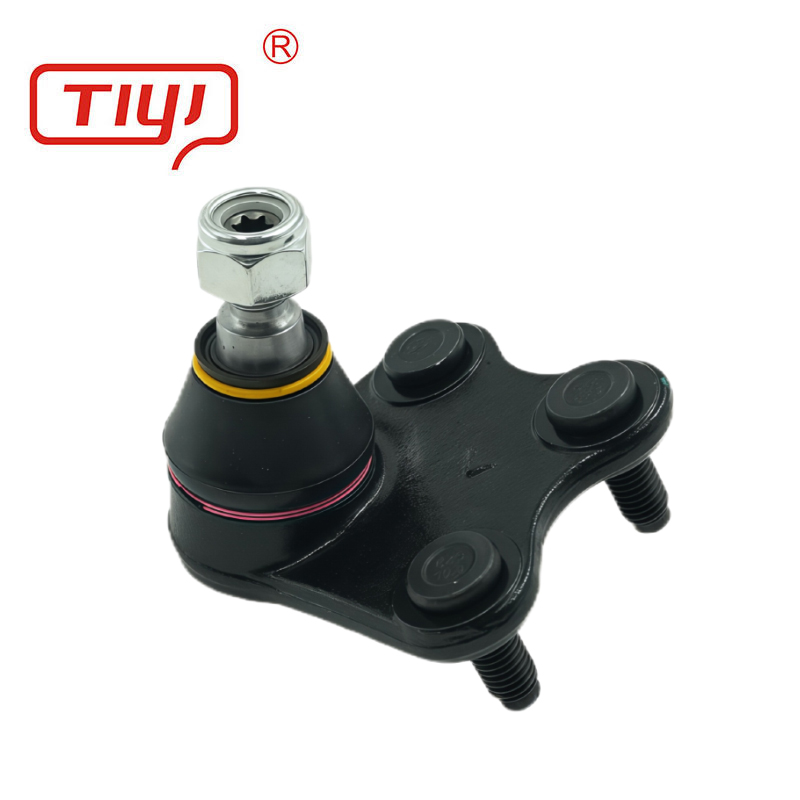
Specification
| Supplier Capability | Key Metrics and Standards |
| Manufacturing Standards | ISO 9001, IATF 16949 Certification, Compliance with SAE/DIN Standards |
| Product Range | Coverage for Passenger Cars, Light Trucks, SUVs, Commercial Vehicles; OE-Spec and HD Options |
| Material Specifications | Use of SAE Grade Steels, Chromoly Alloys, HNBR/Polyurethane for Boots, Specific Grease Formulations |
| Quality Control | 100% Dimensional Checking, Torque-Testing, Salt Spray Testing for Corrosion, End-of-Line Performance Testing |
| Packaging & Logistics | Barcoded, VIN-Specific Packaging; Efficient Regional Distribution Networks |
| Technical Support | Provision of Technical Bulletins, Installation Guides, Fitment Catalogs (Print & Digital) |
| Warranty Offered | Lifetime Limited, 3-Year, or Mileage-Based Warranties to Distributors/End-Users |
Applications
Ball joint suppliers serve a vast and diverse market. Their primary application is supplying parts to the automotive Original Equipment (OE) sector, where ball joints are installed on new vehicles at factories worldwide. A parallel and massive application is the Independent Aftermarket (IAM), where suppliers provide replacement parts to distributors, wholesalers, retail chains, and repair shops for vehicle maintenance and repair.
Specialist suppliers cater to niche applications, such as the performance racing market, providing high-angle, uniball-style joints for custom suspension setups. The heavy-duty and off-road market relies on suppliers who produce reinforced ball joints with larger studs and superior seals for trucks, Jeeps, and commercial vehicles. Suppliers also serve the industrial and agricultural machinery sectors, where similar pivoting joint technology is required.
Advantages of Partnering with a Quality Supplier
- Assured Quality and Consistency: A reputable supplier implements rigorous quality control, ensuring every batch of parts meets strict performance and dimensional standards, reducing comebacks and warranty claims.
- Comprehensive Coverage: Top suppliers offer extensive catalogs covering domestic, European, and Asian vehicles, simplifying inventory management for distributors and shops.
- Technical Expertise and Support: Provides valuable resources such as fitment guides, installation tips, and technical hotlines to help with complex applications or diagnosis.
- Innovation and Development: Invests in R&D to create improved products, such as longer-life seals, easier-to-install designs, or environmentally friendly coatings.
- Supply Chain Reliability: Maintains robust manufacturing and distribution networks to ensure product availability and timely delivery, which is crucial for shop operations.
- Strong Warranty Backing: Stands behind their products with competitive warranty programs that protect the channel partners and the end consumer, building trust in the brand.
Materials, Sourcing, and Manufacturing Structure
A credible ball joint supplier controls its supply chain from raw material to finished product. They source high-grade alloy steels for studs and forgings, often with specific chemical compositions for optimal hardness and toughness. Polymer materials for bearing sockets and boots are selected for low friction, high temperature resistance, and long-term elasticity.
The manufacturing process typically involves precision forging or machining of the housing, heat treatment of the stud for case hardening, automated assembly of the ball into the socket with a precise amount of grease, and crimping or staking to secure the assembly. Advanced suppliers use automated optical inspection and robotic testing to validate angular torque and stud play. The final step involves applying corrosion protection, such as electrocoating or zinc plating, and packaging with clear, accurate labeling that includes part number, vehicle application, and safety information.