

 English
 中文简体
中文简体
 Español
 عربى
عربى


You're driving over a speed bump in your parking garage and hear a distinct knock from the front corner. On the highway, the steering feels imprecise, and you find yourself making small corrections to stay in lane. At the next tire check, the inner edge of one front tire is worn all the way to the wear bar. These three signs together point to a failing lower control arm.
The direct answer: if you have a clunking noise from the front end, steering wander, and uneven tire wear on one edge, your lower control arm is likely at the end of its service life. The sections below explain each symptom, its cause, and how to fix it before you waste money on tires and alignments that won't last.
Content
- What Does a Lower Control Arm Do?
- Bad Lower Control Arm Symptoms: 7 Warning Signs
- What Causes Lower Control Arm Failure?
- Can You Drive with a Bad Lower Control Arm?
- How to Check If Your Lower Control Arm Is Bad
- How to Choose a Replacement Lower Control Arm
- Ball Joints: The Other Failure Point
- FAQ: Bad Lower Control Arm Symptoms
What Does a Lower Control Arm Do?
A lower control arm is a forged or stamped steel link that connects the steering knuckle and wheel hub to the vehicle frame. It works with the upper control arm and a set of rubber or hydraulic bushings to keep the wheel's camber and caster angles within specification while absorbing the impact of potholes and road imperfections.
On most modern vehicles, the lower control arm also carries the lower ball joint. The ball joint serves as the pivot point for the steering knuckle. This double duty means the control arm locates the wheel horizontally and vertically, and it allows the wheel to turn when you steer.
On a MacPherson strut layout, the lower control arm does most of the work. The upper control arm is often eliminated entirely. On a double-wishbone setup, both arms share the load, but the lower arm still carries more weight during braking, acceleration, and cornering. This is why lower control arm failure is far more common than upper control arm failure.
Bad Lower Control Arm Symptoms: 7 Warning Signs
The symptoms of a failing lower control arm build gradually. Use the table below as a quick reference, then read the detailed descriptions for the symptoms that apply to you.
| Symptom | What You Feel | Root Cause |
|---|---|---|
| Clunking or knocking noise | Sharp metallic sound over bumps or during braking | Worn bushing or ball joint allows metal-to-metal contact |
| Steering wander | Front end drifts on a straight road, constant corrections needed | Control arm play changes the wheel alignment geometry |
| Uneven tire wear | Inner or outer edge of one front tire wears quickly | Alignment shift caused by control arm movement |
| Vibration in the steering wheel | Shaking felt at highway speed or while accelerating | Ball joint or bushing play transfers into the steering system |
| Pulling to one side | Car drifts toward one side under braking or acceleration | Asymmetric geometry due to a worn bushing or ball joint |
| Rough ride | Every bump feels harsh and noisy | Bushing no longer absorbs road impacts |
| Squeaking or groaning | Low frequency sound when turning or over rough roads | Rubber bushing degradation and metal rubbing |
Clunking or Knocking Noise Over Bumps
The most recognizable symptom is a sharp knock from the front end when you drive over a speed bump, curb, or pothole. The noise comes from a worn bushing or ball joint inside the control arm. As the rubber bushing degrades or the ball joint develops play, metal components that should be held tightly instead slap together under load. Many drivers describe the noise as coming directly from the steering column.
Steering Wander and Loose Response
If you're on the highway and the car drifts left or right without input, or you find yourself constantly correcting the steering, that's a classic sign of control arm play. A worn bushing allows the lower control arm to pivot more than intended. This changes the alignment geometry mid-drive, so the front wheels point in slightly different directions than you're steering. The result is a feeling of looseness that no alignment can fix until the control arm is replaced.
Uneven Tire Wear
Check your tires. If the inner edge of one front tire is worn down to the tread indicators while the center or outer edge still looks nearly new, that's a direct sign of misalignment. A bad lower control arm lets the wheel tilt in and out under load, changing the camber angle. Even a one-degree shift from the factory camber specification causes grinding wear on one side of the tire. Many drivers end up buying new tires twice before they realize the control arm was the root cause.
Steering Wheel Vibration
Vibration through the steering wheel at highway speed is another symptom. The lower ball joint, which is integrated into the control arm on most vehicles, can develop play that transfers into the steering system. When the ball joint has enough slack, the wheel hub moves back and forth under throttle or on rough pavement. The movement shows up as a vibration that gets worse as speed increases.
Pulling to One Side and Rough Ride
A bad lower control arm makes the car pull to one side during braking and turns every bump into a harsh impact. Because the control arm locates the wheel from front to back and side to side, a failing bushing allows the wheel to shift under heavy braking. This makes the car pull toward the side with the bad component. The same wear removes the cushioning effect of the bushing, so you feel every expansion joint and pothole in your seat. If the pull goes away when you release the brakes, the control arm is a strong suspect.
What Causes Lower Control Arm Failure?
Lower control arms fail through a combination of impact damage, corrosion, and component wear. Here's how each mechanism plays a role.
| Cause | Mechanism | Typical Result |
|---|---|---|
| Impact damage | Hitting a curb, pothole, or raised speed bump | Bent arm, cracked bushing, damaged ball joint seat |
| Corrosion | Road salt, water, and brine in cold climates | Rust weakens the arm, especially at weld seams |
| Bushing fatigue | Millions of load cycles over years of driving | Rubber cracks, hardens, or separates from the steel sleeve |
| Ball joint wear | Repeated steering load and weight over speed bumps | Loose pivot, play in the steering, eventual separation |
Most original equipment control arms are designed to last 60,000 to 100,000 miles in normal driving. Potholes and rough roads accelerate wear on the bushings and ball joint significantly. A quality replacement arm with a 2-year or 100,000 km warranty gives you a realistic expectation of how long the new part should last.
Can You Drive with a Bad Lower Control Arm?
The honest answer is: only for a short time, and only if the symptoms are still mild. A complete control arm failure, where the arm separates from the ball joint or breaks at the frame mount, leaves you with no steering control and a wheel that can collapse under the vehicle. This creates a serious hazard at any speed above parking speed.
Even at the warning stage, driving with a bad control arm causes rapid tire wear and puts extra stress on the steering rack, tie rod ends, and wheel bearings. In the financial picture, you might trade a relatively inexpensive control arm replacement for a repair that includes new tires, alignment labor, and possibly a new steering rack.
If you hear the clunk or feel the wander, replace the control arm before the damage spreads.
How to Check If Your Lower Control Arm Is Bad
You can confirm a bad lower control arm with a few simple checks before you buy parts. Here's a quick checklist:
- Lift the front of the car and shake the wheel from side to side and up and down. Any play or clunking points to a worn ball joint or bushing.
- With the car on a lift, inspect the control arm for cracks, rust, swollen bushings, or a rubber bushing that is split.
- Drive over a series of speed bumps slowly. Listen for sharp noises from the front corner. A bad control arm makes a different sound than a worn shock absorber.
- At 40 miles per hour, apply light steering input and release. If the car overshoots and wobbles back, the control arm is contributing to the instability.
How to Choose a Replacement Lower Control Arm
Replacing the control arm is the durable fix. When you purchase a new part, check these details:
- OE specification: The part should match the original dimensions and tolerances, not just the bolt holes.
- Bushing material: Rubber or hydraulic bushings outperform polyurethane for comfort and noise isolation. Hydro-bushings use a fluid-filled design that absorbs impacts better.
- Ball joint quality: A well-made ball joint passes at least one million load cycles in testing. Bushings should survive 500,000 simulated bump tests. Look for a manufacturer that publishes its test data.
- Warranty: A 2-year or 100,000 km warranty signals that the manufacturer trusts the part to last.
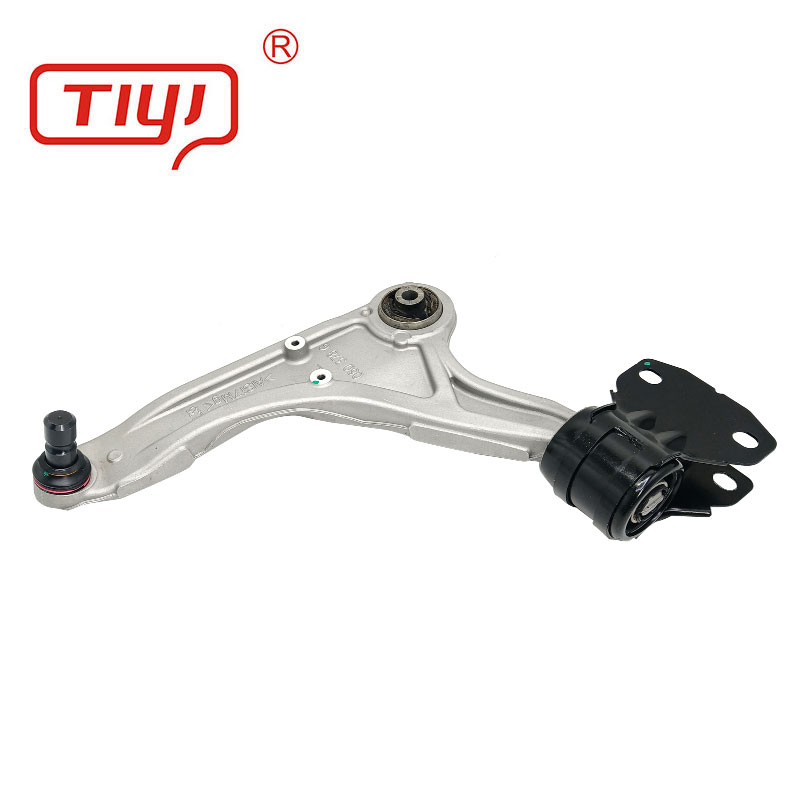
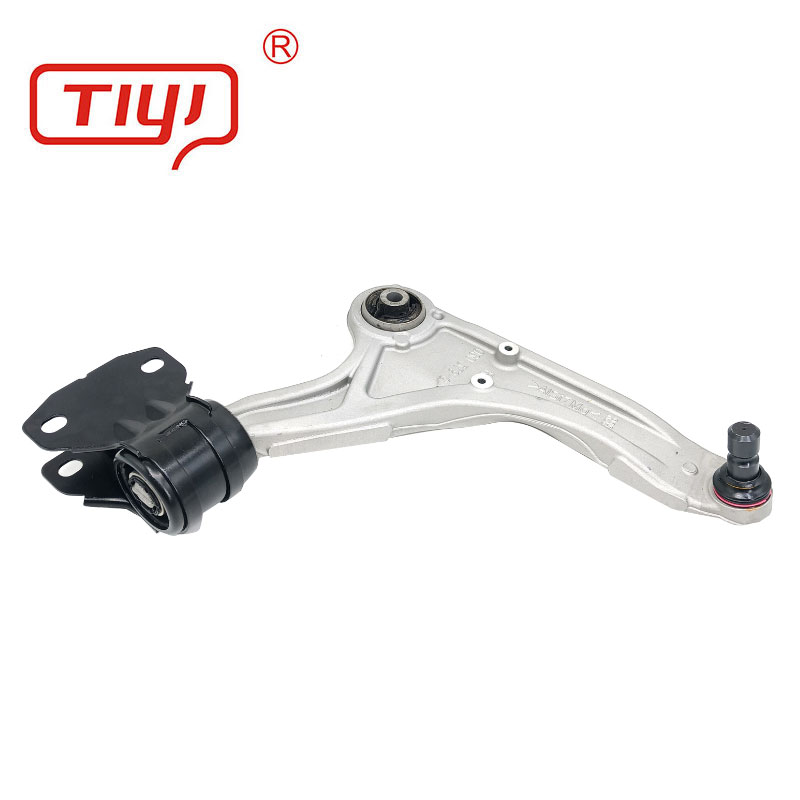
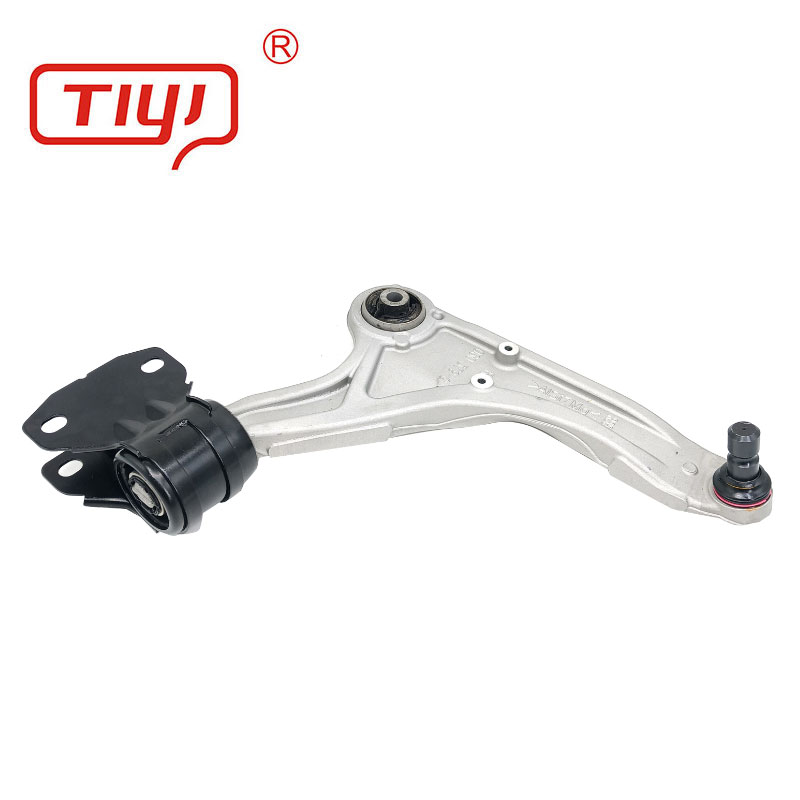 OEM Lower Control Arm for Ford Mondeo 2013-2015 with Ball Joint and BushingsThis direct-fit replacement control arm meets factory specifications for the Mondeo 2013-2015 and includes a new ball joint and bushings, offering a durable fix in about two hours per side.View Product →
For a Ford Mondeo 2013-2015, the OEM lower control arm (DG9C3A053ANE) is a direct fit replacement with a new ball joint and bushings at original factory specifications. The swap takes about two hours per side with a socket set, followed by an alignment. Read this control arm replacement guide to understand the labor and tools involved.
Ball Joints: The Other Failure Point
The lower ball joint is the most likely companion failure when a control arm goes bad. On many vehicles, it is pressed into the lower control arm, and when the joint develops play, the whole assembly is usually replaced. On vehicles with a serviceable ball joint, the component can be changed alone.
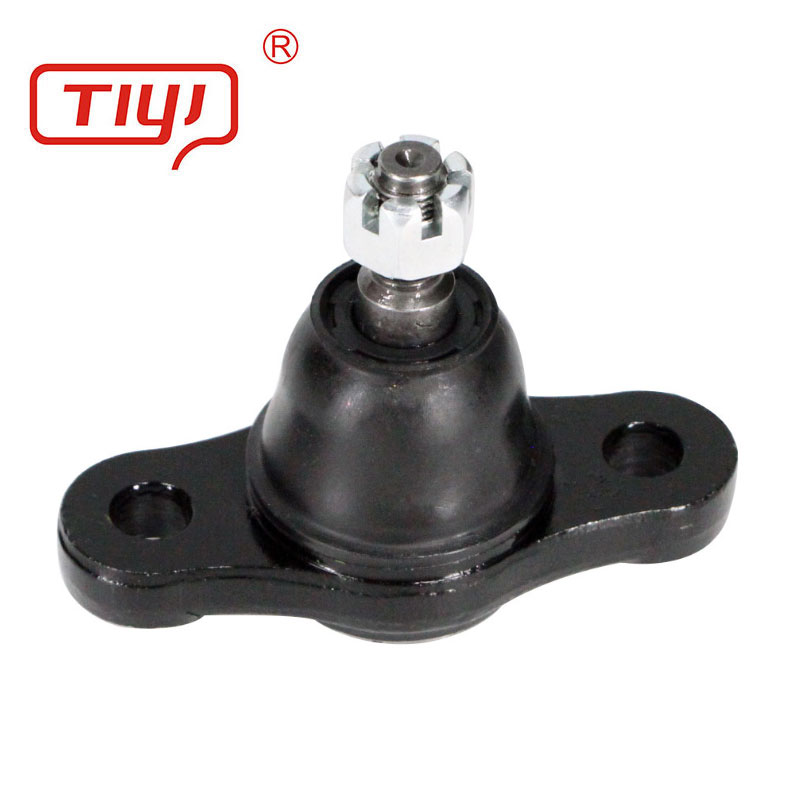
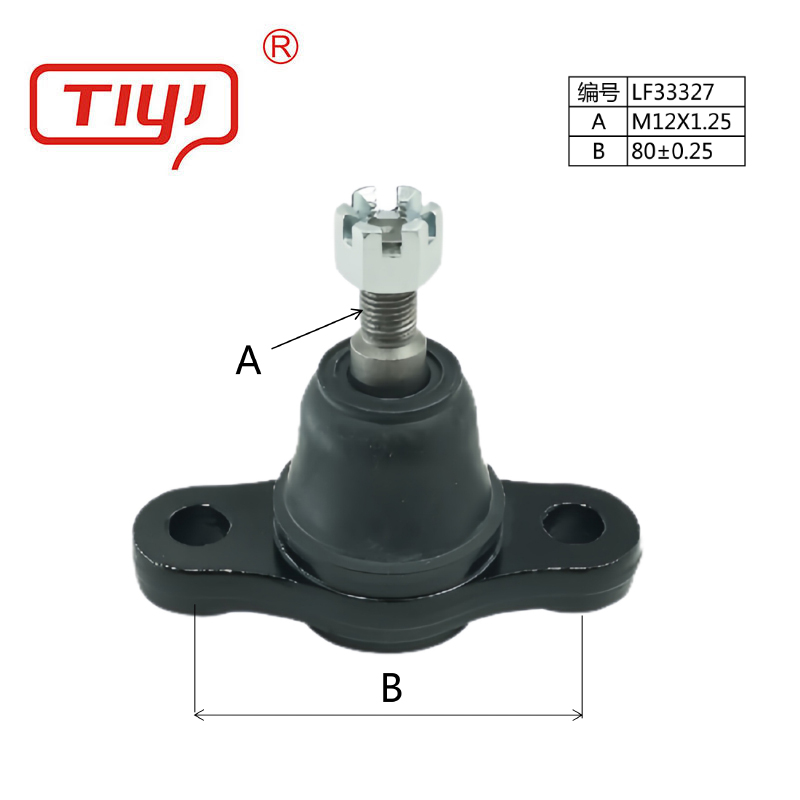 Serviceable Ball Joint for Hyundai Elantra 2000-2007 OEM 51760-0Q000When the control arm remains intact but the joint develops play, this OEM ball joint allows a standalone replacement, restoring steering precision without replacing the whole arm.View Product →
For a Hyundai Elantra 2000-2007, the OEM ball joint is 51760-0Q000. It is a direct replacement for the part originally installed at the factory. If your control arm is still healthy but the ball joint has developed play, this is the part you would specify.
However, the decision to replace the ball joint alone versus the complete control arm depends on your vehicle platform. On many late-model cars, the control arm and ball joint are sold only as one unit. Check your VIN and parts catalog before ordering.
FAQ: Bad Lower Control Arm Symptoms
What are the first signs of a bad lower control arm?
The first signs are usually a knocking noise from the front end over speed bumps, a slight steering wander on the highway, and uneven tire wear on one edge of a front tire. These symptoms are progressive and will worsen over time.
How long can you drive with a bad lower control arm?
Once the symptoms appear, you are looking at weeks, not months, before the part becomes genuinely dangerous. If the bushing has cracked or the ball joint shows play, replace it before the tire wear becomes obvious or the steering develops a loose, unsafe feeling.
Does a bad lower control arm cause pulling to one side?
Yes. A worn bushing or ball joint changes the suspension geometry under braking, and the car pulls toward the side with the bad component. This pull is different from a brake pull, because it can also appear during acceleration or when passing over bumps.
Should I replace both lower control arms at the same time?
In most cases, it makes sense to replace both arms on the same axle at the same time. The two arms face the same road and load conditions, so they wear at a similar rate. Replacing only one side could leave the other side ready to fail, and the car may still pull slightly.
Can a bad lower control arm cause an alignment problem?
Absolutely. The control arm establishes the camber and caster angles. Any play in its bushings or ball joint shifts the wheel geometry. A shop cannot hold a durable alignment while the control arm is loose. Replacing the arm is a prerequisite for a reliable alignment.
Bad lower control arm symptoms are usually a slow build: a noise here, a drift there, tire edges that wear a bit too fast on one side. The fix is straightforward - identify the failing arm, replace it with an OE-quality part, and align the vehicle. Waiting only turns an inexpensive repair into tire, rack, and suspension damage.
If you need the full repair plan, start with reliable automotive suspension repair guidance to understand the scope of the job and the parts you will need.