

 English
 中文简体
中文简体
 Español
 عربى
عربى


Clunking sound when turning? That noise is your car telling you that a steering or suspension component has developed looseness, wear, or a loss of lubrication. A clunk is never normal, and it rarely repairs itself. The most common causes are worn tie rod ends, ball joints, sway bar links, strut mounts, and CV joints. The good news is that these parts are affordable to replace before they fail completely.
Content
What Does a Clunking Sound When Turning Mean?
A clunk is a short, metallic knock that happens when a worn or loose component moves beyond its intended range of motion. Steering and suspension parts rely on ball sockets, bushings, and pivots to keep the wheel geometry stable. When you turn, the vehicle's weight shifts to the outer wheel and the steering linkage rotates. If a joint has play because of dried rubber, lost grease, or a damaged socket, metal surfaces slam together and create the clunk. The sound is easiest to hear at low speed because steering loads are highest during sharp parking-lot turns.
Common Causes of a Clunking Sound When Turning
Five components account for nearly all clunking sounds when turning, and each produces a slightly different noise.
Tie Rod Ends
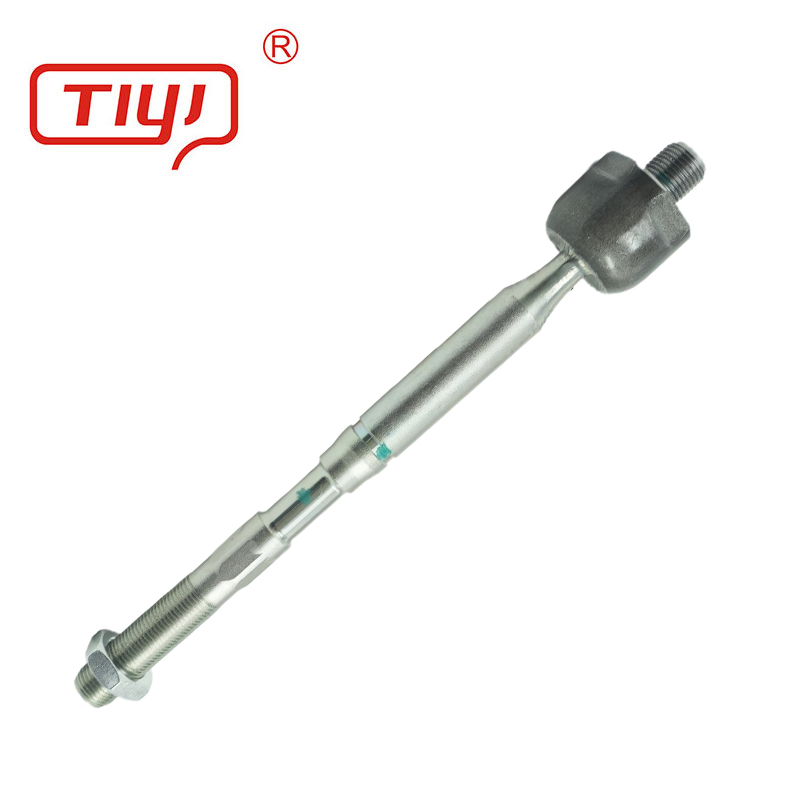
Worn tie rod ends produce a sharp clunk or click on the affected front corner. Tie rods connect the steering rack to the wheel knuckle, and they are the most common steering-related source of turning clunks. When the inner or outer joint wears, the rack movement reaches the wheel with a delay that you can often feel in the steering wheel.
Ball Joints
A deep clunk from the lower front corner, especially when turning over bumps, usually points to a worn ball joint. Ball joints carry the vehicle's weight and allow the knuckle to pivot. Once the socket wears, the stud bangs against the housing whenever load shifts.
Sway Bar Links
A rattle or clunk when one front wheel hits an uneven surface during a turn often comes from a loose stabilizer link. Sway bar links connect the stabilizer bar to the strut or control arm. Their small ball sockets dry out and loosen after years of road grit, so the link clunks in its mountings.
Strut Mounts
A creak or pop when turning the wheel while stationary, such as in a parking lot, is commonly a failing strut mount. The mount's bearing lets the strut pivot with the steering wheel; when the bearing dries out or cracks, every turn forces it over a rough surface.
CV Joints
A rapid clicking or ticking on tight turns, or a clunk when accelerating out of a corner, is the classic CV joint symptom on front-wheel-drive cars. Tears in the rubber boot let dirt and water reach the joint, and the bearing fails soon after.
| Component | Typical sound | Worst condition | Part cost (USD) |
|---|---|---|---|
| Tie rod end | Sharp click or clunk on turns | Uneven pavement and full lock | $15–$60 per side |
| Ball joint | Deep clunk from lower front corner | Turning over bumps | $20–$80 per joint |
| Sway bar link | Rattle or metallic clunk | One wheel on a bump during a turn | $10–$40 each |
| Strut mount | Creak or pop when steering while stationary | Parking-lot manoeuvres | $20–$50 each |
| CV joint | Clicking or ticking in a constant-radius turn | Tight U-turns under load | $50–$120 per driveshaft |
How to Diagnose the Clunking Sound at Home
You can narrow down the failing part in about 15 minutes with basic hand tools, provided you follow safe jacking and support procedures.
- Drive slowly in an empty parking lot, turn the wheel fully left and fully right, and listen for which front corner the clunk comes from.
- Turn the wheel while stationary and feel for roughness or hesitation in the steering wheel.
- Park on level ground, chock the rear wheels, apply the parking brake, and jack up the front end onto jack stands.
- Grip the tire at the 3 o'clock and 9 o'clock positions and push and pull. Horizontal play usually means a worn tie rod end or steering rack.
- Grip the tire at 6 o'clock and 12 o'clock and rock the top and bottom. Vertical play usually means a worn ball joint.
- Inspect the sway bar links and bushings for cracked rubber, broken studs, or visible movement when you push on the bar.
- Check the CV boots for splits, grease leakage, or missing clamps.
- Use a pry bar under the tire to confirm play in the lower ball joint and the tie rod outer end.
If you have any doubt about what you find, have a shop perform a front-end inspection. The same tests are quick and inexpensive when a mechanic does them on a lift.
Left vs Right Turns: How the Direction Helps You Diagnose
Which way you turn points to which side is worn. On a left turn, the right front wheel becomes the outside wheel, takes more load, and usually produces the clunk first. If the noise appears only on left turns, inspect the right side first; if it appears only on right turns, inspect the left side. And when a clunk shows up in both directions, check both sides, because suspension components wear at a similar rate and you should replace them in pairs.
Is It Safe to Drive With a Clunking Sound?
It is not safe to ignore a clunking sound when turning, because steering and suspension failures can cause sudden loss of control. Tie rod ends and ball joints are safety-critical steering parts; if either separates on the road, the wheel collapses and the vehicle drops onto the coupler or rotor. Even a sway bar link failure accelerates wear on nearby control arm bushings and strut mounts. Keep your speed low, avoid hard cornering, and book the repair promptly.
How to Choose the Right Replacement Parts
The correct replacement part is one that matches the original equipment (OE) design, material, and dimensional tolerances. A part that merely fits the bolt pattern will fail quickly if its socket clearance, stud hardness, or bushing compound is inferior. Look for a manufacturer that documents its quality testing and warranty.
Examples of OE-standard steering and suspension parts you can order directly:
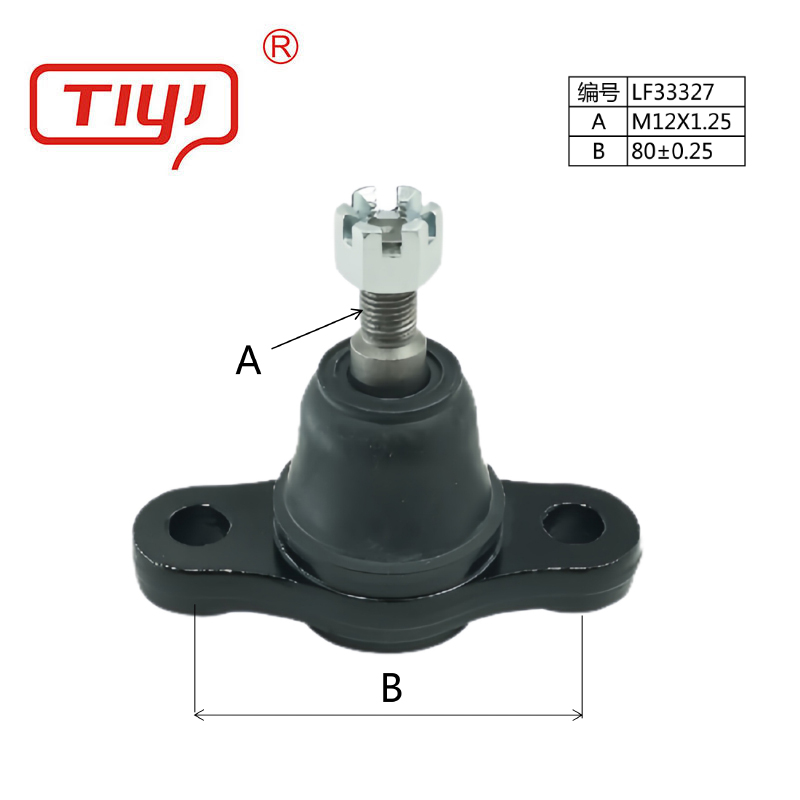 Hyundai Elantra 2000-2007 Ball Joint OEM 51760-0Q000This ball joint matches the OE part for Hyundai Elantra models from 2000 to 2007. It is made by a factory with 28 years of experience and passes one million load-cycle tests, backed by a two-year or 100,000 km warranty.View Product →
 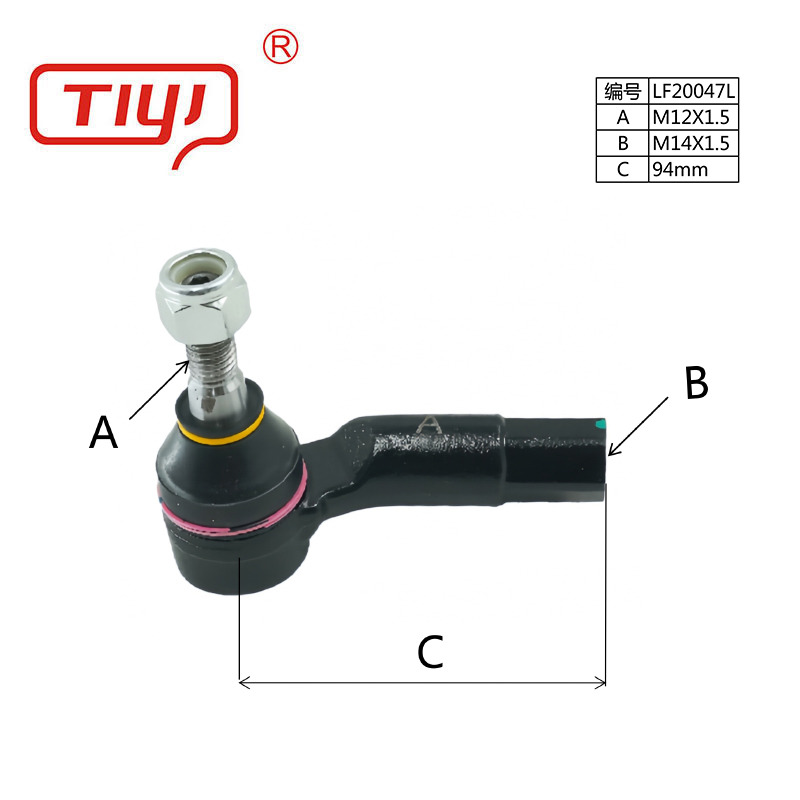 VW Lavida A4 2008- Tie Rod End OEM 1J0422811BA tie rod end for VW Lavida A4 from 2008 onward, with thread sizes M12x1.5 and M14x1.5 and a 94mm center distance. Sourced from a chassis specialist whose parts endure rigorous testing and a comprehensive warranty.View Product →
 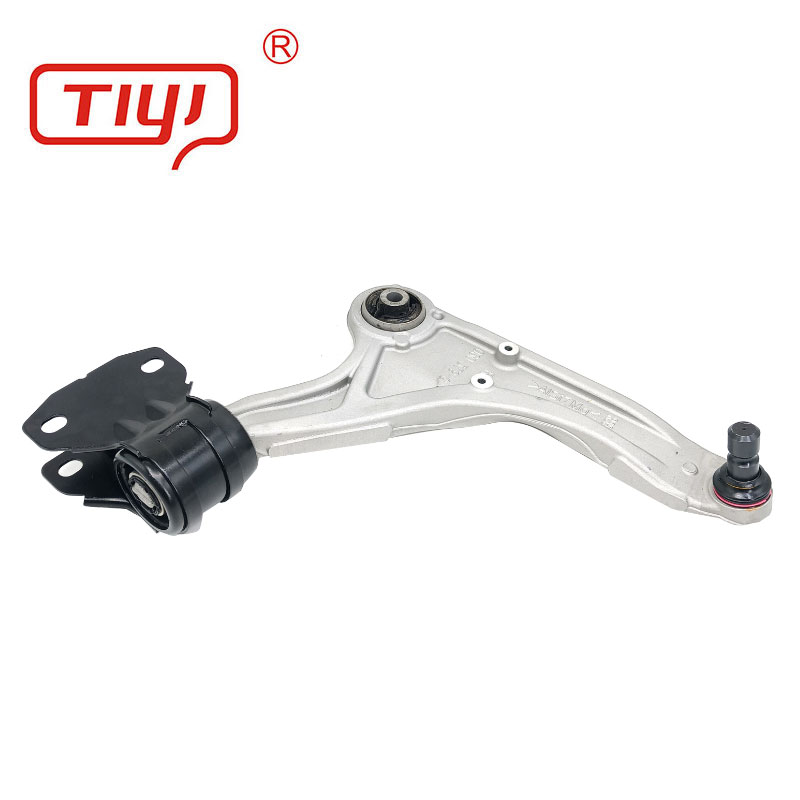 Ford Mondeo 2013-2015 Lower Control Arm OEM DG9C3A053ANEThis lower control arm fits Ford Mondeo models from 2013 to 2015. It comes from a manufacturer with 28 years of production experience, and the brand's suspension parts are tested for durability and covered by a two-year or 100,000 km warranty.View Product →
Tianyu, a chassis parts manufacturer with 28 years of production experience, builds these components in its own factories. Its ball joints pass one million load-cycle tests, its bushings survive half a million simulated road miles, and every Tianyu-branded part carries a two-year or 100,000 km warranty.
When comparing options, check the OE number stamped on your old part against the listing, and confirm the application matches your exact model year. For consistent front-end geometry, choose automotive ball joints and car tie rod ends from the same supplier where possible.
Frequently Asked Questions
Can tires cause a clunking sound when turning?
Not typically. Tires produce rumbling or thumping that gets faster with vehicle speed, whereas suspension clunks appear at low speed when load shifts during a turn. If the noise appears only on full-lock turns, inspect the steering and suspension rather than the tires.
Why does my car clunk only at low speed?
Steering loads are highest at low speed, especially at full lock in a parking lot. At higher speed, the suspension absorbs some of the movement and road noise masks the sound. A low-speed clunk is still a sign of wear, not a reason to postpone the repair.
How much does it cost to fix a clunking sound when turning?
The part itself is often the smallest cost: a tie rod end or sway bar link can be $15–$50, while a control arm assembly runs $50–$150. Shop labour and a front-end alignment add the rest. Buying direct from a manufacturer and supplying the OE number can help you avoid overpaying at a retail counter.
Is a clunking sound when turning dangerous?
Yes when tie rod ends or ball joints are involved, because those parts directly control the wheel. Failure means a loss of steering control. A clunk from a sway bar link is less critical, but it still deserves a timely fix to protect the rest of the front suspension.
To summarise, a clunking sound when turning is a clear sign of looseness in your steering or suspension. Identify the failing component before ordering parts, replace worn components in pairs where the manufacturer recommends it, and follow a proper torque sequence and wheel alignment after the repair. If you need OE-standard ball joints, tie rod ends, control arms, stabilizer links, or rack ends, Tianyu's replacement line covers most mainstream makes and models with documented testing and a two-year warranty.