

 English
 中文简体
中文简体
 Español
 عربى
عربى

What Are the Signs of Ball Joint Failure? A Complete Driver's Guide
 Administrator
 2026-05-09
The most common signs of ball joint failure include a clunking or knocking noise from the front suspension, uneven or rapid tire wear, a pulling sensation while steering, vibrations in the steering wheel, and visible looseness or excessive play when the wheel is rocked by hand. In advanced cases, a failing ball joint can cause the wheel to collapse outward — a catastrophic failure that can result in complete loss of vehicle control at any speed.
Ball joints are among the most safety-critical components in your vehicle's suspension system, yet they are frequently overlooked until failure is imminent or has already occurred. According to NHTSA data, suspension component failures — including ball joints — contribute to approximately 5,000 vehicle crashes per year in the United States alone. Recognizing the warning signs of ball joint failure early is not merely a matter of vehicle maintenance — it is a matter of road safety for everyone in the car and around it.
Content
- What Is a Ball Joint and What Does It Do?
- The 8 Most Common Signs of Ball Joint Failure
- 1. Clunking, Knocking, or Popping Noises from the Front Suspension
- 2. Vibration in the Steering Wheel
- 3. Vehicle Pulling to One Side
- 4. Uneven or Accelerated Tire Wear
- 5. Wandering or Vague Steering Feel
- 6. Visible Wear or Torn Dust Boot
- 7. Excessive Play Detected During Manual Inspection
- 8. Tilted or Misaligned Wheel Appearance
- Ball Joint Failure Signs: Severity and Urgency Guide
- How to Test for Ball Joint Failure at Home
- Ball Joint Failure vs. Other Suspension Problems: How to Tell the Difference
- What Causes Ball Joints to Fail Prematurely?
- How Long Do Ball Joints Typically Last?
- What Happens If You Ignore Signs of Ball Joint Failure?
- Frequently Asked Questions: Signs of Ball Joint Failure
- Conclusion
What Is a Ball Joint and What Does It Do?
A ball joint is a pivoting bearing that connects the wheel hub and steering knuckle to the suspension control arms, allowing the suspension to move up and down while simultaneously allowing the wheel to turn left and right for steering. It functions much like a human hip joint — a ball-and-socket design that permits multi-axis movement while carrying significant structural loads.
Most vehicles have at least two ball joints per front wheel — an upper and a lower — though many modern front-wheel-drive and independent suspension designs use only a lower ball joint per side. Some vehicles also have ball joints in the rear suspension. The lower ball joint typically bears the greatest load and is the one most commonly associated with ball joint failure symptoms.
The internal structure of a ball joint consists of:
- A hardened steel ball stud — the load-bearing element that pivots within the socket
- A bearing socket — a precision-machined housing lined with bearing material (commonly PTFE, nylon, or sintered metal)
- A rubber or polyurethane dust boot — seals the joint against contamination and retains lubrication
- Grease — lubricates the ball-to-socket interface (either pre-packed for life or serviceable via a grease fitting)
Failure begins when the bearing socket wears, the dust boot cracks and admits moisture and dirt, or lubrication is lost — leading to metal-on-metal contact, accelerating wear, and ultimately structural failure of the joint.
The 8 Most Common Signs of Ball Joint Failure
Ball joint failure rarely happens without warning — the joint typically degrades over thousands of miles, producing progressively worsening symptoms before complete failure occurs. Recognizing these signs early allows timely replacement before safety is compromised.
1. Clunking, Knocking, or Popping Noises from the Front Suspension
A clunking or knocking noise from the front suspension — especially over bumps, potholes, speed bumps, or during turns — is the most frequently reported early sign of ball joint failure. The noise is caused by the worn ball stud moving loosely within the bearing socket, creating impact sounds as it shifts under load changes.
The sound characteristics vary by severity:
- Early stage: Faint, intermittent clicking or ticking, most noticeable over rough surfaces at low speed
- Mid stage: Louder clunking, present on most bumps and during cornering, audible inside the cabin
- Late stage: Loud, rhythmic knocking even on smooth roads, felt through the floor and steering wheel as well as heard
Important: clunking noises can also be caused by worn sway bar links, strut mounts, or control arm bushings. A qualified technician must isolate the source before condemning the ball joint.
2. Vibration in the Steering Wheel
A vibration or shimmy felt through the steering wheel — particularly at highway speeds or during acceleration — is a significant sign of ball joint wear. As the ball joint's internal clearance increases beyond specification, it can no longer maintain precise alignment of the wheel hub, causing oscillation that transmits through the steering column to the wheel.
Ball joint-related steering vibration typically intensifies when hitting rough pavement and may diminish on smooth roads — distinguishing it from tire imbalance vibration, which is speed-dependent and consistent across surface types. If vibration appears suddenly after hitting a pothole, suspect ball joint damage.
3. Vehicle Pulling to One Side
A vehicle that drifts or pulls consistently to the left or right without steering input is a common sign of ball joint wear on that side. As the ball joint wears, wheel alignment changes — the camber and caster angles shift away from factory specification, pulling the vehicle in the direction of the affected wheel.
Unlike tire pressure-related pulling (which is easily corrected), ball joint-related pulling cannot be resolved by wheel alignment alone — the worn joint must be replaced first, followed by a fresh alignment. Attempting alignment on a vehicle with worn ball joints produces results that immediately deteriorate because the underlying geometry is unstable.
4. Uneven or Accelerated Tire Wear
Uneven tire wear — particularly inner or outer edge wear on a single front tire — is a reliable indicator of ball joint failure causing a misalignment condition. When a ball joint wears sufficiently, the wheel tilts out of its correct camber angle. Excessive negative camber (top of tire tilting inward) causes inner edge wear; excessive positive camber (top tilting outward) causes outer edge wear.
A worn ball joint can cause tire wear severe enough to require tire replacement after as few as 5,000–10,000 miles of operation in an advanced wear state — representing a significant additional cost beyond the ball joint replacement itself. Identifying the ball joint issue early protects tire life and prevents this compounded expense.
5. Wandering or Vague Steering Feel
Steering that feels imprecise, "loose," or requires constant minor corrections to maintain a straight line is a significant sign of ball joint play. Worn ball joints introduce slop into the steering geometry — the wheel can deviate from its intended path by small amounts without the driver inputting any steering movement, because the joint's internal play allows the wheel hub to shift position unpredictably.
This symptom is particularly dangerous at highway speeds, where small deviations in wheel angle produce large lateral vehicle movement. Drivers often describe the sensation as the vehicle "wandering" or "darting" unpredictably on straight roads.
6. Visible Wear or Torn Dust Boot
A torn, cracked, or missing ball joint dust boot is a direct sign of impending accelerated ball joint failure — even if the joint itself has not yet shown other symptoms. The dust boot seals the bearing socket against water, road grit, and debris. Once compromised, contamination enters the joint and acts as an abrasive, rapidly destroying the bearing surfaces.
A ball joint with an intact boot and adequate lubrication can last 70,000–150,000 miles. The same joint with a torn boot exposed to road contamination may fail within 10,000–20,000 miles. Inspecting boots visually during routine oil changes or tire rotations is one of the most effective early warning measures available.
7. Excessive Play Detected During Manual Inspection
During a professional inspection with the vehicle raised on a lift, a technician can detect ball joint failure by measuring the amount of play (movement) in the joint under controlled conditions. The accepted maximum play varies by vehicle manufacturer and joint type — load-carrying (compression) joints are typically condemned at 0.050 inches (1.27 mm) of movement, while non-load-carrying (tension) joints may use a different threshold specified by the manufacturer.
Many modern ball joints incorporate a wear indicator — a small protrusion on the grease fitting or housing that recedes flush with the joint body when wear reaches the replacement threshold. If the indicator is flush or recessed, replacement is required regardless of other symptoms.
8. Tilted or Misaligned Wheel Appearance
In severe ball joint failure, the wheel visibly tilts out of its correct vertical position — a sign that the joint has lost structural integrity and is on the verge of complete separation. This is most visible when looking at the front wheel from the front of the vehicle — one wheel may appear to lean significantly inward or outward at the top compared to the other side.
A vehicle exhibiting this symptom should be taken off the road immediately. A ball joint at this stage can separate without further warning, causing the wheel to fold under or away from the vehicle at any speed.
Ball Joint Failure Signs: Severity and Urgency Guide
Not all signs of ball joint failure carry equal urgency — use this reference to prioritize your response.
| Sign of Failure | Severity Stage | Safety Risk | Recommended Action |
| Torn dust boot (no other symptoms) | Early | Low (imminent escalation) | Schedule repair within 2 weeks |
| Faint intermittent clunking | Early–Mid | Low–Moderate | Inspect and schedule repair |
| Uneven tire wear (inner/outer edge) | Mid | Moderate | Inspect within 1 week |
| Vehicle pulling to one side | Mid | Moderate | Inspect within 1 week |
| Steering wheel vibration | Mid | Moderate | Inspect within 1 week |
| Loose / wandering steering feel | Mid–Late | High | Inspect immediately; limit highway driving |
| Loud constant clunking / knocking | Late | High | Do not drive; have vehicle towed |
| Visibly tilted / leaning wheel | Critical | Extreme — imminent separation | Do not drive; call for tow immediately |
Ball joint failure warning signs ranked by severity stage, associated safety risk level, and recommended driver response for each symptom.
How to Test for Ball Joint Failure at Home
While a professional lift inspection is the definitive test, drivers can perform a basic ball joint check at home using simple tools and safe lifting procedures. These tests detect moderate to advanced wear and serve as a useful preliminary check before visiting a shop.
The Rocking Test (for Non-Load-Carrying Ball Joints)
This test detects play in ball joints that carry lateral (sideways) loads rather than vertical (compression) loads:
- Safely lift the vehicle using a floor jack and support it on jack stands rated for the vehicle's weight. Never work under a vehicle supported only by a hydraulic jack.
- Grip the tire at the 9 o'clock and 3 o'clock positions (sides).
- Push and pull the tire firmly in and out. Any visible movement of the wheel relative to the suspension — clicking, looseness, or the hub visibly shifting — indicates ball joint play requiring professional measurement.
The Top-and-Bottom Test (for Load-Carrying Ball Joints)
Load-carrying ball joints (typically lower ball joints on most vehicles) require a different test because vertical play is loaded out when the suspension droops:
- Place the floor jack under the lower control arm (not the jacking point) to support the suspension in its loaded position.
- With the suspension slightly loaded, grip the tire at 12 o'clock (top) and 6 o'clock (bottom).
- Rock the tire in and out. Movement detected in this position indicates lower ball joint wear, because the weight is on the joint as it is during normal driving.
Important: These tests detect significant wear. Borderline or early-stage wear may not be detectable by feel alone. A professional technician using a pry bar and dial indicator can measure play to within thousandths of an inch, providing a more precise assessment.
Ball Joint Failure vs. Other Suspension Problems: How to Tell the Difference
Many signs of ball joint failure overlap with symptoms of other suspension and steering component wear, making accurate diagnosis essential before committing to replacement.
| Symptom | Ball Joint Failure | Worn Sway Bar Links | Worn Tie Rod Ends | Strut / Shock Failure |
| Clunking over bumps | Yes — common | Yes — very common | Possible | Possible (thud) |
| Steering wheel vibration | Yes | Rarely | Yes — common | Possible |
| Vehicle pulling to one side | Yes | No | Yes — common | Possible |
| Loose steering feel | Yes | No | Yes — primary symptom | No |
| Uneven tire wear | Yes — inner/outer edge | Rarely | Yes — feathering | Yes — cupping |
| Noise when turning | Yes — clunk/creak | Yes — clunk on body roll | Possible | Possible (creak) |
| Risk of wheel separation | Yes — catastrophic risk | No | No | No |
Symptom comparison chart differentiating ball joint failure from other common suspension and steering component failures to assist in accurate diagnosis.
What Causes Ball Joints to Fail Prematurely?
Ball joints wear faster than their rated lifespan when exposed to conditions that accelerate internal wear or compromise the protective boot and lubrication. Understanding these causes helps owners prevent premature failure.
- Lack of lubrication: Serviceable (greaseable) ball joints that are never lubricated run dry and wear rapidly. Manufacturers typically recommend greasing every 3,000–5,000 miles or at every oil change on vehicles with grease fittings.
- Torn or cracked dust boot: The single most common cause of accelerated ball joint wear. Once contamination enters the sealed bearing, wear rate increases dramatically. High-pressure car washes directed at wheel well components are a frequent culprit.
- Road impact damage: Hitting a large pothole, curb, or debris at speed can deform the ball joint socket or fracture the ball stud, causing immediate damage that may not produce symptoms until later.
- Overloading the vehicle: Regularly exceeding the vehicle's gross vehicle weight rating (GVWR) places excessive stress on the lower ball joints, accelerating compression wear.
- Lifted or modified suspension: Aftermarket lift kits that do not include extended or re-angled ball joints place the joint at operating angles outside its design range, dramatically increasing wear rate and failure risk.
- Corrosion in high-salt environments: Road salt in winter climates corrodes the ball joint housing, boot, and retaining hardware, often causing boot failure and structural degradation faster than in temperate climates.
How Long Do Ball Joints Typically Last?
Under normal driving conditions with proper maintenance, ball joints last between 70,000 and 150,000 miles — but this range varies enormously based on driving environment, vehicle type, and maintenance history.
| Driving Environment | Expected Ball Joint Lifespan | Key Accelerating Factors |
| Smooth highway, temperate climate | 120,000–150,000+ miles | Minimal stress, low contamination |
| Mixed city / highway, moderate climate | 80,000–120,000 miles | Stop-and-go loading, urban potholes |
| Heavy city driving, poor roads | 50,000–80,000 miles | Frequent impacts, constant load cycling |
| Winter climate with road salt | 50,000–90,000 miles | Boot corrosion, salt contamination |
| Off-road / 4WD use | 30,000–60,000 miles | Extreme angles, mud, water, rock impacts |
| Lifted truck, no corrective geometry | 20,000–40,000 miles | Operating beyond designed angle range |
Estimated ball joint lifespan by driving environment and usage pattern, illustrating how dramatically conditions affect service life.
What Happens If You Ignore Signs of Ball Joint Failure?
Ignoring ball joint failure signs does not slow the degradation — it accelerates it, and the consequences of complete failure are potentially fatal.
When a ball joint separates completely — the ball stud pulls out of or breaks free from the socket — the following sequence occurs in milliseconds:
- The wheel and hub assembly loses its connection to the suspension and steering system.
- The wheel collapses inward or folds outward under the vehicle's weight.
- The brake rotor or drum contacts the road surface, causing immediate drag and sparks.
- The vehicle swerves violently in the direction of the failed wheel, with no driver steering input capable of correcting the trajectory.
- At highway speeds, this typically results in a rollover or severe collision.
Beyond the catastrophic failure scenario, operating a vehicle with known ball joint wear causes compounding damage to adjacent components: tires wear unevenly and require early replacement, wheel alignment cannot be maintained, and the steering and suspension geometry stresses other components including tie rod ends, control arm bushings, and wheel bearings — multiplying the eventual repair cost far beyond a single ball joint replacement.
Frequently Asked Questions: Signs of Ball Joint Failure
Q: Can I drive with a bad ball joint?
It depends entirely on the severity. A ball joint showing early signs — a faint clunk over bumps, a slightly torn boot — may allow limited, low-speed driving to a repair facility. A ball joint showing moderate to severe symptoms — loud constant clunking, loose steering, visible wheel tilt — should not be driven at all. Have the vehicle towed rather than risk a complete joint separation on the road. There is no reliable way for a driver to predict when a worn ball joint will transition from "still holding" to "completely separated."
Q: How much does ball joint replacement cost?
Ball joint replacement cost varies by vehicle type, joint location, and whether the joint is a press-in or bolt-on design. For most passenger cars and light trucks, a single ball joint replacement including parts and labor ranges from $150–$400 per joint. Vehicles where the ball joint is integral to the control arm (requiring full arm replacement) may cost $300–$700 per side. A four-wheel alignment — which is required after any ball joint replacement — adds $80–$150. Replacing all four ball joints on a vehicle with upper and lower joints front and rear can total $800–$2,000 or more.
Q: Should both ball joints be replaced at the same time?
If both front lower ball joints have similar mileage and one is being replaced, replacing both at the same time is strongly recommended. Ball joints on the same axle wear at similar rates because they experience identical loads and conditions. Replacing only the failed joint leaves a heavily worn partner that is likely to fail within the same maintenance interval, requiring another alignment fee and the same labor investment. The incremental cost of replacing the second joint while the vehicle is already in the shop is much lower than returning for a separate repair.
Q: How is a ball joint inspection performed professionally?
A professional ball joint inspection involves raising the vehicle on a lift, supporting the suspension appropriately (in load or no-load position depending on joint type), and using a pry bar to apply force at specific points while measuring movement with a dial indicator. The measured play is compared to the vehicle manufacturer's maximum allowable specification. Many technicians also visually inspect the dust boot condition, check the wear indicator position if present, and observe for grease leakage — all indicators of joint condition that complement the measurement.
Q: Are aftermarket ball joints as good as OEM?
Quality varies significantly among aftermarket ball joint suppliers. Premium aftermarket ball joints from reputable manufacturers using OEM-specification materials and engineering meet or exceed original equipment standards and often include better grease fittings for ongoing lubrication. Low-cost budget aftermarket joints may use inferior bearing materials, thinner dust boot compounds, and looser manufacturing tolerances — resulting in significantly shorter service life and potentially early failure. For a safety-critical component like a ball joint, it is not advisable to select replacement parts based on price alone.
Q: How do I extend ball joint life?
The most effective steps to maximize ball joint service life are: (1) grease the joints at every oil change if your vehicle has serviceable fittings; (2) avoid directing high-pressure water jets at ball joint boots during car washing; (3) have the boots inspected and replaced immediately if cracking or tearing is detected; (4) avoid aggressive off-road use unless the vehicle is equipped with heavy-duty joints rated for that purpose; (5) have the suspension inspected after any significant impact such as hitting a large pothole or curb at speed; and (6) keep the vehicle at or below its rated load capacity.
Conclusion
The signs of ball joint failure — clunking noises, steering vibration, vehicle pulling, uneven tire wear, loose steering, torn boots, and visible wheel tilt — form a progressive sequence from early warning to imminent catastrophe. Recognizing these symptoms and responding appropriately at each stage is the difference between a routine repair and a roadside emergency.
Ball joint failure is not a slow, graceful decline — it can transition from "manageable wear" to "complete separation" without additional warning. The safest and most cost-effective approach is to have any suspected ball joint failure symptoms professionally inspected promptly, replace worn joints before they reach the critical stage, and follow a maintenance routine that protects ball joint service life from the outset.
Your vehicle's ball joints are among the smallest components carrying the largest safety responsibility. Treat the warning signs with the seriousness they deserve.
Related Products
-
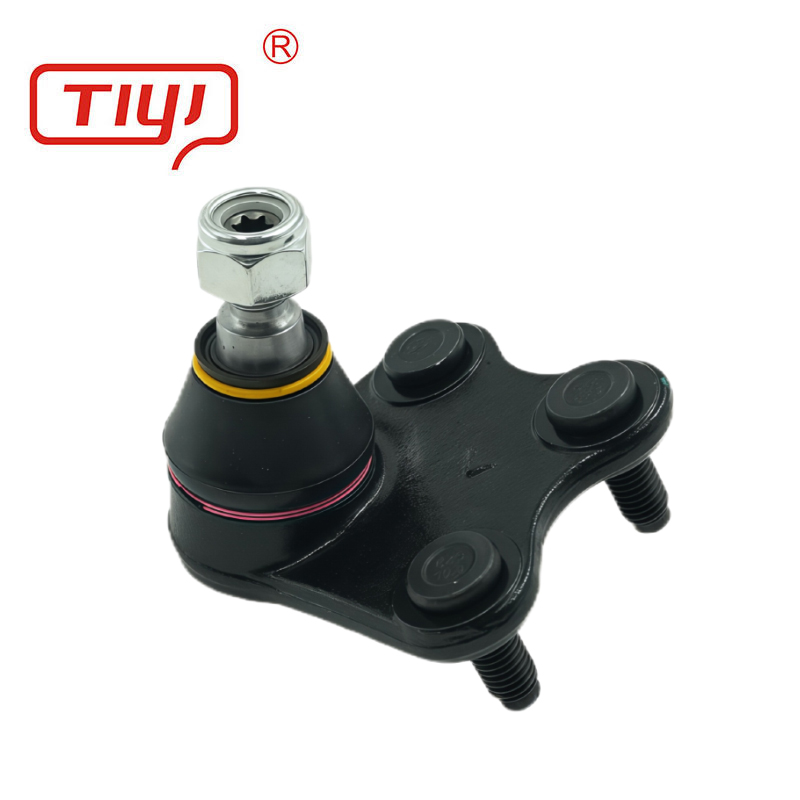
VW NEW JETTA/NEW SANTANA 2013-/BALL JOINT/OEM:6RD407365
View More -
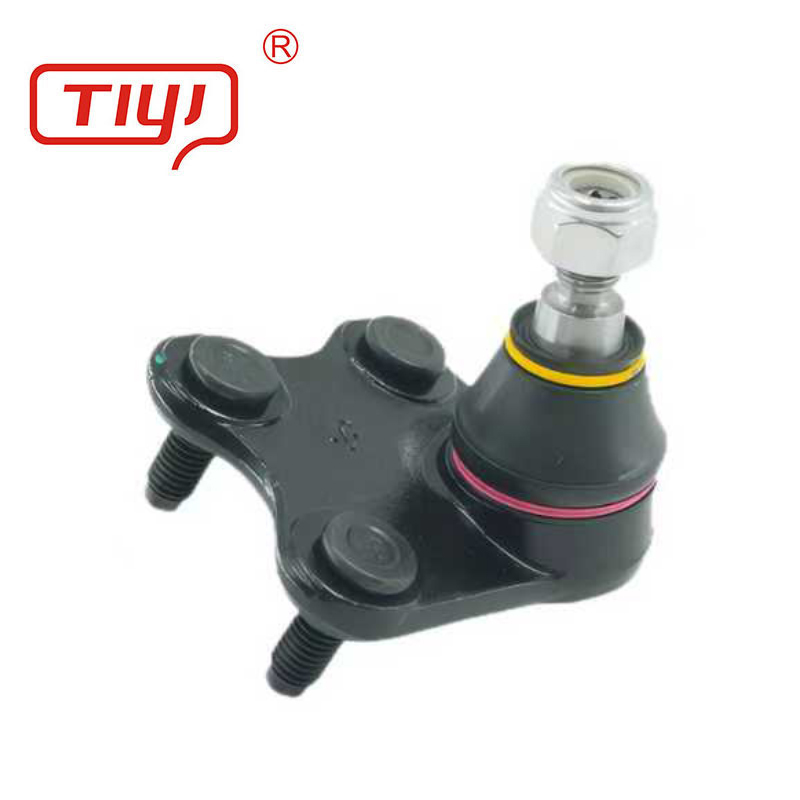
VW NEW JETTA/NEW SANTANA 2013-/BALL JOINT/OEM:6RD407366
View More -
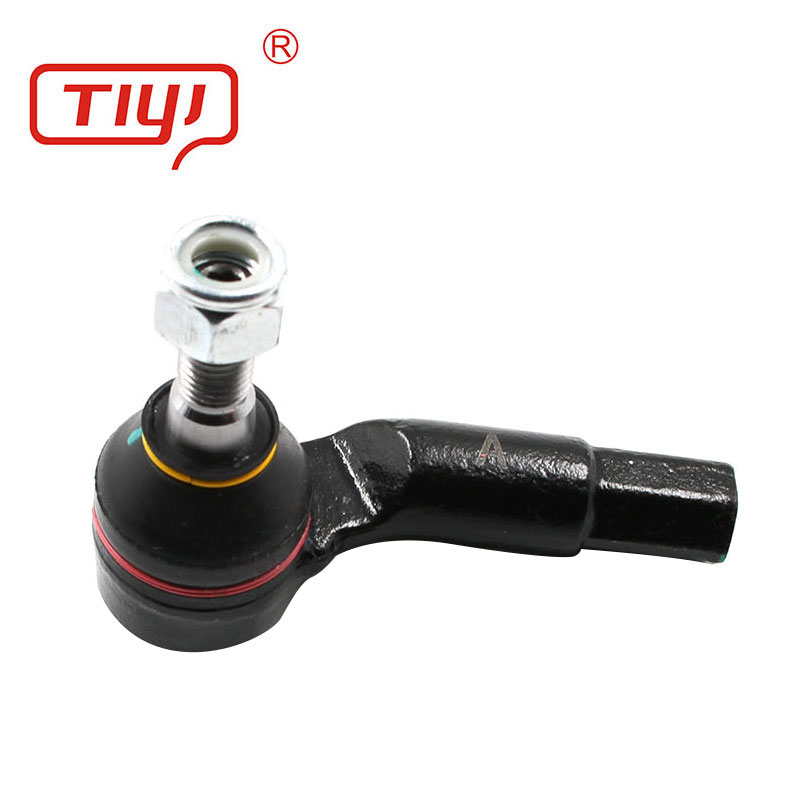
VW Lavida A4 2008-/Tie Rod End/OEM:1J0422811B
View More -
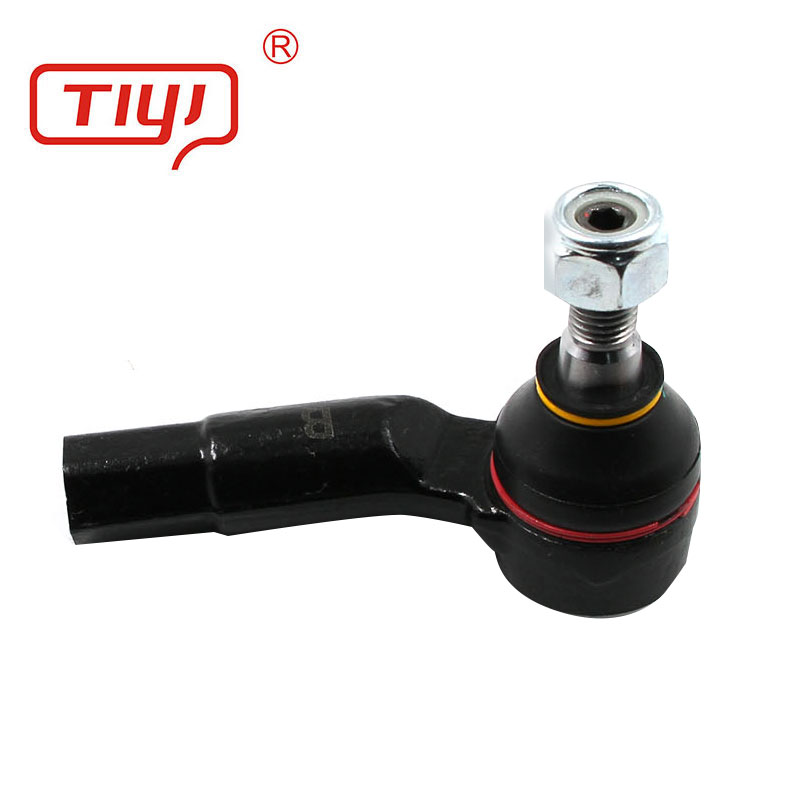
VW Lavida A4 2008-/Tie Rod End/OEM:1J0422812B
View More -
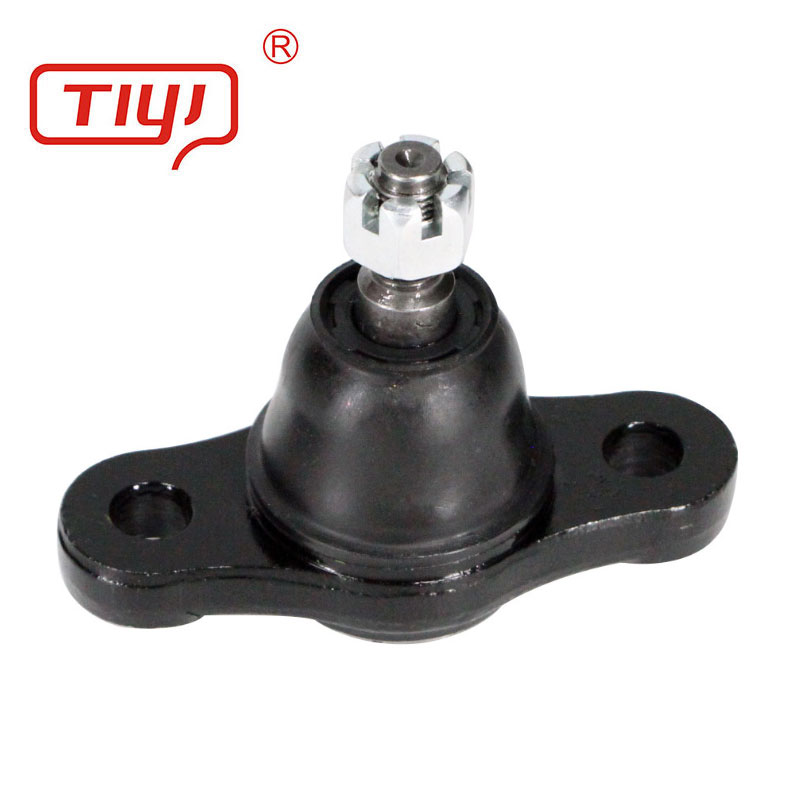
Hyundai Elantra 2000-2007/BALL JOINT/OEM:51760-0Q000
View More -
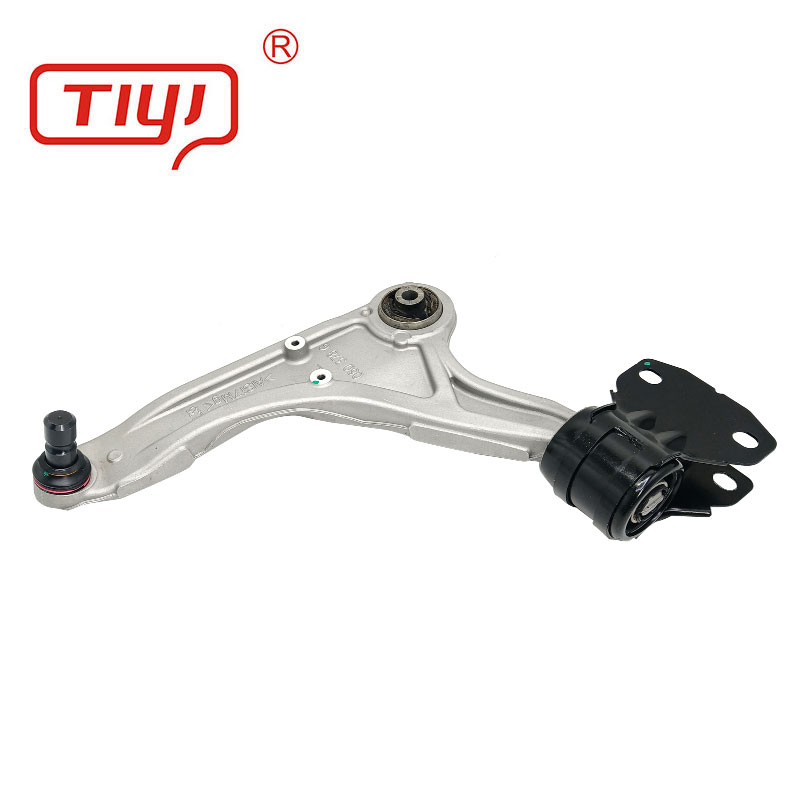
Ford Mondeo 2013-2015/LOWER CONTROL ARM/OEM: FG9C3A052ANB
View More
-


-
Quick Links
About Us Products Capabilities Support News & Events Contact Us -
Product Range
Rack End Tie Rod End Stabilizer Link Control Arm Ball Joint -
Address
No. 1471, Qingliu East Road, Chuzhou City, Anhui Province, China
