

 English
 中文简体
中文简体
 Español
 عربى
عربى


If you are asking why is the car shaking when I drive, the most common answer is an issue with your wheels or tires — typically an imbalance, flat spot, or misalignment — but the shaking can also stem from worn brake components, damaged suspension parts, engine misfires, or failing drivetrain components. The exact cause depends heavily on when the vibration occurs: at a specific speed, under braking, during acceleration, or constantly at all speeds. Identifying that pattern narrows the diagnosis dramatically and prevents unnecessary repair costs.
Content
- How to Read the Shaking Pattern Before You Visit a Mechanic
- Top 8 Reasons Your Car Is Shaking When You Drive
- Comparing Car Shaking Causes: Symptoms, Risk Level, and Repair Cost
- Why Does My Car Shake at Specific Speeds but Not Others?
- Preventive Maintenance to Stop Your Car from Shaking
- Frequently Asked Questions: Why Is My Car Shaking When I Drive?
- Conclusion: Do Not Ignore a Shaking Car
How to Read the Shaking Pattern Before You Visit a Mechanic
The most efficient way to diagnose car shaking when driving is to log three variables before anything else: speed range, driving condition, and vibration location. This simple self-check can save you hundreds of dollars in diagnostic fees.
| When Does It Shake? | Where Do You Feel It? | Most Likely Cause | Urgency |
| 55 – 70 mph (90 – 110 km/h) | Steering wheel | Wheel imbalance / tire issue | Moderate |
| When braking | Brake pedal / whole car | Warped rotors / worn brake pads | High |
| Accelerating from stop | Whole vehicle / floor | CV axle / drivetrain | High |
| Constant at all speeds | Steering wheel + body | Tire flat spot / suspension wear | Moderate–High |
| Idle / low RPM | Seat / floor | Engine misfire / mount failure | High |
Table 1: Quick-reference guide for diagnosing car shaking patterns by speed, location, and likely cause.
Top 8 Reasons Your Car Is Shaking When You Drive
The following causes account for over 90% of car shaking complaints seen in independent repair shops. Each section begins with the diagnostic conclusion, followed by supporting detail and estimated repair cost.
1. Unbalanced or Damaged Tires
Unbalanced tires are the single most common reason a car shakes when driving, responsible for an estimated 40–50% of highway vibration complaints. When a tire and wheel assembly has uneven weight distribution — even an imbalance as small as 0.25 oz (7 g) — it creates a rhythmic centrifugal force that translates into steering wheel shake, typically appearing between 55 and 75 mph (88–120 km/h).
- Symptom: Steering wheel vibration at highway speed that diminishes above or below that speed window.
- Cause: Lost wheel weight, uneven tread wear, or a tire with an internal belt shift.
- Fix: Spin balance all four tires on a dynamic balancing machine. Cost: USD 15–25 per wheel.
- When to replace: If the tire has a bulge, visible cord damage, or tread depth below 2/32 in (1.6 mm), balancing will not solve the shaking — replace the tire.
2. Wheel Alignment Problems
Poor wheel alignment causes progressive shimmy and uneven tire wear, and is responsible for roughly 15% of car shaking cases. When the wheels are not pointed in the correct geometric direction, the car pulls to one side and tyres scuff laterally at speed, generating vibration that worsens over time.
- Symptom: Vibration combined with the car drifting left or right without steering input; uneven tire wear on one edge.
- Cause: Hitting a pothole or kerb; suspension component wear; lowering springs installed without re-alignment.
- Fix: Four-wheel alignment on a laser alignment rack. Cost: USD 75–150. Should be performed every 12,000–15,000 miles (19,000–24,000 km) as preventive maintenance.
3. Warped Brake Rotors
Warped brake rotors are the leading cause of car shaking under braking, and this is a safety-critical issue requiring prompt attention. When brake rotors develop thickness variation (DTV) — as little as 0.004 in (0.10 mm) of runout — the brake pads grip unevenly during deceleration, producing a pulsing vibration felt through the brake pedal and steering wheel.
- Symptom: Shaking that appears or worsens specifically when the brake pedal is pressed; pedal pulsation.
- Cause: Thermal stress from repeated heavy braking; driving through deep water immediately after heavy brake use; overtightened lug nuts causing rotor distortion.
- Fix: Resurface (machine) rotors if thickness is above the minimum discard spec, or replace. Cost to replace front rotors and pads: USD 200–450 per axle.
4. Worn or Damaged Suspension Components
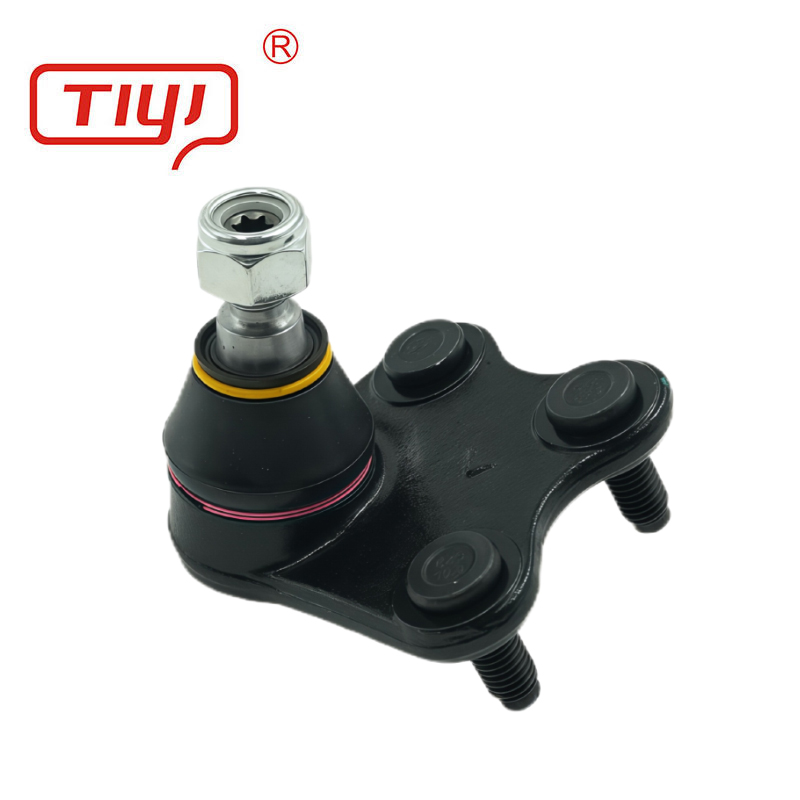
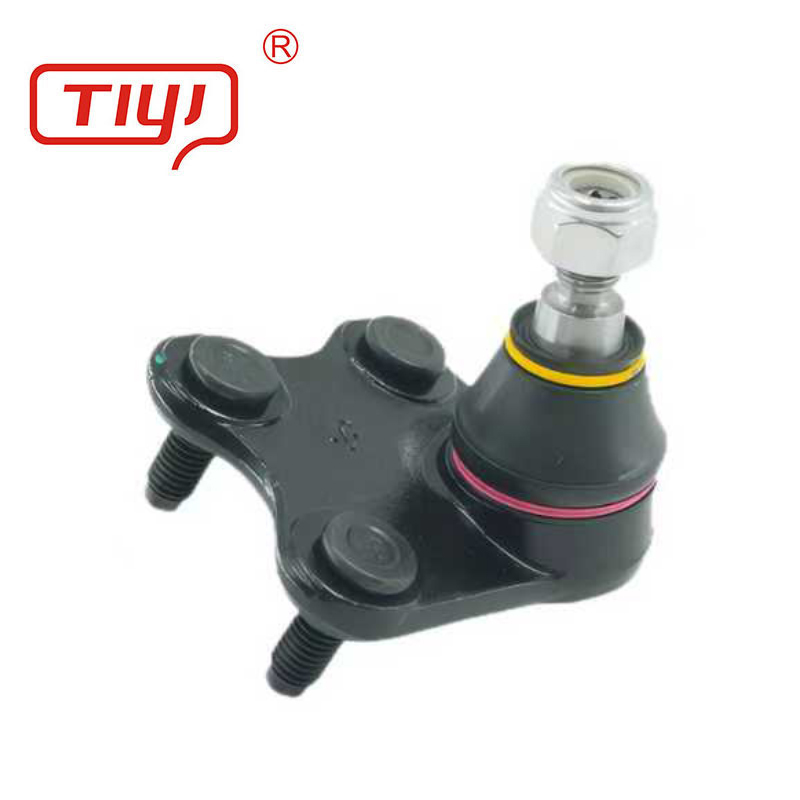
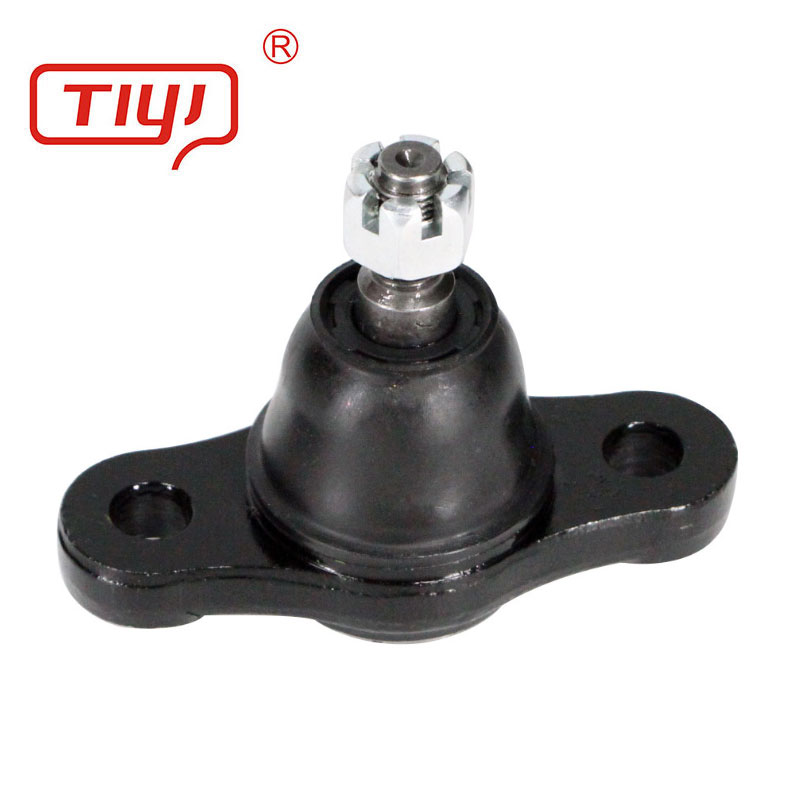
Worn suspension components — particularly ball joints, tie rod ends, and control arm bushings — cause persistent, low-frequency car shaking that does not follow a clear speed pattern. Each worn joint introduces play in the steering and suspension geometry, allowing wheel oscillation that the driver feels as a persistent shimmy or wobble.
- Ball joints: A worn lower ball joint with more than 0.05 in (1.3 mm) of axial play can cause death wobble at highway speeds — a violent, uncontrollable steering shake. Treat as a safety emergency.
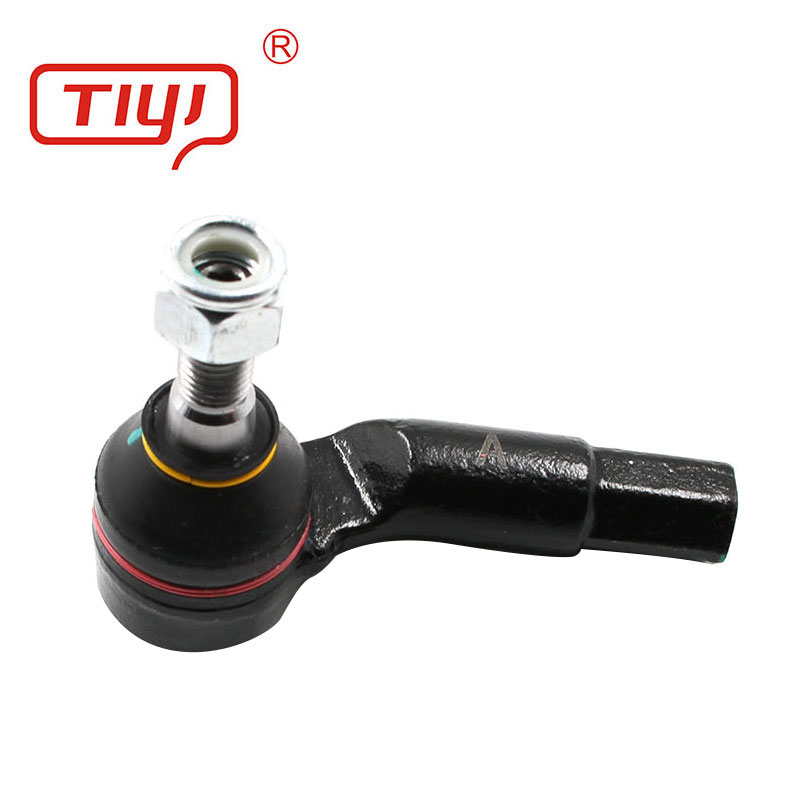
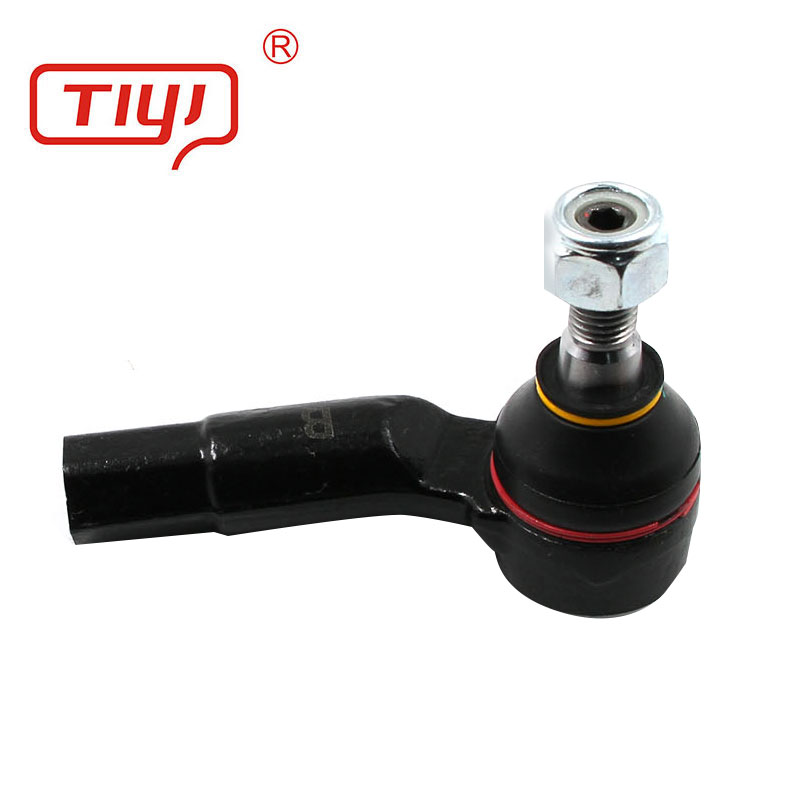
- Tie rod ends: Worn tie rods cause steering play and contribute to shimmy on rough roads. Replacement cost: USD 100–250 per side.
- Control arm bushings: Cracked rubber bushings allow the control arm to shift fore-aft under load, generating low-frequency vibration during acceleration and braking. Replacement: USD 200–500 per arm.
5. Engine Misfire
An engine misfire causes a distinct rhythmic shudder felt at idle or low RPM, and is one of the more urgent reasons a car shakes when driving. A misfiring cylinder fails to combust its fuel-air charge, interrupting the engine's smooth power delivery by as much as one power stroke per engine revolution.
- Symptom: Check Engine Light illuminated; rough idle; shaking worsens under load; possible smell of unburnt fuel from the exhaust.
- Common causes: Faulty spark plugs (replace every 30,000–100,000 miles depending on plug type); failed ignition coil; clogged fuel injector; vacuum leak.
- Fix: Read OBD-II fault codes to identify the misfiring cylinder. Spark plug replacement: USD 100–300. Ignition coil replacement: USD 150–400 per coil.
- Risk of ignoring: Prolonged misfiring can damage the catalytic converter within as few as 50 miles. Convertor replacement costs USD 800–2,500+.
6. Failing CV Axle or Driveshaft
A worn CV (constant velocity) joint or unbalanced driveshaft is the primary cause of car shaking when accelerating, especially in front-wheel-drive and all-wheel-drive vehicles. CV joints transmit torque at variable angles; when the protective rubber boot cracks and the grease escapes, the joint wears rapidly.
- Symptom: Clicking noise when turning under power; vibration that increases with acceleration; grease splattered inside the wheel arch.
- Fix: Replace the CV axle shaft assembly. Cost: USD 250–600 per shaft including labour.
- Driveshaft (RWD/AWD): An out-of-balance or bent driveshaft creates vibration that scales with vehicle speed. Driveshaft rebalancing: USD 150–250; replacement: USD 400–900.
7. Worn or Broken Engine Mounts
Failed engine mounts transmit engine vibration directly into the cabin, causing the whole car to shake at idle and low speeds. Engine mounts are hydraulic or rubber-damped brackets that isolate the engine from the chassis. When the rubber degrades or the hydraulic fluid leaks, isolation drops dramatically.
- Symptom: Loud clunk when shifting between Drive and Reverse; severe shaking at idle that lessens with RPM; visible engine movement of more than 0.5 in (13 mm) when revving in Park.
- Fix: Replace failed mounts. Cost: USD 200–600 per mount depending on location and vehicle. Most cars have 2–4 mounts.
8. Bent Wheel Rim
A bent wheel rim causes constant, low-speed vibration that cannot be corrected by balancing alone. Even a rim bent by as little as 1.5 mm of lateral runout will produce a noticeable shimmy because the tire contact patch lifts and re-contacts the road surface with each rotation.
- Symptom: Vibration present at low speeds (20–40 mph); tire pressure loss on the affected wheel; visible damage on the rim inner lip.
- Fix: Minor bends on steel rims can be press-straightened for USD 75–150. Alloy rims with cracks must be replaced: USD 200–800+ per rim.
Comparing Car Shaking Causes: Symptoms, Risk Level, and Repair Cost
To help you prioritise, the table below ranks every major cause of car shaking when driving by safety risk, average repair cost, and DIY feasibility.
| Cause | Safety Risk | Avg Repair Cost (USD) | DIY Friendly? | Can You Drive With It? |
| Wheel Imbalance | Low | 60 – 100 | No (needs machine) | Yes, short-term |
| Misalignment | Low–Moderate | 75 – 150 | No | Yes, short-term |
| Warped Rotors | High | 200 – 450 | Intermediate | No — stop distance increases |
| Worn Ball Joints | Very High | 200 – 500 | No | No — risk of wheel separation |
| Engine Misfire | Moderate | 100 – 400 | Partly (plugs only) | Brief only — risks cat. damage |
| CV Axle / Driveshaft | High | 250 – 900 | Intermediate | No — axle can separate |
| Engine Mounts | Moderate | 200 – 600 | No | Yes, carefully |
| Bent Rim | Moderate | 75 – 800 | No | Limited — monitor tire pressure |
Table 2: Car shaking causes ranked by safety risk, typical repair cost, DIY feasibility, and whether driving is safe in the short term.
Why Does My Car Shake at Specific Speeds but Not Others?
Speed-specific vibration is almost always a resonance phenomenon — the rotating component reaches a frequency at a particular road speed that matches the natural frequency of the chassis, steering column, or seats, amplifying the vibration noticeably. This is why the shaking often appears in a narrow band (e.g., 60–65 mph) and fades above or below it.
- 20–40 mph: Typically a bent rim, severe tire flat spot, or worn front hub bearing. Hub bearings produce a humming vibration that intensifies as load shifts on curves.
- 45–55 mph: Often a driveshaft imbalance or worn U-joints on rear-wheel-drive vehicles. Also associated with out-of-round tires with large-diameter tread blocks.
- 55–75 mph: Classic tire/wheel imbalance window. Front imbalance is felt in the steering wheel; rear imbalance shakes the seat and floor.
- Above 75 mph: Severe wheel imbalance, or more seriously, separation of a tire belt — visible as a raised ridge circling the tread. Pull over immediately if a belt-separation bulge is suspected.
Preventive Maintenance to Stop Your Car from Shaking
Most causes of car shaking when driving are preventable with a consistent maintenance schedule. The following intervals are based on general best practices for passenger vehicles under normal driving conditions.
| Maintenance Task | Recommended Interval | Vibration Problem It Prevents | Approx. Cost |
| Tire rotation | Every 5,000 – 7,500 miles | Uneven wear, flat spots | USD 20 – 50 |
| Wheel balance | Every 12,000 miles or new tire | Highway steering shimmy | USD 60 – 100 |
| Wheel alignment | Every 15,000 miles or after impact | Pull, shimmy, edge wear | USD 75 – 150 |
| Spark plug replacement | 30K miles (copper) / 100K (iridium) | Engine misfire shudder | USD 100 – 300 |
| Brake rotor inspection | Every pad replacement | Brake pedal pulsation | USD 20 – 50 (inspection) |
| Suspension inspection | Annually or every 30,000 miles | Steering wobble, death shimmy | USD 50 – 100 (inspection) |
| CV boot inspection | Every 30,000 miles | Acceleration vibration | USD 20 – 40 (inspection) |
Table 3: Preventive maintenance schedule to reduce the risk of car shaking when driving, with typical service intervals and costs.
Frequently Asked Questions: Why Is My Car Shaking When I Drive?
Q1: Is it safe to drive when my car is shaking?
It depends entirely on the cause. A mild shimmy from wheel imbalance at highway speed is low risk for a short trip to a shop. However, if the shaking occurs under braking, during acceleration, or appears suddenly at any speed, you should stop driving immediately. Causes such as a failed ball joint, separated tire belt, or broken CV axle can result in loss of vehicle control within seconds of failure.
Q2: Why does my car shake more on the highway than in the city?
Highway speeds amplify rotational imbalances because centrifugal force increases with the square of rotational speed. A wheel imbalance of just 1 oz (28 g) generates approximately 1.5 lbs of force at 60 mph, which is enough to produce a clearly felt vibration. In city traffic below 40 mph, that same imbalance may be imperceptible.
Q3: My car just had new tires installed and now it shakes — why?
New tires that were not balanced after mounting, or mounted on a rim with a pre-existing bent lip, will vibrate just as much as old ones. Insist the shop perform a road-force balance (not just a standard spin balance) after every tire installation. Road-force balancing detects internal tire stiffness variation, which standard balancers miss, resolving up to 30% more vibration complaints on new tires.
Q4: Can low tire pressure cause a car to shake?
Yes. A tire underinflated by more than 8 PSI below recommended pressure can develop a noticeable flat-spot vibration, particularly after the car has been parked overnight in cold weather. The vibration typically diminishes after 5–10 minutes of driving once the tire warms and rounds out. However, if shaking persists after reaching operating temperature, the tire may have permanent deformation and should be inspected.
Q5: Why does my car shake only when the air conditioning is on?
The AC compressor adds a significant load to the engine — typically 5–15 horsepower — which can expose an existing rough idle caused by worn spark plugs, a dirty throttle body, or a failing motor mount. The shaking is not caused by the AC itself; the AC is revealing a pre-existing condition that was previously masked. Diagnosing the rough idle source is the correct fix.
Q6: How much does it typically cost to diagnose why my car is shaking?
Most independent repair shops charge a diagnostic fee of USD 75–150 for a vibration complaint, which typically includes a road test, visual inspection, and lift inspection of tires, brakes, and suspension. Many shops apply this fee toward the repair cost if you proceed with the work. Bringing the symptom log described at the top of this article (speed, location, condition) can cut diagnosis time in half.
Q7: Can a clogged air filter cause car shaking?
Indirectly, yes. A severely clogged air filter restricts airflow to the engine, causing it to run rich (excess fuel). This can lead to fouled spark plugs and rough combustion, which produces a mild idle vibration. It rarely causes severe shaking on its own. Air filters should be replaced every 15,000–30,000 miles under normal conditions.
Conclusion: Do Not Ignore a Shaking Car
When you ask why is the car shaking when I drive, the answer nearly always falls into one of eight categories: tire/wheel issues, brake problems, suspension wear, engine misfire, drivetrain failure, or engine mount deterioration. The critical first step is identifying the pattern — what speed, what conditions, and where in the car you feel it.
A vibration that appears gradually and remains mild (such as a wheel imbalance) allows a short window to schedule a repair. A vibration that appears suddenly, worsens quickly, or is accompanied by noise, pulling, or a warning light should be treated as a stop-and-call situation. The repair costs for catching a problem early — USD 60 for a balance, USD 150 for an alignment — are a fraction of the USD 2,000–5,000+ bill that results from a failed CV axle causing suspension damage, or a misfire destroying a catalytic converter.
Stay proactive: rotate your tires every 6,000 miles, align your wheels once a year, and book a suspension inspection if your vehicle has crossed 60,000 miles (97,000 km). Doing so will keep vibration issues from developing in the first place — and keep you, your passengers, and other road users safe.