

 English
 中文简体
中文简体
 Español
 عربى
عربى


A stabilizer bar link — also called a sway bar link or anti-roll bar link — connects the stabilizer bar (sway bar) to the suspension control arm or strut assembly on each wheel. Its primary job is to transfer lateral force between the left and right sides of the suspension, reducing body roll when a vehicle corners, braking, or traversing uneven road surfaces. Without functioning stabilizer bar links, the sway bar cannot do its job, and the vehicle's handling, stability, and safety are significantly compromised.
This guide explains exactly how stabilizer bar links work, what symptoms indicate they have failed, how they compare to related suspension components, what replacement costs to expect, and answers the most frequently asked questions from vehicle owners.
Content
- How Does a Stabilizer Bar Link Work?
- The Role of the Stabilizer Bar Link in the Overall Suspension System
- Symptoms of a Bad or Worn Stabilizer Bar Link
- What Causes Stabilizer Bar Links to Fail?
- Stabilizer Bar Link Replacement: Cost, Difficulty, and Frequency
- Stabilizer Bar Link vs. Stabilizer Bar Bushing: Key Differences
- Is It Safe to Drive with a Worn or Broken Stabilizer Bar Link?
- How to Inspect a Stabilizer Bar Link Yourself
- Frequently Asked Questions (FAQ)
- Conclusion
How Does a Stabilizer Bar Link Work?
A stabilizer bar link works as a mechanical bridge between the stabilizer bar and the wheel's suspension assembly, transmitting twisting force from one side of the vehicle to the other to resist body roll. When a vehicle corners — say, turning left — centrifugal force pushes the body weight toward the right side, compressing the right suspension and extending the left. The stabilizer bar, which is a U-shaped torsion spring spanning the vehicle's width, resists this by twisting against itself. The stabilizer bar links are what physically connect the ends of this bar to each wheel's suspension, making that force transfer possible.
The Physics Behind Body Roll Reduction
Body roll reduction is the stabilizer bar link's core purpose. When one wheel rises (due to a bump or cornering load) and the other drops, the stabilizer bar link on the rising side pulls up on one end of the bar while the link on the dropping side pushes down on the other end. This creates torsional stress in the bar, generating a restoring force that pushes the rising side back down and lifts the dropping side — effectively levelling the vehicle. A stiff stabilizer bar paired with properly functioning links can reduce body roll by 30–60% compared to a vehicle with no anti-roll system, depending on bar diameter and vehicle weight.
Construction of a Stabilizer Bar Link
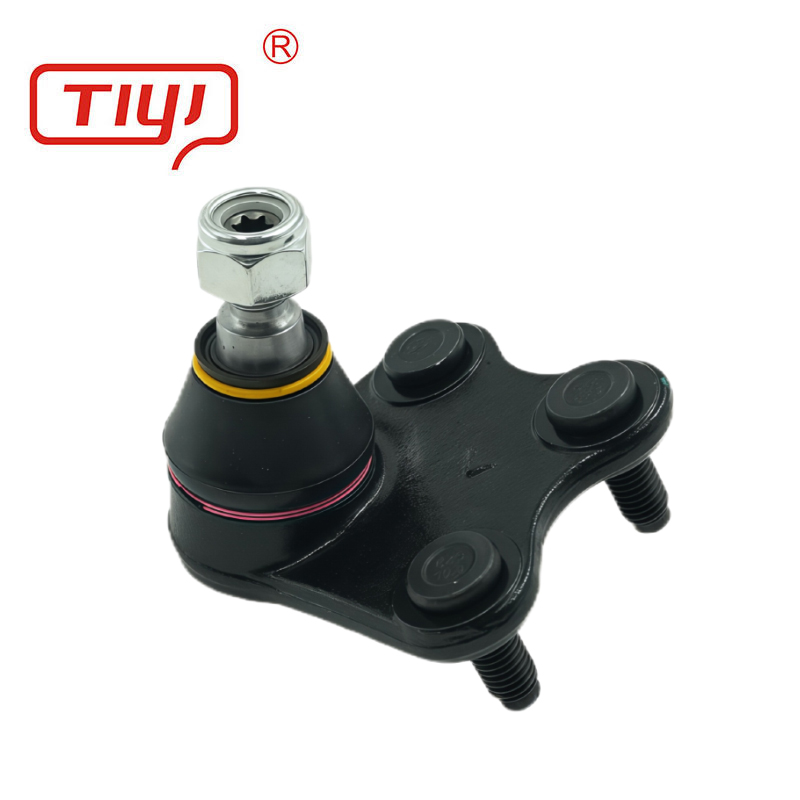
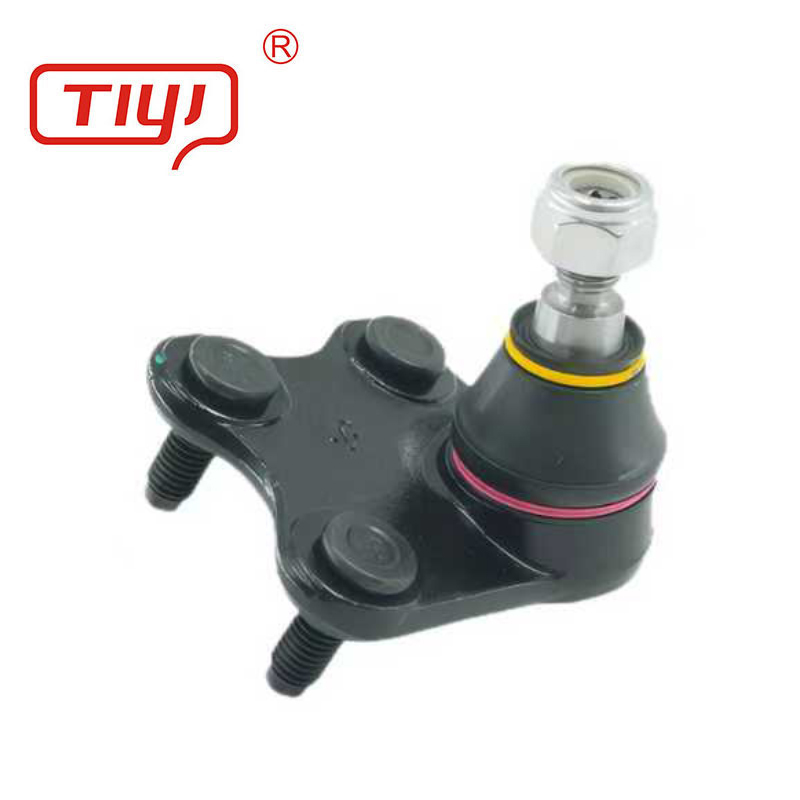
Most stabilizer bar links consist of a steel rod or bolt with a ball joint or rubber bushing at each end. The ball joints allow multi-directional movement while transmitting force, accommodating the complex three-dimensional motion of the suspension through its travel. There are two common construction types:
Ball Joint End Links: Feature a spherical ball-and-socket joint at one or both ends, enclosed in a rubber or polyurethane boot filled with grease. These allow full articulation and are standard on most modern passenger vehicles. They are more durable under high-load conditions but more expensive to replace.
Rubber Bushing End Links: Use a threaded bolt passing through rubber bushings at each end rather than ball joints. The rubber absorbs vibration and allows limited rotational movement. These are common on older vehicles, trucks, and some SUVs. They are cheaper but may transmit more road noise than ball-joint designs.
Position in the Suspension System
The stabilizer bar link occupies a critical position in the suspension chain: at the top, it bolts to the end of the stabilizer bar; at the bottom, it connects either to the lower control arm or, on MacPherson strut systems, directly to the strut housing. Because this connection point is close to the wheel and subject to road impacts, it experiences significant vertical and lateral loading — which is why the ball joints or bushings at each end are the first parts to wear.
The Role of the Stabilizer Bar Link in the Overall Suspension System
The stabilizer bar link is one component in a larger anti-roll system, and understanding how it interacts with related parts helps explain why a single failed link can have such a noticeable impact on handling.
| Component | Function | Location | Typical Lifespan |
| Stabilizer Bar (Sway Bar) | Torsion spring that resists body roll by linking left and right suspension | Spans vehicle width, front and/or rear subframe | Lifetime of vehicle (bar itself rarely fails) |
| Stabilizer Bar Link | Connects sway bar ends to strut or control arm; transmits force | Between bar end and strut/control arm, each corner | 50,000 – 100,000 miles (80,000 – 160,000 km) |
| Stabilizer Bar Bushings | Mount the bar to the vehicle chassis; allow bar to rotate | Midpoint of bar, at frame/subframe brackets | 60,000 – 120,000 miles (96,000 – 193,000 km) |
| Control Arm | Guides wheel motion; provides mounting point for sway bar link | Between wheel hub and vehicle subframe | 90,000 – 150,000 miles (145,000 – 241,000 km) |
| Strut / Shock Absorber | Damps suspension oscillation; mounting point for link on MacPherson struts | Vertical, inside wheel arch | 50,000 – 100,000 miles (80,000 – 160,000 km) |
Table 1: Key suspension components related to the stabilizer bar link, their functions, locations, and typical service life.
The stabilizer bar link is the most frequently replaced component in the anti-roll system because it sits at the corner of the vehicle, exposed to road debris, moisture, and the highest concentration of suspension movement. It is essentially a sacrificial connector — designed to wear before the more expensive stabilizer bar or control arm does.
Symptoms of a Bad or Worn Stabilizer Bar Link
A failing stabilizer bar link produces recognisable symptoms that worsen progressively. Identifying them early prevents secondary damage to related components and avoids the safety risks of degraded handling.
1. Clunking or Rattling Noise Over Bumps
A clunking, knocking, or rattling sound when driving over speed bumps, potholes, or rough pavement is the most common and earliest symptom of a worn stabilizer bar link. The noise occurs because a worn ball joint or deteriorated bushing no longer holds the link rigid — it develops play (free movement), and the metal components knock against each other under load. The sound typically comes from the front corner corresponding to the failed link, and it often worsens in cold weather when rubber and lubrication are less pliable. Drivers frequently describe it as a "clunk-clunk" when entering or exiting a parking lot speed hump at low speed.
2. Excessive Body Roll During Cornering
Increased body lean when turning is a direct consequence of the sway bar link's inability to transmit force effectively. If the link is broken or its ball joint has significant play, the stabilizer bar is effectively disconnected from one end of the suspension. The vehicle will lean noticeably more than normal into corners, feel less stable during lane changes, and require more driver input to maintain a line through a curve. This symptom is more pronounced at highway speeds and during sudden directional changes.
3. Rattling or Squeaking on Uneven Roads
When the rubber boot protecting the ball joint cracks or tears, grease escapes and contaminants enter. The resulting metal-on-metal contact produces squeaking or grinding sounds, particularly when the suspension articulates over uneven surfaces. Unlike the clunking over speed bumps, this squeaking may be more continuous on rough road sections. If detected early, re-greasing can temporarily suppress the noise, but the link should be replaced promptly to avoid ball joint seizure.
4. Loose or Wandering Steering Feel
A severely worn or broken stabilizer bar link can introduce a vague, wandering sensation in the steering. Because the front suspension geometry is no longer properly coupled through the anti-roll system, small inputs from the road surface cause unpredictable lateral movement of the front wheels. Drivers describe the vehicle as feeling "floaty" or "loose" at highway speeds. While this symptom has multiple possible causes, a worn sway bar link is a common contributor and should be among the first items inspected.
5. Visible Damage or Play in the Link
On visual inspection under the vehicle, a worn stabilizer bar link may show a torn or missing grease boot, rust on the ball stud, cracked rubber bushings, or a bent/deformed rod. A technician performing a suspension inspection will grip the link and attempt to move it — more than 1–2 mm of free play at a ball joint end is typically considered excessive and warrants replacement. A completely separated link (snapped rod or detached ball stud) will be obvious: the bar end will hang loose with no connection to the strut or control arm.
What Causes Stabilizer Bar Links to Fail?
Stabilizer bar links fail due to a combination of mechanical wear, environmental exposure, and driving conditions. Understanding the causes helps predict replacement intervals and extend component life.
| Failure Cause | Mechanism | Accelerating Factors |
| Normal Wear | Gradual erosion of ball joint socket and ball stud from cyclic loading | High mileage, frequent cornering, heavy vehicle weight |
| Rubber Boot Degradation | UV exposure and ozone crack the protective boot, allowing grease loss and contamination | High UV environments, age, road salt exposure |
| Corrosion | Rust weakens the link rod, ball stud, and threaded ends | Road salt in winter climates, coastal environments, neglected inspection |
| Impact Damage | Sudden overload from striking a pothole or kerb bends the rod or fractures the ball joint housing | Poor road conditions, aggressive driving |
| Incorrect Torque During Previous Service | Over-torquing crushes bushings or preloads ball joints; under-torquing allows loosening | DIY repairs, non-specialist workshops |
| Vehicle Lift Height Modification | Lifting changes the geometry, putting ball joints at extremes of their travel angle range | Aftermarket lift kits without matching longer end links |
Table 2: Common causes of stabilizer bar link failure, the mechanisms involved, and conditions that accelerate wear.
Stabilizer Bar Link Replacement: Cost, Difficulty, and Frequency
Replacing a stabilizer bar link is one of the more affordable suspension repairs, and most vehicles require it at least once during their service life. Acting promptly avoids secondary damage to the stabilizer bar bushings, strut, or control arm.
Typical Replacement Cost
| Cost Component | DIY (Per Side) | Workshop (Per Side) | Workshop (Both Sides) |
| Parts (economy) | $10 – $25 | $15 – $35 | $30 – $70 |
| Parts (OEM quality) | $25 – $80 | $30 – $100 | $60 – $200 |
| Labour (workshop) | N/A | $40 – $80 | $60 – $110 |
| Total Estimated Cost | $10 – $80 | $55 – $180 | $90 – $310 |
Table 3: Typical cost ranges for stabilizer bar link replacement by service method and quantity. Costs vary by vehicle type, region, and part quality tier.
Corrosion is the main variable that affects labour cost. On vehicles from salt-belt states or coastal areas, the link fasteners can be severely rusted and require cutting, adding 30–60 minutes of labour time. Always replace stabilizer bar links in pairs (both sides of the same axle) — if one link has failed due to age, the opposite side is at a similar wear stage and will likely fail soon after.
DIY Difficulty Level
Replacing a stabilizer bar link is rated as a beginner-to-intermediate DIY job on most vehicles. The task typically takes 30–60 minutes per side on a non-corroded vehicle with basic tools: a floor jack, jack stands, a torque wrench, a combination wrench set, and a hex key (Allen key) to hold the ball stud from spinning during nut removal. The primary risk is cross-threading or over-torquing the replacement link's fasteners — always consult the vehicle-specific torque specification (typically 35–65 lb-ft for the link nut, depending on vehicle). Severely rusted fasteners may require penetrating oil, heat, or a reciprocating saw and are better handled by a workshop.
Recommended Replacement Interval
There is no fixed mileage interval for stabilizer bar link replacement because lifespan depends heavily on driving conditions and climate. As a general guide, inspect the links at every tyre rotation or brake service (every 6,000–10,000 miles / 10,000–16,000 km). Plan for likely replacement somewhere between 50,000 and 100,000 miles (80,000–160,000 km) on most passenger vehicles. Vehicles operated in regions that use road salt in winter, or those frequently driven on rough unpaved surfaces, may need replacement as early as 40,000–60,000 miles.
Stabilizer Bar Link vs. Stabilizer Bar Bushing: Key Differences
The stabilizer bar link and stabilizer bar bushing are often confused because both are small, relatively inexpensive suspension parts that produce similar noise symptoms when worn. They are distinct components serving different functions, and diagnosing which one has failed before ordering parts saves time and money.
| Feature | Stabilizer Bar Link | Stabilizer Bar Bushing |
| Location | Between bar end and strut / control arm | Midpoint of bar, at chassis bracket |
| Construction | Steel rod with ball joints or rubber bushings at each end | Rubber or polyurethane sleeve clamped around bar |
| Function | Transmits force; accommodates suspension articulation | Mounts bar to chassis; allows bar rotation |
| Noise When Worn | Clunking or knocking over bumps, especially at link attachment points | Squeaking or creaking when weight shifts side to side |
| Handling Effect When Failed | Significant body roll increase; sway bar effectively disconnected | Mild increase in body roll; bar still partially functions |
| Average Parts Cost | $10 – $80 per side | $5 – $30 per side |
| DIY Difficulty | Beginner to intermediate; requires torque wrench | Beginner; U-bolt clamp replacement, no torque-critical joints |
| Diagnostic Test | Grasp link and check for free play at ball joints | Check for cracking, tearing, or movement at midpoint brackets |
Table 4: Comparison of stabilizer bar link versus stabilizer bar bushing across location, function, failure symptoms, and replacement cost.
Is It Safe to Drive with a Worn or Broken Stabilizer Bar Link?
Driving with a worn stabilizer bar link is inadvisable, and driving with a completely broken one is genuinely hazardous in certain situations. A worn link that still provides some connection to the bar will degrade handling progressively — the vehicle will roll more, feel less planted in corners, and require more driver correction. This is dangerous in emergency avoidance manoeuvres where vehicle response must be immediate and predictable.
A completely broken stabilizer bar link means the sway bar is disconnected from one corner of the vehicle entirely. On dry, smooth roads at moderate speed, this may go almost unnoticed. However, in the following scenarios it becomes a serious safety risk:
Emergency lane changes at highway speed: Without anti-roll resistance on one side, the vehicle's centre of gravity shifts rapidly and recovery is slower. The risk of vehicle rollover, particularly in taller SUVs and vans, increases substantially.
Wet or slippery roads: Reduced lateral grip from the tyres combined with uncontrolled body roll makes loss of control more likely at speeds that would be safe on a properly maintained vehicle.
Secondary damage risk: A dangling broken link can contact the tyre, CV axle, brake lines, or ABS sensor wiring. Impact damage to these components dramatically escalates repair costs — a $40 part ignored long enough can cause $800 in consequential damage.
The recommended course of action is to have a broken stabilizer bar link replaced within one week of diagnosis, or sooner if the vehicle needs to be driven on motorways or in adverse conditions.
How to Inspect a Stabilizer Bar Link Yourself
A basic stabilizer bar link inspection takes under ten minutes and requires no special tools beyond a floor jack and jack stands. Here is a structured approach:
Step 1 — Safely raise the vehicle. Lift the front (or rear) of the vehicle using a floor jack at the correct jacking point, then support it on rated jack stands. Never work under a vehicle supported only by a hydraulic jack.
Step 2 — Locate the links. The stabilizer bar link runs vertically or at a slight angle between the end of the sway bar (a U-shaped bar running across the vehicle) and the strut housing or lower control arm. There is one on each side.
Step 3 — Inspect the boots and rod. Look for cracked, torn, or missing rubber boots at the ball joints. Check the metal rod for rust, bending, or visible cracks. Any torn boot means contamination has entered the joint.
Step 4 — Check for play. Grasp the link firmly and attempt to move it in all directions. At the ball joint ends, there should be zero detectable free play (slop). Any knock or movement of more than 1–2 mm indicates the joint is worn.
Step 5 — Check fastener tightness. Attempt to tighten the link nuts by hand (with appropriate tool). They should be completely immovable. Loose fasteners on a link that otherwise appears in good condition is a straightforward fix but still a safety concern until corrected.
Frequently Asked Questions (FAQ)
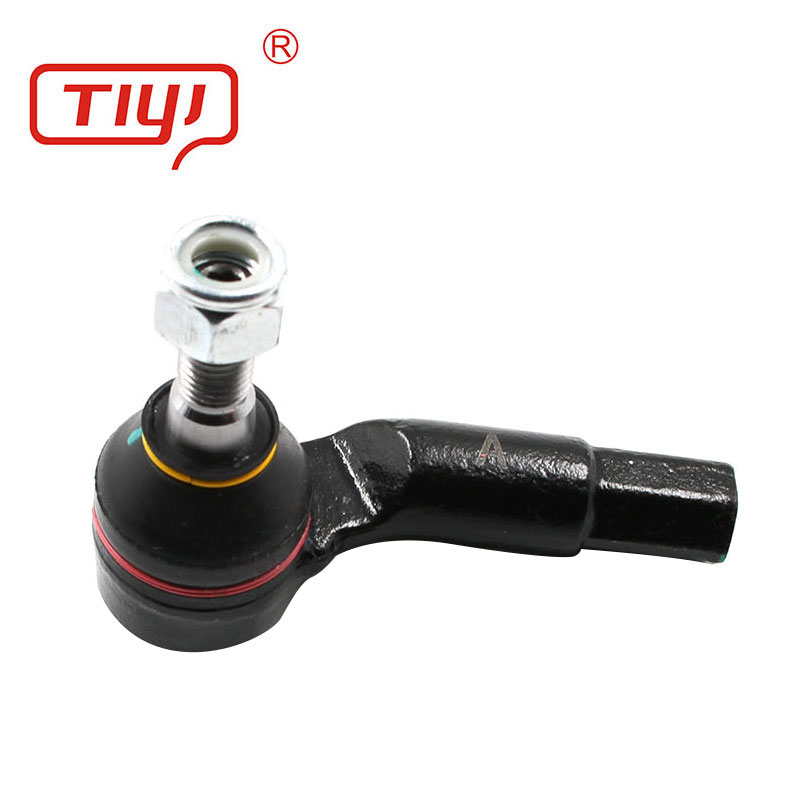
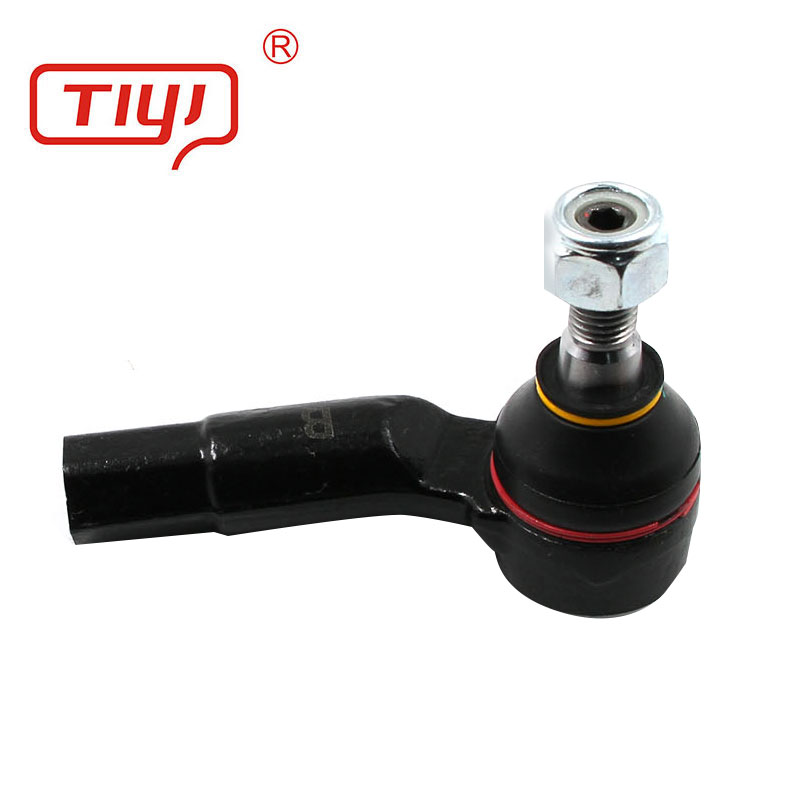
Q: What is the difference between a stabilizer bar link and a tie rod end?
A: A stabilizer bar link connects the sway bar to the strut or control arm and controls body roll. A tie rod end connects the steering rack to the wheel hub and controls steering direction. They are both ball-joint type components in the front suspension, which causes confusion, but they serve completely different functions. Tie rod wear causes steering wander and uneven tyre wear; stabilizer bar link wear causes body roll and clunking over bumps.
Q: Can I replace just one stabilizer bar link, or do I need to replace both sides?
While it is mechanically possible to replace only the failed side, replacing both stabilizer bar links at the same time is strongly recommended. If one link has worn out from age and use, the other side has experienced the same conditions and wear cycle. Replacing only one side often results in the opposite side failing within months, requiring a repeat labour charge. The incremental cost of a second link is small compared to the additional labour for a return visit.
Q: Do rear stabilizer bar links fail as often as front ones?
Rear stabilizer bar links generally last longer than front ones on most vehicles. The front suspension carries more load, handles steering inputs, and experiences greater side-force during cornering, accelerating wear. Rear links on many sedans and SUVs can last 80,000–120,000 miles before requiring attention. However, rear-wheel-drive vehicles and those with independent rear suspension may see earlier rear link wear. When front links are replaced, it is prudent to inspect the rear links at the same time.
Q: Will a bad stabilizer bar link cause a vehicle to fail a safety inspection?
In most jurisdictions that conduct roadworthiness or MOT-style inspections, excessive play in a stabilizer bar link ball joint is a direct failure item. Inspectors typically check for free play at all ball joints and linkage points, and a link with detectable slop or a visible torn boot will result in a rejection. A completely separated or broken link is an immediate failure in virtually all inspection regimes. It is advisable to inspect and replace worn links before taking a vehicle for its annual inspection.
Q: Can a bad stabilizer bar link cause tyre wear?
A worn or broken stabilizer bar link can contribute to uneven tyre wear indirectly. Because the failed link allows the suspension to move outside its designed geometry during cornering and roll, the tyre contact patch tilts and the tread scrubs unevenly. The effect is typically not as severe or rapid as worn control arm bushings or incorrect wheel alignment, but over tens of thousands of miles it can produce noticeable inner or outer edge wear. Replacing the links and performing a four-wheel alignment check simultaneously resolves both issues.
Q: How do I know if the clunking noise is from the stabilizer bar link or the strut?
A useful diagnostic test: with the vehicle safely raised on jack stands, have an assistant rock the vehicle side to side while you observe the front suspension. Movement at the stabilizer bar link under this lateral load indicates a worn link. Alternatively, disconnect the stabilizer bar links from the struts (one side at a time) and drive slowly over a bump — if the clunking disappears with the link disconnected, the link is the source. Strut noise is more typically a knock on direct vertical impacts (potholes, hard bumps) rather than lateral weight transfer.
Q: Are aftermarket stabilizer bar links as good as OEM?
Quality varies significantly among aftermarket suppliers. Well-regarded aftermarket links meeting or exceeding OEM specifications in ball joint load ratings, boot material, and steel grade are available at lower cost than dealer parts and perform equally well in normal use. Low-cost economy links may use inferior ball joint sockets that develop play sooner, or rubber boots that crack within one to two years. For most drivers, a mid-tier aftermarket link from a reputable supplier is the optimal balance of cost and durability. If the vehicle is used in a high-performance or towing context, OEM or heavy-duty aftermarket links are worth the premium.
Conclusion
The stabilizer bar link is a small but mechanically critical component that connects the sway bar to the suspension, enabling the anti-roll system to reduce body lean during cornering, lane changes, and uneven road conditions. Its ball joints and rubber boots absorb continuous stress and environmental exposure, making it one of the first suspension components to require replacement — typically between 50,000 and 100,000 miles.
Recognising the symptoms — clunking over bumps, increased body roll, squeaking, and loose steering feel — and acting on them promptly protects the vehicle's handling, prevents secondary damage to more expensive components, and maintains roadworthiness. Replacement is affordable ($55–$180 per side at a workshop), straightforward for a DIY mechanic, and should always be done in pairs on the same axle.
Regular inspection at every tyre rotation, attention to noise changes after rough road driving, and proactive replacement when wear is confirmed will keep the anti-roll system functioning as designed — keeping the vehicle flat, predictable, and safe in every driving condition.