

 English
 中文简体
中文简体
 Español
 عربى
عربى

Specifications
| Parameter | Details |
| Type | Inner Tie Rod End, Outer Tie Rod End |
| Thread Size (Adjuster) | Vehicle specific (e.g., M12x1.25, M14x1.5) |
| Stud Taper | Machined to match steering knuckle (e.g., 7°) |
| Material (Housing) | Forged Steel or Stamped Steel |
| Material (Stud) | Heat-Treated Alloy Steel |
| Seal/Boot | Integral Rubber or Polyurethane Boot to protect joint |
| Attachment | Threaded sleeve (outer) or ball socket (inner) |
| Adjustment Feature | Yes, for setting toe alignment |
| Load Type | Primarily axial (push/pull) from steering forces |
Applications
Tie rod ends are used in virtually every vehicle with a steering system—passenger cars, trucks, SUVs, and commercial vehicles. They are integral to both rack-and-pinion steering systems (where an inner and outer tie rod end are used on each side) and recirculating-ball steering systems (which typically use a center link connected to outer tie rod ends).
Their application is strictly focused on the steering linkage. Performance and heavy-duty versions are available for vehicles subjected to harder use, such as off-road trucks, where stronger materials and more robust boots are needed to withstand impacts and environmental abuse. They are also a common upgrade when lifting a vehicle, as extended-length tie rods may be required to maintain proper steering geometry.
Advantages
- Critical for Steering Accuracy: Directly influences how precisely the wheels follow steering inputs.
- Alignment Adjustability: The threaded design allows mechanics to easily set and correct the vehicle's toe angle.
- Integrated Protection: The sealed boot effectively keeps lubrication in and contaminants out, promoting long life.
- Robust Construction: Built to handle constant steering forces and suspension movement.
- Safety Component: A reliable tie rod end is non-negotiable for safe vehicle operation.
- Vehicle-Specific Design: Engineered to fit precisely and maintain the correct steering geometry for the model.
Materials and Structure
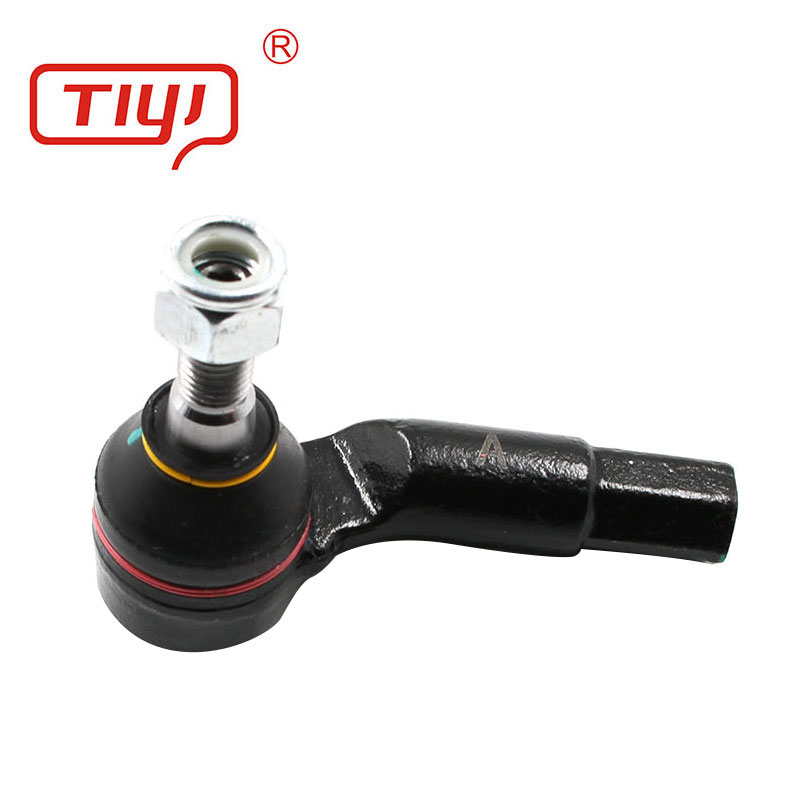
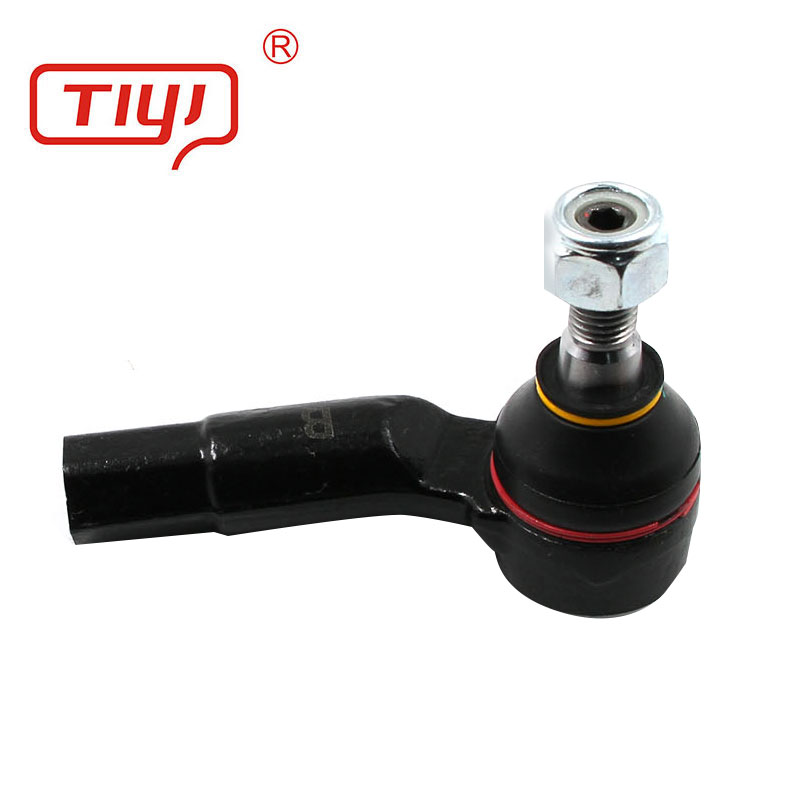
The outer tie rod end's housing is typically a forged or stamped steel body. Inside, a hardened steel ball stud is seated in a polymer or sintered metal bearing socket, pre-loaded with grease. The stud has a precision-machined tapered shank that fits into a matching hole in the steering knuckle, secured by a castellated nut and cotter pin.
The other end of the housing features a threaded tube (for the outer end) or a socket/eyelet (for the inner end). A large, flexible rubber or thermoplastic boot is crimped or clamped over the housing to seal the ball stud interface. The inner tie rod end often has a different internal design, resembling a socket that attaches directly to the steering rack, but it serves the same fundamental pivoting function.