

 English
 中文简体
中文简体
 Español
 عربى
عربى


Picture this: you are driving down a straight highway, and the steering wheel has a small dead zone at the center, or you hear a dull clunk from the front end every time the road surface changes. The fastest way to tell if your tie rods are bad while driving is to pay attention to four sensations: a clunking or knocking noise from the front suspension, a steering wheel that feels loose before the tires respond, the car wandering or pulling to one side on a flat road, and vibration through the steering wheel at speed. If you notice any combination of these, the tie rod ends are likely worn and should be inspected immediately, because a tie rod that separates while driving can cause a complete loss of steering on that wheel.
This guide explains what the warning signs feel like from the driver's seat, how to confirm the diagnosis in a parked-car check, and when the repair is urgent.
Content
What Are Tie Rods and How Do They Fail?
Tie rods are the steering linkage between the steering rack and the front wheel knuckles, and they fail when the ball-and-socket joint at either end develops play from wear. They belong to the car steering components that convert your steering wheel input into the wheel turning angle. Each tie rod end contains a stud that swivels inside a grease-filled socket sealed by a rubber boot. Tie rods are often confused with ball joints, but ball joints are suspension parts that connect the control arm to the knuckle, while tie rods are steering parts that connect the rack to the same knuckle.
Wear usually begins when the boot tears and lets in water, road salt, and grit, or when normal mileage hammers the socket until the stud moves freely inside it. Once play develops, the wheel no longer follows steering input precisely, and every bump, pothole, or turn stresses the loose joint further, producing symptoms you can feel while driving.
7 Warning Signs of Bad Tie Rods While Driving
Bad tie rods produce symptoms you can detect without tools, and the most important one is a sharp knock or clunk when you turn or drive over bumps. The table below gives a quick overview; each sign is then explained in detail.
| Sign | What you notice | Why it happens |
|---|---|---|
| Clunking noise | Thud or knock from the front wheels on bumps or turns | Worn socket allows metal-to-metal movement |
| Steering wheel play | The wheel moves before the tires respond | The stud is loose inside the tie rod socket |
| Wandering or pulling | The car drifts from the lane on a straight road | The toe angle shifts as the rod flexes |
| Vibration at speed | Shaking in the steering wheel at highway speeds | Unstable wheel movement travels up the column |
| Uneven tire wear | Feathered or cupped edges on the front tires | The toe angle changes constantly while driving |
| Drift after bumps | The car veers sharply after a pothole or dip | The loose joint cannot hold wheel position |
| Off-center steering wheel | The wheel sits crooked even when driving straight | The effective tie rod length has changed |
1. Clunking or Knocking Noise
A clunk or knock from the front suspension when you drive over rough pavement or make a turn is the most common first sign of a bad tie rod. The sound comes from the stud moving loosely inside the worn socket, and it becomes sharper as wear increases. When the noise appears together with any steering looseness, replacement is already overdue.
2. Loose Steering Wheel with Free Play
Steering wheel free play means the wheel moves noticeably before the front tires respond, which is a direct indication that the tie rod socket has lost its tight fit. Test it on a straight road with the car stationary: wiggle the steering wheel gently from side to side and feel for a dead zone or a soft clunk at the end of the travel.
3. Wandering or Pulling to One Side
Wandering means the car drifts from a straight line without steering input, and it happens because the worn tie rod allows the toe angle to change as the wheel moves. Unlike a brake-drag pull, a tie rod pull is inconsistent and often gets worse on rough roads or under braking.
4. Steering Wheel Vibration at Highway Speed
Vibration in the steering wheel at 50 to 70 mph is another signal, especially when it was not present before. The loose joint lets the wheel assembly wobble slightly, and that movement travels up the steering column where you feel it as a trembling in your hands.
5. Uneven or Cupped Tire Wear
Bad tie rods change the toe angle under load, which scrapes the tire tread and produces feathered or cupped wear on the inner or outer edges of the front tires. If you run your hand across the tread and feel a sawtooth pattern, the alignment is moving, and the tie rods are a likely cause.
6. Sharp Drift After Hitting a Bump
If the car jerks or veers noticeably after you hit a pothole, expansion joint, or speed bump, the tie rod cannot hold the wheel in position after the impact. This symptom is especially dangerous because it can happen suddenly at highway speed.
7. Steering Wheel Off-Center After an Alignment
If the steering wheel sits crooked when the car drives straight, the tie rod may be flexing, or the threaded adjustment sleeve may have moved. A fresh alignment that keeps drifting out of spec is also a good clue that the tie rod end is worn and needs replacement.
How to Confirm a Bad Tie Rod in 10 Minutes
You do not need a scan tool or a lift to confirm a bad tie rod: lift the front wheels off the ground and check for play with your hands, and if you see or feel movement at the tie rod end, the part must be replaced.
- Park on level ground, chock the rear wheels, and jack up the front of the car. Support it on jack stands; never work under a car supported only by a jack.
- Grab the front tire at the 9 o'clock and 3 o'clock positions and rock it side to side. Have a helper watch the inner and outer tie rod joints; any clunk or visible movement between the tie rod and the knuckle confirms wear.
- Place your hand on the tie rod end boot while the helper wiggles the steering wheel slightly. If you feel a knock, the socket is loose.
- Inspect each rubber boot for tears, cracks, or grease leaks. A torn boot means water and grit have already entered the joint, and replacement is the correct choice even if play is not yet obvious.
- Grasp the inner tie rod near the rack and try to move it. On most cars it should not move freely; a rack end that turns or feels loose is also a replacement candidate.
A good tie rod end feels tight in all directions. There is no acceptable amount of radial play at the tie rod end: if you can move the joint by hand or feel a knock, it is worn beyond specification.
Inner vs Outer Tie Rod: Which One Is Worn?
Outer tie rod ends fail far more often than inner tie rods, and the difference matters because the part itself and the labor time are not the same.
| Feature | Outer tie rod end | Inner tie rod (rack end) |
|---|---|---|
| Location | Bolts to the steering knuckle | Screws into the steering rack |
| Typical symptom | Clunking, steering play, wheel wiggle | Clunking from the center of the car, vague steering |
| How it is checked | Rock the wheel at 9 and 3 o'clock | Grasp the joint near the rack and feel for play |
| Wear frequency | Wears faster, replaced more often | Lasts longer, but harder to access |
| Typical labor | 30 to 60 minutes per side | 1 to 2 hours because of access |
When the outer end fails, the stud that bolts to the knuckle and the threaded adjusting sleeve are the parts that need attention. When the rack end fails, the symptoms are similar, but the play comes from the joint screwed into the rack, and the steering often feels vague around the center. In both cases there is no adjustment that fixes a worn socket; the correct repair is replacement of the worn component.
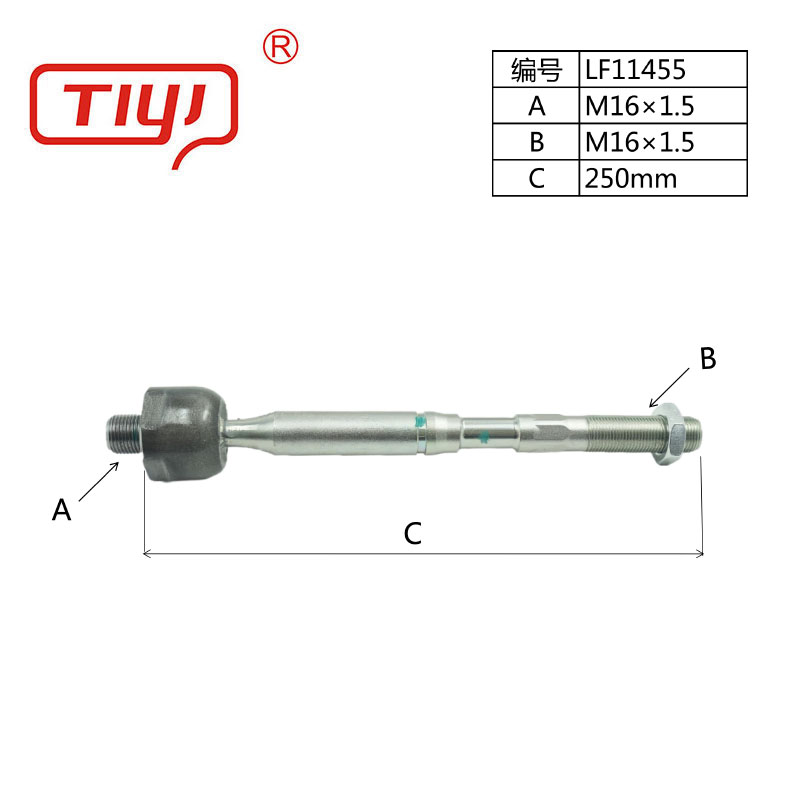 Toyota RAV4 4th/3rd Gen (2005-2013) Rack End Tie Rod, OEM 45503-42030This rack end is the correct replacement for a worn outer tie rod socket on RAV4 models from 2005 to 2013. It matches the original OEM number and includes the M16 threads and 250mm install size, fitting the specified steering joint.View Product →
Can You Drive on Bad Tie Rods? Safety Risks
No, you should not keep driving on a bad tie rod, because a tie rod that separates while driving removes steering control for that front wheel completely.
When the ball stud separates from the socket, the wheel can fold outward and the car will veer regardless of steering input. At city speed the result may be a curb impact; at highway speed it can cause a serious crash. There is also gradual secondary damage: every mile with a loose tie rod wears the front tires unevenly and stresses the wheel bearing. A worn tie rod does not stabilize with time; it only gets looser.
Replacement Cost and How to Choose the Right Part
Plan on roughly $100 to $350 for a tie rod end replacement, including parts, labor, and an alignment, with the exact figure depending on the side, the vehicle, and whether the inner tie rod also needs replacement.
- Outer tie rod end part price: $15 to $60 each for quality aftermarket parts.
- Labor: $50 to $150 per side, depending on how easily the threads come loose.
- Wheel alignment: $50 to $120, and it is always required after tie rod work.
- Warranty: choose parts with at least a 2-year or 100,000 km warranty, which is what quality OE-standard manufacturers offer.
When ordering a replacement, match the OEM number stamped on the old part, and replace both sides if the other side shows the same wear. On many models the left and right tie rod ends have separate OEM numbers; for example, the VW Lavida A4 (2008) uses OEM 1J0422811B on one side and 1J0422812B on the other. Detailed steps and quality considerations are covered in our tie rod end replacement guide.
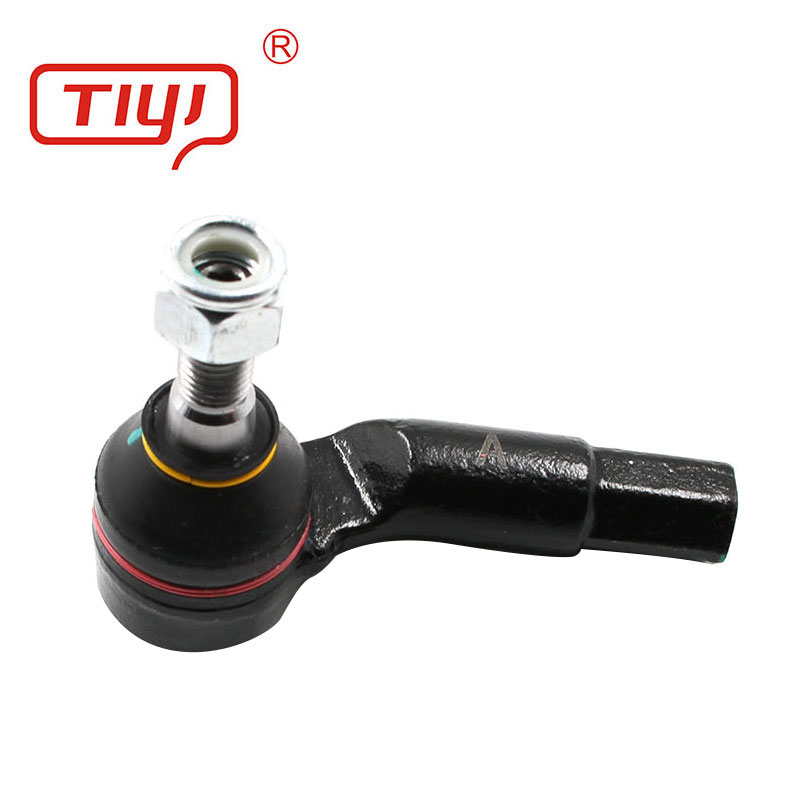
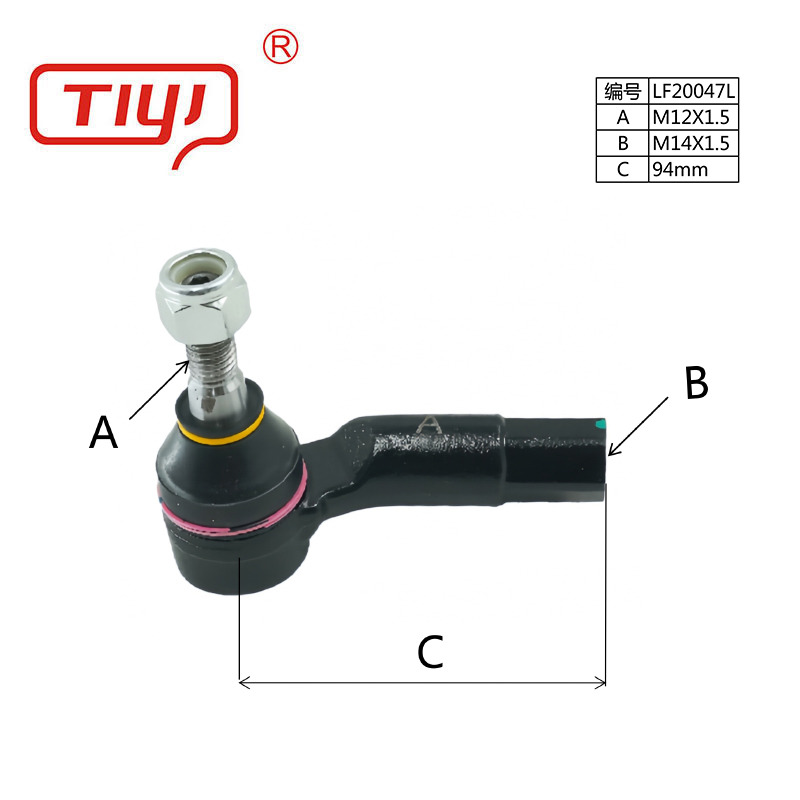 VW Lavida A4 (2008) Tie Rod End, OEM 1J0422811B (Left Side)This tie rod end is the matching left-side component for VW Lavida A4 2008 models. It uses M12 ball pin and M14 shell threads with 94mm center distance, and it is critical to confirm the OEM number when replacing a worn joint.View Product →
 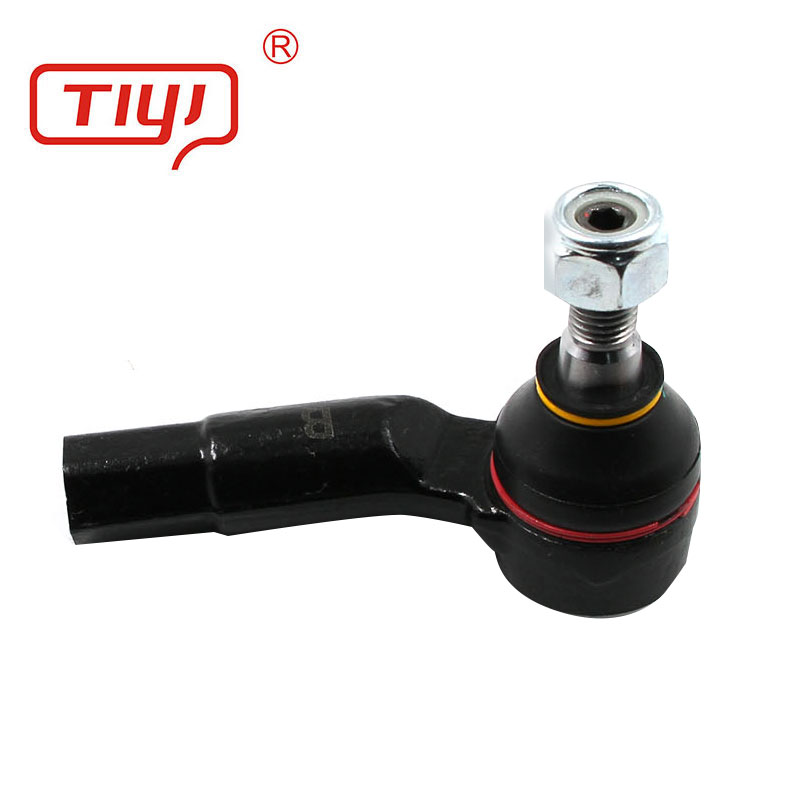 VW Lavida A4 (2008) Tie Rod End, OEM 1J0422812B (Right Side)As the opposite-side tie rod end for the 2008 Lavida A4, this part has the same M12/M14 threads and 94mm center spacing as its counterpart. It is a suitable replacement when the right side shows play or wear.View Product →
Frequently Asked Questions
How long can you drive on a bad tie rod?
There is no safe distance. A tie rod with visible play can fail on the next sharp turn, so drive only directly to a repair shop and keep the speed low.
What does a bad tie rod sound like while driving?
It sounds like a rhythmic clunk or knock from the front wheels when driving on rough pavement, turning, or crossing gaps such as manhole covers. The noise usually becomes faster and sharper as the joint wears further.
Do I need an alignment after replacing tie rods?
Yes, a wheel alignment is mandatory after tie rod replacement because the threaded adjuster changes the toe angle. Driving without an alignment causes rapid tire wear and an off-center steering wheel.
Will a bad tie rod cause vibration at highway speed?
Yes, worn tie rod ends allow the wheel to wobble slightly, and the vibration can usually be felt in the steering wheel between 50 and 70 mph as a shimmy that comes and goes with road conditions.